
The Surprisingly Vast World of Types of Microgreens
The types of microgreens you can grow at home range from quick-sprouting radish and broccoli to slow-growing herbs like basil and cilantro — and the list goes far beyond what you’ll find at the grocery store.
Here’s a quick overview of the most popular varieties:
| Type | Family | Flavor | Days to Harvest |
|---|---|---|---|
| Broccoli | Brassicaceae | Mild, slightly earthy | 7-10 days |
| Radish | Brassicaceae | Spicy, peppery | 5-10 days |
| Sunflower | Asteraceae | Nutty, crunchy | 10-14 days |
| Pea Shoots | Fabaceae | Sweet, fresh | 8-12 days |
| Arugula | Brassicaceae | Peppery | 6-12 days |
| Beet | Amaranthaceae | Earthy, sweet | 10-12 days |
| Basil | Lamiaceae | Intense, herbal | 15-21 days |
| Cilantro | Apiaceae | Fresh, citrusy | 18-25 days |
| Kale | Brassicaceae | Mild, slightly bitter | 8-12 days |
| Mustard | Brassicaceae | Sharp, spicy | 7-10 days |
These tiny greens pack a serious nutritional punch despite their small size. Many contain higher concentrations of vitamins and antioxidants than their full-grown counterparts.
There are actually over 1,500 types of edible microgreens that can potentially be grown — yet just 15 varieties dominate the two-billion-dollar commercial market. That means home growers have enormous room to explore.
Whether you want a fast crop ready in under two weeks, a bold flavor for your salads, or a nutrient-dense addition to smoothies, there’s a microgreen variety that fits.
This guide covers everything you need to identify, select, and grow the right varieties for your goals.
Defining the Stages: Sprouts vs. Shoots vs. Types of Microgreens
When we first start our indoor gardens, it is easy to get the terminology mixed up. Are we growing sprouts? Are these shoots? Or are they types of microgreens? While they all come from the same seeds, the difference lies in the growth stage, the environment, and how we eat them.
Sprouts are the “infants” of the plant world. They are grown entirely in water, usually in a jar, for just 2 to 7 days. You eat the whole thing—the seed, the tiny root, and the pale stem. Because they grow in warm, wet conditions without soil or light, they have a higher risk of bacterial contamination, which is why food safety is so important here.
Shoots are the next step up. They are tender stems and leaves harvested after the sprout phase but before they reach full microgreen status. Pea shoots and sunflower shoots are the most famous examples. They are often grown in soil or a medium and are prized for their “crunch” and height.
Microgreens are the “toddlers.” We harvest them once the cotyledon leaves (the very first “seed leaves”) have fully developed and the first true leaves (the ones that actually look like the adult plant) begin to emerge. This usually happens between 7 and 21 days. Unlike sprouts, microgreens are grown in soil or a porous mat, require plenty of light, and are harvested by clipping the stems above the soil line.
This stage is the “sweet spot” for nutrition. Research shows that microgreens can have 4 to 40 times the nutrient density of mature vegetables. They are the ultimate culinary multitasker, adding a concentrated burst of flavor and color to everything from morning smoothies to high-end dinner plates.
Categorizing the Most Popular Types of Microgreens by Family
Understanding botanical families isn’t just for scientists; it’s a “cheat code” for growers. Plants in the same family usually have similar flavors, growth rates, and nutritional profiles. If you know how to grow one member of the Brassicaceae family, you can likely grow them all!
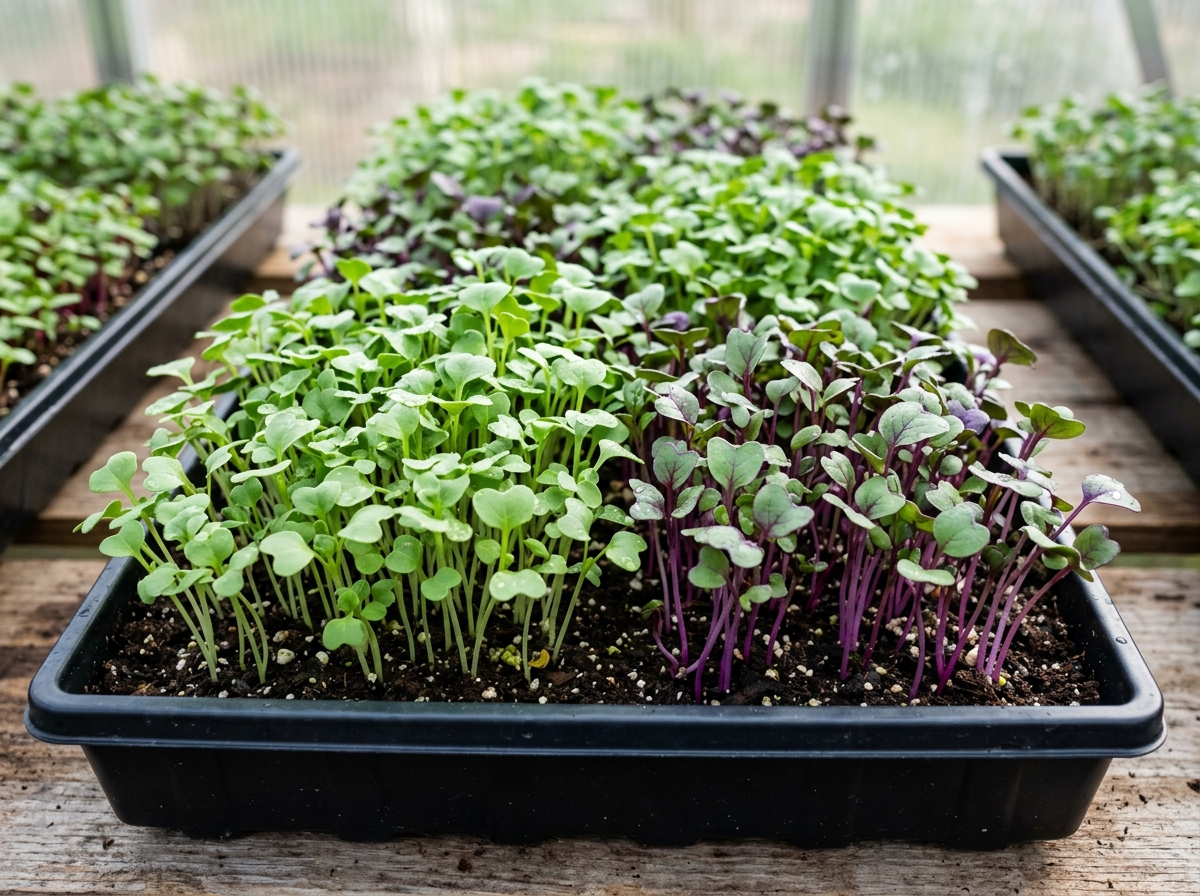
By grouping types of microgreens by family, we can better predict what they will taste like and how they will behave on our windowsills. For a deeper dive into what these tiny plants can do for your body, check out our guide on vitamins in popular microgreens and explore antioxidant-rich microgreens to grow.
Popular Commercial Types of Microgreens
While there are over 1,500 varieties possible, a few families dominate our kitchens and the two-billion-dollar microgreen market:
- Brassicaceae (The Mustard Family): This is the “heavy hitter” family. It includes Broccoli, Radish, Arugula, Kale, Mustard, and Kohlrabi. These are generally the easiest and fastest to grow, often ready in just 7 to 10 days.
- Amaranthaceae (The Amaranth Family): Known for stunning colors, this family includes Beets, Swiss Chard, and Amaranth. They offer earthy flavors and vibrant red or pink stems that make any dish pop.
- Apiaceae (The Carrot Family): These are slower growers but pack intense herbal punches. Think Cilantro, Fennel, Dill, and Carrot. They can take 15 to 30 days to reach harvest.
- Fabaceae (The Legume Family): Primarily Pea shoots, Alfalfa, and Clover. Pea shoots are a fan favorite because they taste exactly like snap peas and provide a satisfying crunch.
- Asteraceae (The Daisy Family): The king of this family is the Sunflower. These are large-seeded, nutty, and incredibly filling. This family also includes various types of Lettuce and Chicory.
Unique Flavors and Nutritional Benefits
Every variety brings something unique to the table. Broccoli microgreens are world-famous for their high levels of sulforaphane, a compound studied for its potential cancer-preventing properties. If you want a spicy kick, Radish and Mustard varieties contain glucosinolates, which provide that signature peppery heat.
Beets contain geosmin, the same compound responsible for that pleasant “smell after the rain,” giving them a deeply earthy flavor. Meanwhile, red-hued varieties like Red Garnet Amaranth are rich in anthocyanins, powerful antioxidants that give them their striking purple color. To learn more about how these tiny plants earn their “superfood” title, see our article on superfood microgreens for health.
Beginner-Friendly Varieties and Optimal Growing Conditions
If you are new to tiny harvests, we always recommend starting with the “Big Three”: Radish, Broccoli, and Sunflower. These varieties are forgiving, fast, and have high germination rates.
To get your home garden started on the right foot, take a look at our list of top microgreens seeds for home gardening.
Fast-Growing vs. Slow-Growing Varieties
Timing is everything in a microgreen workflow. We generally categorize types of microgreens into two speed groups:
- Fast-Growing (7-14 days): These are the “instant gratification” greens. Cabbage, Kohlrabi, Cress, and Radish fall into this camp. They are great for kids or impatient gardeners! For more quick-win ideas, check out the fastest growing microgreens to try at home.
- Slow-Growing (15-30 days): These require a bit more “zen.” Herbs like Basil, Sorrel, and Parsley take their time to develop those complex essential oils that give them their intense aromas.
Essential Cultivation Parameters
To succeed, you need to solve the “growth puzzle.” Each variety has its own preferences:
- Seeding Rates: Small seeds (like broccoli) need about 10-12 seeds per square inch, while large seeds (like sunflowers) need about 6-8.
- Presoak Requirements: Larger, tougher seeds like Peas, Sunflowers, and Beets benefit from a 6-12 hour soak in cold water to jumpstart germination. Never soak mucilaginous seeds like Basil or Chia, as they will turn into a gooey mess!
- Blackout Periods: Most seeds need 2 to 5 days in total darkness (often with a weight on top) to encourage strong root development and “stretch” the stems.
- Growing Mediums: While most prefer a high-quality soilless potting mix, many (like Kale and Kohlrabi) thrive in hydroponic setups using hemp or jute mats.
- Watering: We strongly suggest bottom watering. Pouring water directly onto the delicate leaves can lead to mold. Instead, let the tray “drink” from a reservoir below.
Growing your own greens isn’t just a hobby; it’s a lifestyle choice. If you’re looking to lighten up your meals, you might find our guide on the best microgreens for weight loss particularly helpful.
Safety First: Toxic Varieties and Food Safety Guidelines
While most garden vegetables make excellent microgreens, there is one major “No-Go” zone: the Nightshade (Solanaceae) family.
Never grow or eat microgreens from tomatoes, potatoes, eggplants, or peppers. These plants contain toxic alkaloids in their stems and leaves that can make you very sick. Stick to the families we know are safe.
Beyond plant toxicity, we must also be mindful of foodborne illnesses like E. coli, Listeria, and Salmonella. Because microgreens are grown in high-density environments, moisture can sometimes invite unwanted guests. To keep your harvest safe:
- Use clean seed: Buy seeds specifically marketed for sprouting or microgreens, as these are tested for pathogens.
- Sanitize your trays: Always wash your equipment between harvests.
- Control humidity: Use a small fan to ensure good air circulation. If the air is stagnant, mold (like damping-off disease) will likely move in.
- Fresh media: Never reuse soil or mats from a previous crop; it’s a breeding ground for bacteria.
Advanced Innovation and Global Resources
Once you’ve mastered the basics, types of microgreens opens up into a vast frontier. Scientists and adventurous chefs are currently exploring over 1,500 species, many of which are underutilized but offer incredible potential.
From hydroponic setups to advanced plant tissue analysis, the industry is constantly evolving. For those who want to get into the technical nitty-gritty, we recommend reading The ABCs of Microgreens for a scientific perspective on species selection and seed density.
Exploring Experimental Types of Microgreens
Ready to graduate from Broccoli? Try these high-potential varieties:
- Nasturtium: These have lily-pad-shaped leaves and a powerful, wasabi-like kick.
- Corn Shoots: Grown in complete darkness to keep them yellow and prevent them from becoming fibrous, they are intensely, almost unnaturally sweet.
- Borage: Known for its beautiful “hairy” leaves and a flavor exactly like fresh cucumber.
- Shiso (Perilla): A staple in Japanese cuisine, offering a complex flavor profile of mint, basil, and cinnamon.
- Buckwheat: A tangy, citrusy green that is excellent in smoothies (just be sure to remove the black hulls!).
Databases for Safe Experimentation
If you find a wild edible or a unique garden plant and wonder if it can be a microgreen, don’t guess—check the data. Reliable resources include:
- USDA Plants Database: The gold standard for plant attributes and taxonomy in the U.S.
- Plants For A Future (PFAF): A massive database of over 7,000 edible and medicinal plants.
- University Agricultural Extensions: Many state universities (like the University of Georgia) offer affordable plant tissue analysis to check for nutrient content and safety.
Frequently Asked Questions about Microgreen Varieties
Which microgreens are the easiest for beginners to grow?
Radish is the undisputed champion for beginners. It germinates in about 48 hours and can be harvested in as little as 5 or 6 days. Broccoli and Sunflowers are also excellent choices due to their high success rates and sturdy stems.
What do different microgreens taste like?
Think of them as “concentrated” versions of the adult plant. Arugula is peppery, Cilantro is citrusy, Beets are earthy, and Peas are sweet. Some, like Mustard, can be quite sharp and spicy, while others, like Clover, are very mild and fresh.
Are there any microgreens that are poisonous?
Yes. As mentioned, stay away from the Nightshade family (tomatoes, potatoes, peppers, eggplants). Also, avoid any wild plants unless you are a certified expert in plant identification, as many wild seedlings look identical to toxic look-alikes.
Conclusion
At FinanceOrbitX, we believe that “growing your own” is one of the smartest investments you can make for your health and your wallet. By understanding the different types of microgreens and their unique needs, you can transform a small corner of your home into a high-yield, nutrient-dense farm.
Whether you are looking for the spicy crunch of a radish or the earthy sweetness of a beet, microgreens offers endless variety. Ready to plant your first tray? Start your gardening journey with FinanceOrbitX and discover how accessible—and delicious—horticulture can be.
