
Why Microgreens Belong in Every Vegan Salad
Microgreens for salads are one of the easiest ways to pack serious nutrition into a simple bowl of greens.
Quick answer — here’s what you need to know:
- What they are: Tiny, young vegetable seedlings harvested just 7–14 days after planting
- Why they matter: They contain up to 4–40x more vitamins (C, E, and K) than fully grown vegetables
- Best varieties for salads: Pea shoots, radish, sunflower, broccoli, and arugula
- How to use them: Toss with a light vinaigrette, layer with seasonal produce, and serve immediately
- Can you grow them? Yes — on a sunny windowsill, in any shallow container, with basic potting soil
If you’ve ever felt like your vegan salad was missing something — a little crunch, a burst of flavor, or just more nutritional punch — microgreens are almost always the answer.
These tiny greens aren’t just a fancy restaurant garnish. They’re genuinely one of the most nutrient-dense foods you can add to your plate. And the best part? You can grow them yourself at home, even with zero gardening experience.
This guide walks you through everything — from which varieties taste best in salads, to how to grow your first tray on a windowsill, to meal-prepping your greens for the whole week.

What Are Microgreens and Why They Outshine Mature Veggies
At FinanceOrbitX, we like to think of microgreens as the “high-growth startups” of the vegetable world. They are small, aggressive, and packed with potential. But what exactly are they?
Microgreens are young seedlings of edible vegetables and herbs. Unlike sprouts, which are grown in water and eaten whole (roots, seed, and all), microgreens are typically grown in soil or a sterile growing medium. We harvest them once they’ve developed their first set of “true leaves,” known as cotyledons.
The differences between sprouts, microgreens, and mature veggies are significant:
- Sprouts: Harvested in 2–5 days; grown in dark, humid conditions in water; high risk of bacterial growth.
- Microgreens: Harvested in 7–21 days; grown in light; cut above the soil line (no roots); intense flavor.
- Mature Veggies: Harvested in 40–90+ days; require significant space and time.
Because they are harvested so early, microgreens possess a delicate, tender texture that melts in your mouth, yet they carry the concentrated flavor profile of the adult plant. A tiny radish microgreen, for instance, packs the same peppery punch as a full-sized radish but without the woody bite. According to Scientific research on microgreen health benefits, these “baby” plants are far more than just a garnish; they are a functional superfood.
The Nutritional Powerhouse: Why Use microgreens for salads?
If you’re looking for the best “Return on Investment” (ROI) for your health, microgreens for salads are the ultimate asset. Research has shown that these tiny greens can contain up to 40 times the nutrient concentration of their mature counterparts.
When you add a handful of microgreens to your vegan bowl, you aren’t just adding color; you’re adding a massive dose of:
- Vitamin C: Essential for immune function and skin health.
- Vitamin E: A powerful antioxidant that protects cells from damage.
- Vitamin K: Critical for bone health and proper blood clotting.
- Phytonutrients: Including polyphenols and glucosinolates, which have anti-inflammatory and potentially cancer-fighting properties.
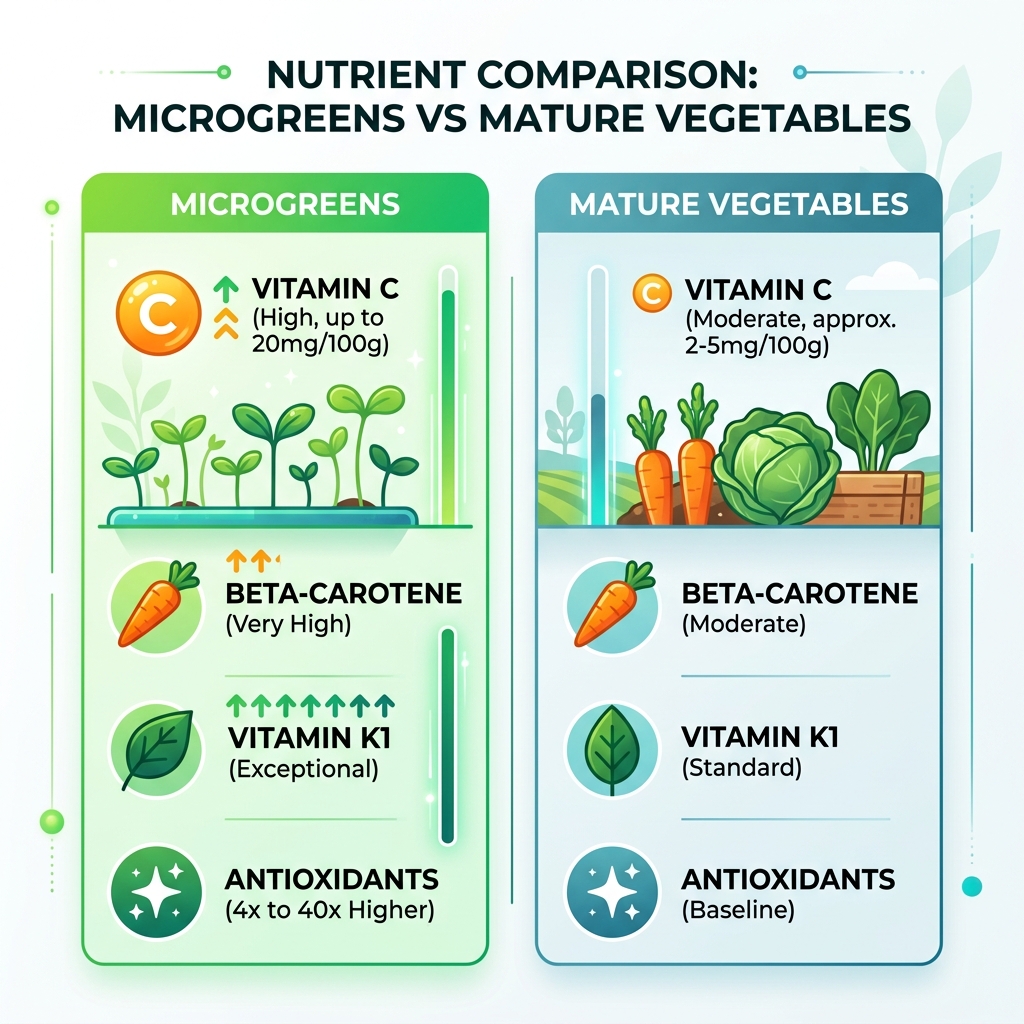
For those of us following a vegan lifestyle, getting a broad spectrum of minerals like zinc and magnesium is vital. Microgreens provide these in a highly bioavailable form. We’ve explored this further in our guide on More info about microgreens for smoothies and salads, but the table below illustrates the stark difference in “nutrient density” per gram.
Nutrient Comparison: Micro vs. Mature
| Nutrient | Microgreen Level (Avg) | Mature Vegetable Level (Avg) |
|---|---|---|
| Vitamin C | High (up to 20mg/100g) | Moderate (approx. 2-5mg/100g) |
| Beta-Carotene | Very High | Moderate |
| Vitamin K1 | Exceptional | Standard |
| Antioxidants | 4x to 40x Higher | Baseline |
Best Varieties of microgreens for salads
Not all microgreens are created equal when it comes to the dinner plate. Depending on your mood, you can customize the flavor profile of your salad:
- Pea Shoots: These are lacy, sweet, and incredibly crisp. They are the “crowd-pleasers” of the microgreen world and pair beautifully with fruit-based salads.
- Radish: If you like a kick, radish microgreens are for you. They offer a spicy, peppery flavor that can stand up to heavy dressings.
- Sunflower: Nutty, crunchy, and substantial. These are thick enough to serve as a base for a salad rather than just a topping.
- Broccoli: Mild and earthy. These are arguably the healthiest of the bunch, containing high levels of sulforaphane.
- Arugula: Just like the mature version but more intense and “nutty.”
- Amaranth: These provide a stunning vibrant red or pink color, making any vegan salad look like it came from a Michelin-star kitchen.
For beginners, we often recommend a Basic Salad Mix. These usually contain a blend of broccoli, kale, kohlrabi, arugula, and red cabbage. They all grow at a similar rate (about 10 days), making them easy to harvest all at once.
How to Prepare and Pair Microgreens for Maximum Flavor
Handling microgreens requires a bit of finesse. Because they are so young, they are fragile. If you squash them, they lose their “crunch” and nutritional integrity.
Our Step-by-Step Prep Guide:
- Harvest gently: Use sharp scissors to snip the greens about half an inch above the soil.
- Wash with care: Place them in a bowl of cool water and swirl gently. Do not blast them with a high-pressure faucet!
- Dry thoroughly: This is the most important step. Use a salad spinner or lay them flat on a clean kitchen towel. Wet microgreens will wilt instantly once dressing is applied.
- Dress at the last second: To maintain that delicate texture, only add your vinaigrette right before you eat.
Speaking of dressings, microgreens love light, acidic pairings. A Sweet & Savory Balsamic Microgreens Salad is a classic. We recommend a simple mix of balsamic vinegar, extra virgin olive oil, a touch of Dijon mustard, and a splash of maple syrup (to keep it vegan). If you want to dive deeper into daily integration, check out our tips on How to eat microgreens daily.
Ideal Ingredients to Pair with Microgreens
To turn a pile of greens into a satisfying meal, you need the right “supporting cast.” Here are some of our favorite vegan-friendly pairings:
- Creamy Fats: Avocado is a must. The richness of the avocado balances the sharp, peppery notes of radish or arugula microgreens.
- Acidic Fruits: Heirloom tomatoes add sweetness and moisture. Pro tip: If you are sensitive to lectins, peeling and deseeding your tomatoes can make them easier on the gut.
- Crunchy Proteins: Toasted pecans, walnuts, or sunflower seeds add a necessary texture contrast.
- Seasonal Sweetness: In the summer, try adding sliced peaches. The sweetness of the peach against the crunch of pea shoots is a game-changer.
- Zingy Additions: Fermented onions or a drizzle of thinned-out pesto can elevate the flavor profile without adding heavy calories.
Growing Your Own Salad Bar: A Beginner’s Guide
At FinanceOrbitX, we believe gardening is the ultimate “side hustle” for your health. Growing microgreens for salads at home is incredibly cost-effective. A small container of microgreens at a health food store can cost $5–$8, but you can grow the same amount for pennies in your own kitchen.
What You Need:
- Shallow Containers: You don’t need fancy equipment. Reused mushroom trays or plastic spinach tubs work perfectly—just poke a few drainage holes in the bottom.
- Growing Medium: A basic seed-starting potting soil is best. You only need about 1.5 inches of depth.
- Seeds: High-quality, non-GMO seeds are worth the small extra investment.
- Light: A sunny windowsill is usually enough, though a simple LED grow light can speed things up in winter.
The Process:
- Fill your tray with soil and pat it down firmly.
- Scatter seeds thickly across the surface (think “sprinkles on a cupcake”).
- Mist with water and cover with a lid for 2–3 days to create a mini-greenhouse effect.
- Once they sprout, remove the lid and move them to the light.
- Water from the bottom (if possible) to keep the leaves dry.
- Harvest in 7–14 days!
For more ideas on what to do with your first harvest, see our Microgreens recipes for beginners.
Meal Prep Secrets: Storing and Customizing Your Greens
Can you meal prep microgreens? Yes, but you have to be smart about it. Because they have a high water content, they can go from “crisp” to “sludge” if stored incorrectly.
The Mason Jar Method
This is the gold standard for vegan meal prep. The key is layering:
- Bottom: Dressing (balsamic or tahini).
- Middle: “Hard” veggies like carrots, cucumbers, or fermented onions.
- Top: Your delicate microgreens. By keeping the greens away from the moisture at the bottom, they stay fresh for up to 48 hours.
Storage Tips for Harvested Greens
If you’ve harvested a large batch, line an airtight container with a dry paper towel. Place the microgreens on top and seal it. The paper towel absorbs excess moisture, keeping the greens crisp for 4–5 days in the fridge.
If you’re looking for more storage hacks, our article on More info about microgreens for smoothies and salads-2 covers advanced preservation techniques.
Pro Tips for Using microgreens for salads in Meal Prep
- Moisture Control: Never store microgreens while they are still wet from washing. They must be bone-dry.
- Variety Rotation: Don’t get stuck in a “broccoli rut.” Rotate your greens weekly to ensure you’re getting a diverse range of phytonutrients.
- Fermentation Power: Add a spoonful of sauerkraut or kimchi to your microgreen salad. The probiotics in the fermented food work synergistically with the prebiotic fiber in the greens.
Frequently Asked Questions about Microgreens for Salads
Can you eat microgreens as a full salad base?
While you can, it might be a bit intense (and expensive if you’re buying them!). We recommend using them as a 50/50 mix with baby spinach or butter lettuce, or as a very generous topping. However, varieties like sunflower and pea shoots are “beefy” enough to serve as a standalone base.
How long do harvested microgreens stay fresh in the fridge?
When stored correctly (dry, in a paper-towel-lined container), they typically last 4–5 days. If they start to look wilted, you can still toss them into a smoothie or a soup—just don’t eat them raw in a salad.
Are microgreens safer to eat than sprouts?
Generally, yes. Because microgreens are grown in soil (or a substrate) with airflow and light—and because the roots are discarded—the risk of salmonella or E. coli is much lower than with sprouts, which are grown in warm, stagnant water.
Conclusion
Incorporating microgreens for salads is one of the most effective ways to upgrade your vegan lifestyle. They provide a massive nutritional “dividend” for very little effort. Whether you are buying them at the local farmer’s market or starting your own windowsill garden, these tiny greens are a “blue-chip” addition to your diet.
At FinanceOrbitX, we are passionate about making sustainable gardening accessible to everyone. You don’t need a farm to grow superfoods; you just need a tray and a little bit of sunshine.
Ready to grow your own? Start your gardening journey with FinanceOrbitX and discover how easy it is to bring farm-to-table freshness into your kitchen. Happy planting!
