
Red Amaranth Microgreens Pack More Nutrition Than You Think
Amaranth microgreens nutrition facts reveal one of the most nutrient-dense foods you can grow at home — and in just 10 to 14 days from seed to harvest.
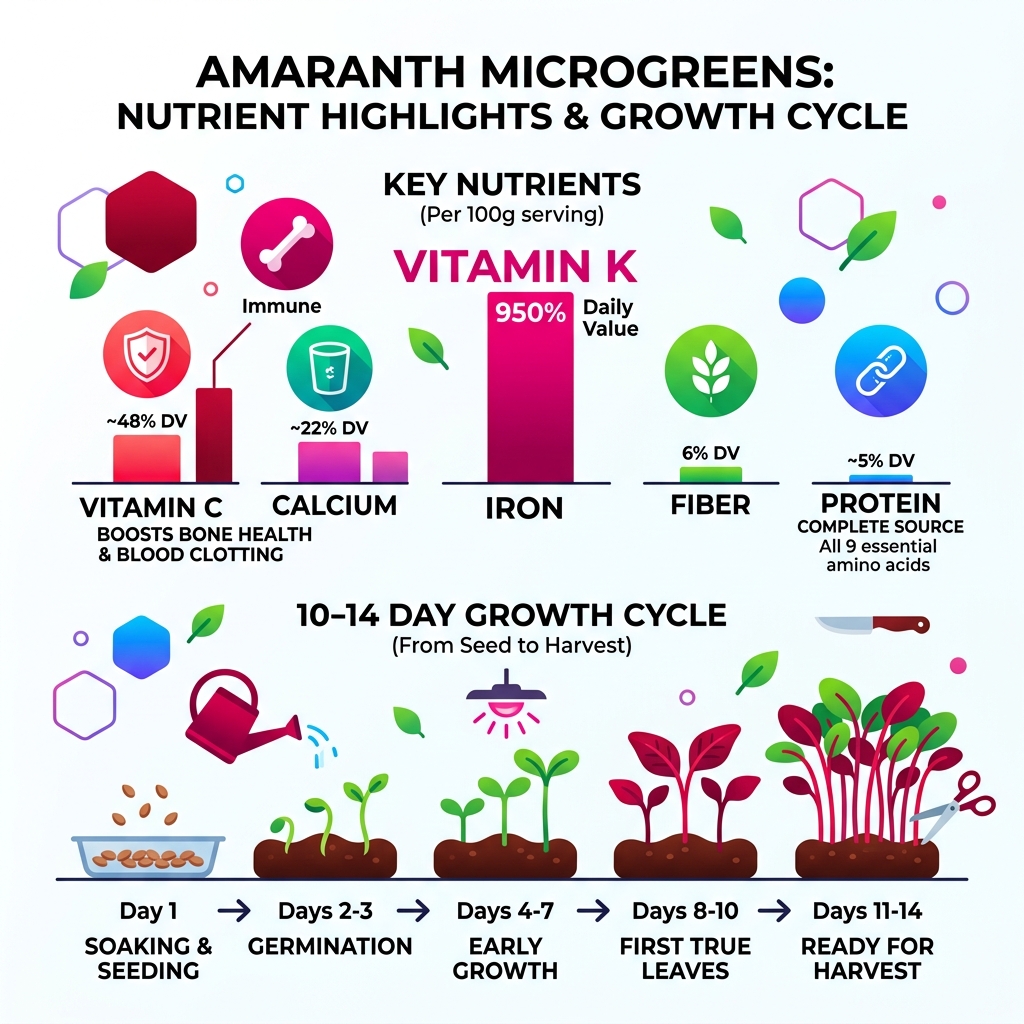
Here is a quick snapshot of what you get per 100g of red amaranth microgreens:
| Nutrient | Amount per 100g | % Daily Value |
|---|---|---|
| Calories | 23 kcal | 1% |
| Protein | 2.46g | ~5% |
| Dietary Fiber | 2.2g | 6% |
| Vitamin K | 1,140 µg | 950% |
| Vitamin C | 43.3 mg | ~48% |
| Calcium | 215 mg | ~22% |
| Iron | 2.32 mg | ~13% |
| Potassium | 611 mg | ~18% |
| Folate | 85 µg | ~21% |
The standout number? 950% of your daily Vitamin K needs in a single 100g serving. A 2012 USDA-linked study found that amaranth ranked highest for Vitamin K concentration among 25 microgreen varieties tested.
These tiny greens are also a complete protein source, containing all nine essential amino acids — including lysine, which is often missing from plant-based foods.
Whether you want to boost your bone health, support your immune system, or simply add more nutrients to your meals without extra calories, red garnet amaranth microgreens are hard to beat.
What Are Amaranth Microgreens?
When we talk about amaranth microgreens, we are referring to the young, vibrant seedlings of the Amaranthus plant. While there are over 75 species of amaranth worldwide, the most popular variety for home growers is the Red Garnet (Amaranthus tricolor). These tiny plants are harvested just after they have developed their first set of “true leaves,” usually when they are between one and two inches tall.
The story of amaranth is as rich as its color. It boasts a 5,000-year heritage, serving as a cornerstone of the diet for ancient civilizations in South America, including the Aztecs, Mayans, and Incas. To the Aztecs, amaranth was more than just food; it was a sacred plant used in religious ceremonies. They ground the seeds into flour to make traditional foods, a practice that continues in various forms today.
Technically, amaranth is classified as a “pseudo-grain.” This means that while we use it similarly to cereal grains like wheat or oats, it doesn’t actually belong to the grass family. Instead, it is related to beets and spinach. This botanical heritage explains why the microgreens have such a delightful, earthy flavor profile. You can learn more about the fascinating History of amaranth cultivation to see how this “ancient grain” transitioned from a ceremonial staple to a modern superfood.
Today, we appreciate amaranth microgreens not just for their history, but as a “functional food”—a food that provides health benefits beyond basic nutrition. Their striking fuchsia stems and delicate leaves make them a favorite for culinary aesthetics, but as we are about to see, the beauty of these greens is definitely more than skin deep.
Amaranth Microgreens Nutrition Facts: A Deep Dive
To truly understand why we call these “tiny but mighty,” we need to look at the numbers. The amaranth microgreens nutrition facts are staggering when compared to many other leafy greens. One of the most important things to realize is that microgreens are often more nutrient-dense than their mature counterparts.
Research suggests that microgreens can contain anywhere from 4 to 40 times the nutrient concentration of mature plants. In the case of amaranth, the young shoots are a concentrated source of vitamins and minerals that the plant uses to fuel its early growth.
| Nutrient | Microgreen (100g) | Mature Leaf (100g) |
|---|---|---|
| Energy | 23 kcal | 23 kcal |
| Vitamin K | 1140 µg | 1140 µg* |
| Vitamin C | 43.3 mg | ~41 mg |
| Calcium | 215 mg | 215 mg |
| Iron | 2.32 mg | 2.32 mg |
(Note: While some values are similar, the bioavailability and concentration of specific antioxidants are often higher in the microgreen stage.)
The most shocking statistic in the nutritional profile is the Vitamin K content. Providing 1,140 μg per 100g, amaranth microgreens deliver roughly 950% of the Recommended Dietary Allowance (RDA). This makes amaranth one of the single best dietary sources of Vitamin K on the planet. This isn’t just our opinion; Scientific research on microgreen vitamin concentrations conducted by the University of Maryland and the USDA confirmed that amaranth topped the charts for this essential nutrient.
Macronutrients and Amaranth Microgreens Nutrition Facts
While most people look to greens for vitamins, amaranth is an outlier because of its impressive protein profile. At approximately 2.46g of protein per 100g (accounting for about 16% of its dry weight), it is exceptionally high for a leafy vegetable.
What makes this protein special is its quality. Amaranth is one of the few plant sources that provides a “complete protein.” It contains all nine essential amino acids, including lysine. Lysine is an amino acid that is typically very low in other grains and greens, making amaranth microgreens a vital addition for vegetarians and vegans looking to balance their amino acid intake.
Furthermore, these greens are excellent for weight management. With only 23 calories per 100g and a healthy dose of dietary fiber (2.2g), they help you feel full without adding a significant caloric load. High-fiber diets are consistently linked to better weight control and metabolic health, as noted in this Research on fiber and weight management.
Micronutrient Density and Amaranth Microgreens Nutrition Facts
Beyond the “big hitters” like Vitamin K and C, amaranth microgreens are packed with a spectrum of essential minerals and phytonutrients.
- Potassium (611 mg): Essential for heart health and maintaining healthy blood pressure levels.
- Folate (85 µg): Crucial for DNA repair and especially important during pregnancy for cell creation.
- Manganese & Magnesium: These minerals play key roles in bone health and hundreds of biochemical reactions in the body.
- Antioxidants: Red amaranth is rich in anthocyanins—the pigments that give the plant its red color. These compounds are powerful anti-inflammatories.
- Carotenoids: You’ll find significant amounts of Beta-carotene, Lutein, and Zeaxanthin, all of which are vital for eye health and protecting cells from oxidative stress.
To see the full breakdown of how these antioxidants function, you can explore this Study on antioxidant components in amaranth, which highlights the plant’s high antioxidant capacity.
Top Health Benefits of Consuming Amaranth Microgreens
Adding these vibrant greens to your diet isn’t just about the numbers on a chart; it’s about how those nutrients transform your health.
Bone Health and Blood Clotting
The massive amount of Vitamin K in amaranth microgreens serves two primary functions. First, it is essential for blood clotting, helping your body heal wounds efficiently. Second, it plays a critical role in bone health by aiding the production of osteocalcin, a protein required to bind calcium to the bone matrix. Regular consumption can help protect against osteoporosis and maintain bone density as we age.
Immune System Support
With nearly 50% of your daily Vitamin C in a 100g serving, amaranth microgreens are a powerful ally for your immune system. Vitamin C stimulates the production of white blood cells and acts as an antioxidant to protect the body against infections.
Anemia Prevention
Amaranth is a notable source of plant-based iron (2.32 mg per 100g). When combined with its high Vitamin C content (which enhances iron absorption), it becomes an excellent dietary tool for preventing anemia and boosting energy levels.
Heart Health and Inflammation
The anthocyanins and potassium found in red amaranth help reduce systemic inflammation and support cardiovascular function. By fighting free radicals, these microgreens may even help reduce the risk of chronic diseases. For a broader look at how this plant supports wellness, check out the WebMD on health benefits of amaranth.
How to Grow and Store Your Own Superfood
At FinanceOrbitX, we love things that offer a high “return on investment,” and amaranth microgreens are exactly that. For the price of a few seeds and a little bit of soil, you get a continuous supply of premium nutrition.
The Growing Process
- Seeds: Always start with high-quality, organic, non-GMO seeds. Red Garnet is our top pick for its color and flavor.
- Preparation: Fill a shallow tray with 1-2 inches of quality potting soil or cocopeat. Level the surface and mist it until damp.
- Sowing: Broadcast the seeds evenly across the surface. You don’t need to soak amaranth seeds beforehand.
- Blackout Phase: Cover the tray for 2–3 days. This “blackout” period encourages the seedlings to stretch, making them easier to harvest later.
- Light and Water: Once the seeds have sprouted, expose them to light. They prefer 12–16 hours of indirect sunlight or a dedicated LED grow light. Bottom watering is the secret to success here; place your tray in a larger basin of water for a few minutes so the soil soaks up moisture without getting the fragile leaves wet.
- Harvest: In 10–14 days, when the greens are about 2 inches tall, snip them just above the soil line with clean scissors.
For a deeper look at how microgreens can improve your food security, read this Guide to growing microgreens for security.
Storage Tips
To keep your harvest fresh, follow these steps:
- Keep them dry: Do not wash your microgreens until right before you eat them.
- Airtight container: Place them in a sealed container or a glass jar with a paper towel to absorb excess moisture.
- Refrigerate: They will stay crisp and nutrient-dense for 5–7 days in the fridge.
Frequently Asked Questions about Amaranth Microgreens
Are amaranth microgreens better eaten raw or cooked?
We always recommend eating amaranth microgreens raw. Heat can destroy sensitive vitamins like Vitamin C and certain antioxidants. They are best used as a fresh garnish, tossed into salads, or blended into smoothies. If you do want to use them in warm dishes, like soups, add them at the very last second before serving. For inspiration, check out these Microgreen soup recipes.
Can I eat amaranth microgreens if I have kidney stones?
Like many leafy greens (including spinach and beets), amaranth contains oxalates. In susceptible individuals, high oxalate intake can contribute to the formation of calcium oxalate kidney stones. While the levels in a typical serving of microgreens are generally lower than in mature spinach, if you have a history of kidney stones, you should consult a healthcare professional. Balancing your intake with calcium-rich foods can sometimes help mitigate oxalate absorption.
How do amaranth microgreens taste in daily meals?
They have a mild, earthy flavor that many people compare to beets or a very mild spinach. There is a subtle sweetness that makes them incredibly versatile. We love adding a handful to a morning smoothie for a nutrient boost that doesn’t overpower the fruit flavors. You can find more ideas in these Microgreen juice recipes.
Conclusion
At FinanceOrbitX, our goal is to help you build a “wealthy” life, starting with your health. Amaranth microgreens are one of the most cost-effective and efficient ways to flood your body with essential vitamins and minerals. Whether you are a first-time gardener or a seasoned pro, the amaranth microgreens nutrition facts make a compelling case for why these fuchsia beauties deserve a permanent spot on your windowsill.
Ready to take the next step in your home horticulture journey? Explore our Microgreens health benefits guide to learn more about how these tiny plants can lead to a big change in your well-being. Happy growing!
