
Why You Should Stop Buying and Start Growing Your Own Microgreens
Learning how to microgreen at home is simpler than most people think — and the payoff is huge.
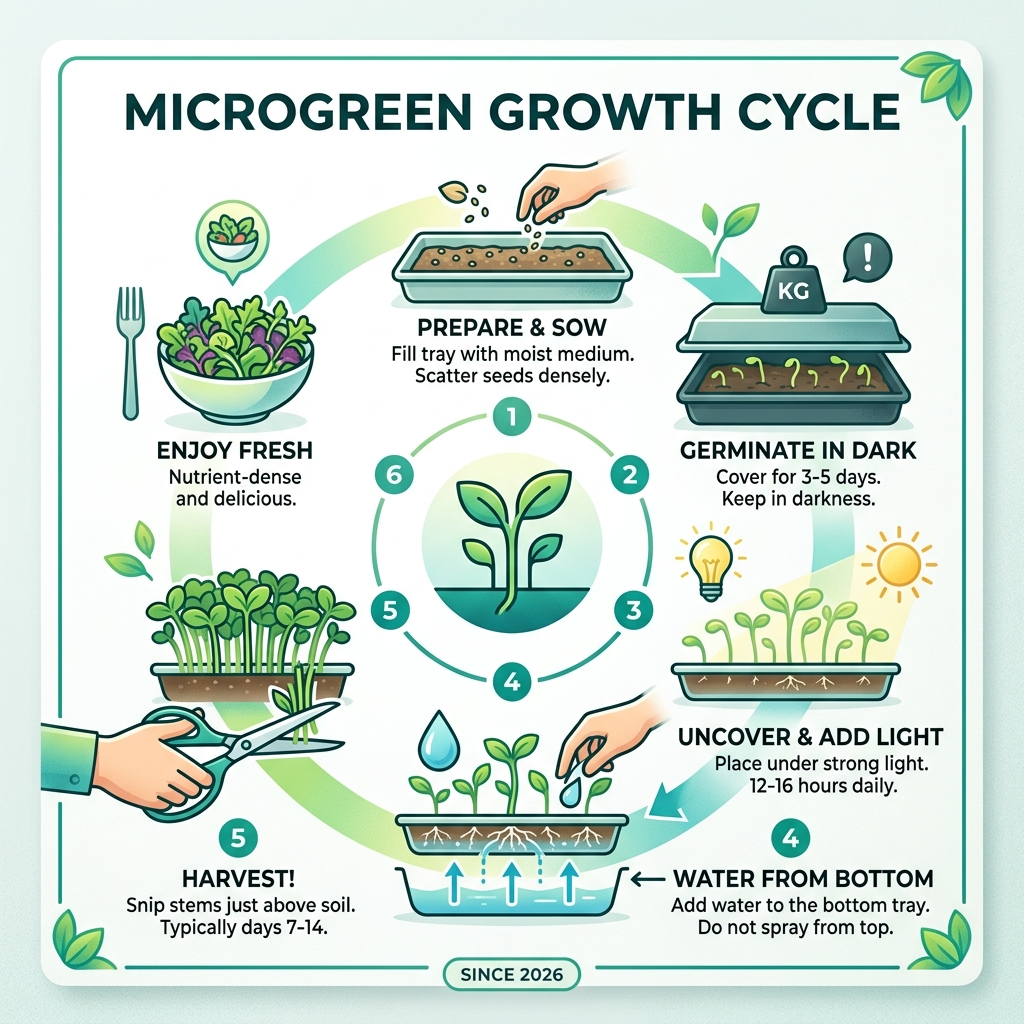
Here’s a quick overview to get you started:
- Get a shallow tray and fill it with 1-1.5 inches of moist potting mix or a growing mat.
- Scatter seeds evenly and densely across the surface.
- Cover the tray with another tray and a weight for 3-5 days to germinate in the dark.
- Uncover and add light — 12-16 hours per day from a window or grow light.
- Water from the bottom daily to keep roots moist without causing mold.
- Harvest in 7-14 days by snipping stems just above the soil line with clean scissors.
That’s the core of it. No outdoor space. No gardening experience. Just seeds, soil, light, and water.
Store-bought microgreens can cost $5-$10 per tray. Growing your own takes less than two weeks and costs a fraction of that. And the nutrition? Research suggests microgreens can contain up to 40 times more nutrients than their fully grown counterparts.
Whether you have a spare windowsill or a small shelf in your kitchen, you can grow a steady supply of fresh, nutrient-dense greens year-round — even in the middle of winter.
This guide walks you through everything: the right supplies, best beginner varieties, step-by-step growing instructions, and how to fix common problems like mold or leggy growth.
Microgreens vs. Sprouts: Understanding the Basics
To master how to microgreen, we first need to clear up a common misconception: microgreens are not the same thing as sprouts. While they both start from the same seeds, the growing methods and the parts you eat are quite different.
Sprouts are the very first stage of a plant’s life. They are typically grown in water (hydroponically) in jars, kept in the dark, and harvested within 3 to 5 days. When you eat a sprout, you eat the whole thing—seed, root, and tiny pale stem. Because they grow in warm, wet, dark conditions, sprouts carry a higher risk of bacterial contamination.
Microgreens, on the other hand, are the “toddler” stage of the plant. They are grown in a medium like soil or a fiber mat and require light to perform photosynthesis. We harvest them once they develop their first set of “seed leaves,” known as cotyledons, and sometimes their first set of true leaves. Unlike sprouts, you only eat the stems and leaves, snipping them off above the soil line. This stage of growth allows the plant to develop much more complex flavors and a significantly higher concentration of nutrients.
According to Scientific research on microgreen nutrient concentrations, these tiny greens are nutritional powerhouses. Because they are harvested during a period of “juvenile vigor,” all the energy and nutrients intended to grow a large plant are concentrated into a tiny package. For a deeper dive into these differences, check out our Microgreens 101: A Beginner’s Guide.
Comparison Table: Microgreens vs. Sprouts
| Feature | Sprouts | Microgreens |
|---|---|---|
| Growth Medium | Water/Jars | Soil, Coir, or Mats |
| Light Requirement | None (Darkness) | High (Sun or Grow Lights) |
| Harvest Time | 3–5 Days | 7–21 Days |
| Parts Eaten | Seed, Root, and Stem | Stem and Leaves Only |
| Flavor Profile | Mild/Crunchy | Intense/Vibrant |
Essential Supplies for Your Home Setup
One of the best things about learning how to microgreen is that you don’t need a backyard or a greenhouse. You can turn a kitchen counter or a small shelf into a high-yield garden. However, having the right gear makes the process much more “hands-off” and successful.

At FinanceOrbitX, we recommend a “two-tray system” for the best results. You will need:
- Trays with holes: These are your growing containers. Drainage is vital because microgreen roots will drown if they sit in stagnant water. We suggest using Trays with holes that are about 10×20 inches but shallow (around 1-2 inches deep).
- Trays without holes: These act as a reservoir. You place the tray with holes inside this solid tray. This allows you to “bottom water,” which keeps the leaves dry and prevents mold. You can find Trays without holes designed to fit perfectly.
- Growing Medium: While you can use coconut coir or hemp mats, many beginners find the best results with a high-quality potting mix. Pro-Mix HP soil is a fantastic choice because it provides great aeration and drainage.
- Mister Bottle: For the first few days of germination, a gentle spray is better than a heavy pour.
For a complete checklist of everything from pH testers to shelving, visit our Beginner’s Guide to Microgreens Garden Setup.
Choosing the Best Seeds to Microgreen
Not all seeds are created equal when you are starting out. We suggest choosing “easy” varieties that germinate quickly and are resistant to common issues. Here are our top picks:
- Radish: The undisputed king for beginners. They sprout in 24 hours and can be harvested in as little as 6 days. They have a spicy, peppery kick.
- Broccoli: These are incredibly mild and famous for their high sulforaphane content (a powerful antioxidant).
- Pea Shoots: These grow tall and crunchy with a sweet flavor just like fresh peas. They are one of the few varieties that might give you a second harvest if you cut them correctly.
- Sunflower: These require a bit more work (soaking the seeds for 8-12 hours), but the nutty, crunchy result is a fan favorite.
Check out our full list of Top Microgreens Seeds for Home Gardening to find the flavor profile that fits your kitchen.
Lighting and Watering Tools to Microgreen Like a Pro
While a sunny south-facing window can work, it often leads to “leggy” plants that lean toward the glass. For consistent, professional results, artificial light is a game-changer.
We recommend the Barrina four-foot T8 full spectrum light. These LEDs are energy-efficient and provide the specific wavelengths (blue and red) that microgreens need to grow thick and vibrant. To make your life easier, plug your lights into a Light timer set for 12-16 hours a day. This ensures your “crops” get consistent care even if you’re busy.
When it comes to hydration, more microgreen crops are killed by overwatering than underwatering. Learn The Right Way to Water Your Microgreens to avoid the dreaded “damping off” disease.
Step-by-Step Guide on How to Microgreen Indoors
Now for the fun part: getting your hands dirty! Follow this process to ensure a bountiful harvest. For a more detailed walkthrough, see The Ultimate Step-by-Step Guide to Growing Microgreens (Without Killing Them).
- Prepare the Tray: Fill your tray with holes with about 1 to 1.5 inches of moist soil. Smooth it out so the surface is flat—this prevents seeds from bunching up in “valleys.”
- Seed Density: This is where most people guess, but we prefer precision. Use a Digital scale to weigh your seeds. For a standard 10×20 tray, you typically want about 10g of broccoli seeds or 22g of radish seeds.
- Sow the Seeds: Broadcast the seeds evenly across the soil. You want them to be close but not overlapping. Imagine a “carpet” of seeds.
- Mist and Stack: Give the seeds a light misting with water to settle them. Now, instead of covering them with soil, we are going to use the “stacking method.”
Managing the Blackout Phase to Microgreen Successfully
The “Blackout Phase” is a professional secret that helps you how to microgreen with much better results.
Place an empty tray (without holes) directly on top of your seeds. Then, place a weight—like a brick or a heavy stone—on top of that empty tray. This might seem counterintuitive, but it serves two purposes:
- Humidity: It locks in moisture during the critical germination period.
- Stem Strength: The weight forces the tiny seedlings to push upward with all their might. This results in much thicker, stronger stems that are easier to harvest later.
Keep your seeds in this weighted darkness for 3 to 5 days. Once the seedlings are about half an inch tall and are starting to push the top tray up themselves, it’s time to remove the weight and introduce them to the light.
Troubleshooting and Harvesting Your Crop
Even with the best setup, you might run into a few hurdles. The most common enemy is mold. If you see white, fuzzy growth, don’t panic—first, check if they are “root hairs,” which are normal. If it’s definitely mold, you need to improve your airflow.
Using a fan to keep air moving and sanitizing your trays between uses with ZeroTol disinfectant are the best ways to keep your garden healthy. If your plants look “leggy” (tall, thin, and pale), they are starving for light. Move your grow lights closer—about 6 to 12 inches above the canopy. For more tips, see How to Avoid Mold in Your Microgreen Garden.
When and How to Harvest
Most microgreens are ready when they are 2 to 3 inches tall and have their first set of leaves fully open.
- The Method: Use sharp, clean kitchen shears or a harvesting knife.
- The Technique: Hold a small bunch of greens gently and snip them about half an inch above the soil.
- The Timing: Harvest in the morning when the plants are most hydrated for the crispest texture.
Learn the nuances of different varieties in our guide on Proper Techniques for Harvesting Microgreens.
Frequently Asked Questions about Growing Microgreens
Can microgreens regrow after harvesting?
For the vast majority of varieties, the answer is no. Because you are cutting the plant below its growth point, it won’t produce new leaves. After harvesting, we recommend composting the soil and root mass and starting fresh. The exception is pea shoots; if you leave at least one “node” (a leaf junction) on the stem, they may produce a second, smaller harvest, though the quality usually declines.
How long do microgreens last in the fridge?
When stored properly, home-grown microgreens can last 10-12 days. The key is keeping them dry. After harvesting, do not wash them until you are ready to eat them. Place them in an airtight container or a reusable silicone bag with a dry paper towel to absorb any excess moisture.
Why are microgreens more nutritious than mature plants?
Microgreens possess “juvenile vigor.” They contain all the vitamins and minerals the plant needs to grow into a large vegetable, but concentrated into a tiny sprout. For example, broccoli microgreens can have significantly higher concentrations of sulforaphane than a mature head of broccoli. On average, they are 40 times more nutrient-dense than their mature counterparts!
Conclusion
At FinanceOrbitX, we believe that gardening should be accessible to everyone, regardless of their budget or living situation. Learning how to microgreen is the ultimate “financial win” for your kitchen—it reduces your grocery bill, eliminates plastic waste from store-bought containers, and provides you with the freshest possible food.
Whether you’re using your harvest as a vibrant garnish for a five-star steak or tossing a handful into your morning smoothie, the satisfaction of eating something you grew yourself is unmatched. Ready to expand your indoor jungle? Explore More info about indoor gardening services and start your next tray today!
