
Why a DIY Microgreen Kit Is the Smartest Way to Grow Superfoods at Home
Building a diy microgreen kit is simpler than most beginners expect. Here’s what you need to get started:
Quick-start essentials:
- 2 shallow trays (one with drainage holes, one without)
- Organic seed starting mix or coco coir
- Non-GMO microgreen seeds (broccoli, radish, or pea shoots work great)
- A spray bottle or mister
- A light source (windowsill or full-spectrum LED)
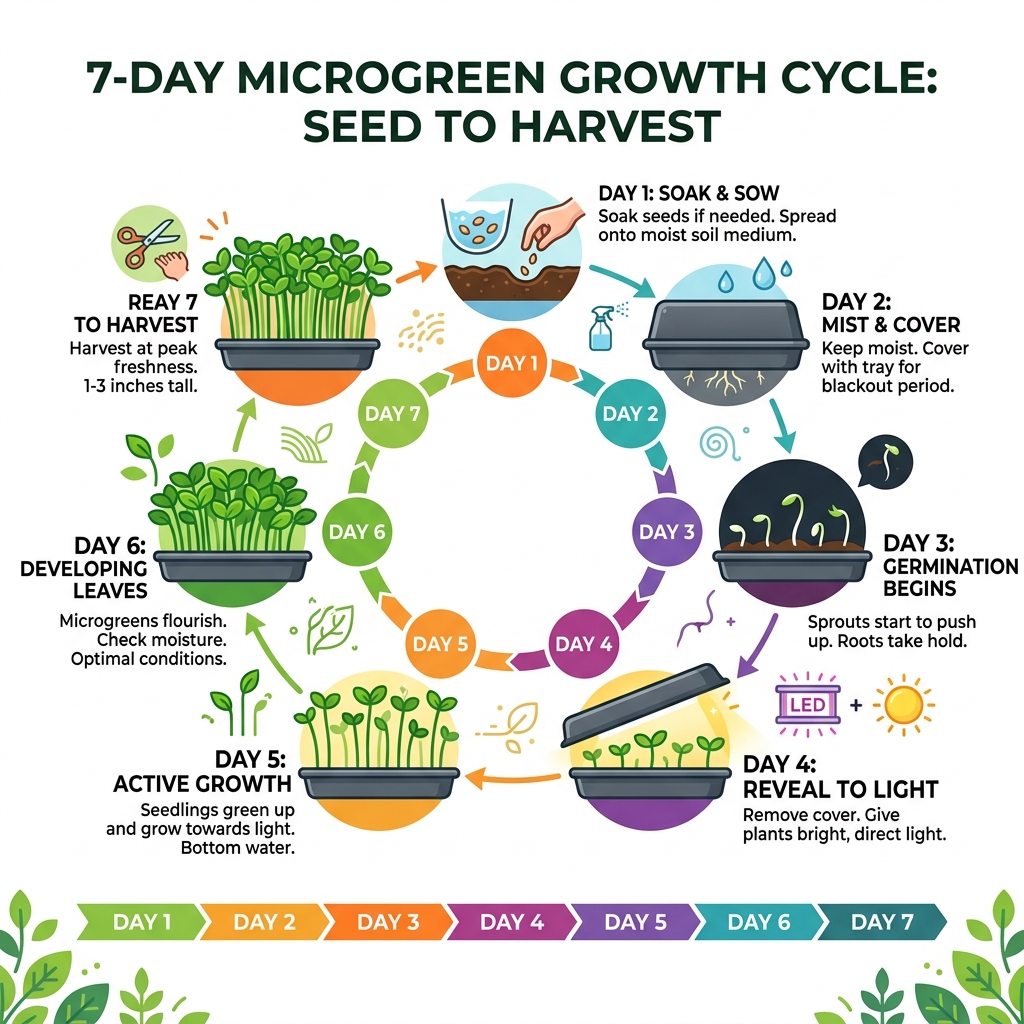
From seed to harvest in just 7-10 days — no garden, no experience, and very little money required.
Microgreens are young vegetable seedlings, harvested when they’re just 1-3 inches tall. They sit somewhere between a sprout and a full-grown plant. And despite their small size, they pack a serious nutritional punch — up to 40 times the vitamins of their fully mature counterparts.
The good news? You don’t need a fancy pre-made kit to grow them. A basic DIY setup costs a fraction of the price and gives you full control over what goes into your food.
Whether you’re growing on a kitchen windowsill in winter or in a basement under grow lights, microgreens are widely considered the easiest entry point into home gardening. You can have your first harvest ready before most houseplants even wake up.
This guide walks you through everything — from picking your seeds to harvesting your first tray.
Why Grow Microgreens at Home?
If you are looking for a way to boost your health without spending a fortune on synthetic supplements, your kitchen counter is the perfect place to start. We often call microgreens “living supplements” because they are harvested at the peak of their nutritional potential. Research shows that these tiny greens can contain up to 40 times the vitamins and enzymes of mature vegetables.
Beyond the health benefits, a diy microgreen kit offers unparalleled food security. Unlike traditional gardening, which is at the mercy of frost, pests, and seasons, microgreens can be grown year-round indoors. Whether it is the dead of winter or a scorching summer, you can produce a fresh crop of greens in as little as 7 to 10 days.
For those of us living in tight urban spaces, microgreens are a dream come true. You don’t need an acre of land; a small shelf or a windowsill will do. Plus, the flavor profiles are incredible. From the spicy kick of radish to the sweet, nutty crunch of pea shoots, these greens elevate any salad, smoothie, or sandwich. For a deeper dive into why these tiny plants are so powerful, check out our ultimate-guide-to-growing-microgreens-at-home.
Essential Supplies for Your DIY Microgreen Kit
One of the most common myths is that you need expensive, high-tech equipment to grow microgreens. In reality, the best diy microgreen kit is often made from simple items you might already have around the house.

To build a professional-grade setup on a budget, we recommend focusing on these core supplies:
- Trays: You need two trays of the same size. One should have drainage holes (the planting tray), and the other should be solid (the watering tray). Shallow trays (1–2 inches deep) are best because microgreen roots don’t need much depth, and using shallow trays saves on soil costs.
- Growing Medium: This is the “bed” for your seeds. We suggest an organic seed starting mix or coco coir.
- Misting Bottle: A simple spray bottle is essential for keeping the seeds moist during the germination phase.
- Weight and Cover: You will need something to cover the seeds (like an upside-down tray or a piece of cardboard) and a weight (like a brick or a heavy book) to press the seeds into the soil initially.
- Watering Can: A small watering can or a simple pitcher helps with bottom-watering once the plants have sprouted.
For a full breakdown of how to arrange these items for maximum efficiency, see our beginners-guide-to-microgreens-garden-setup.
Choosing the Best Seeds for Your DIY Microgreen Kit
The seeds are the heart of your kit. While you can technically grow almost any vegetable as a microgreen, some are much easier for beginners. We always recommend choosing Non-GMO and organic seeds to ensure your “superfood” is as clean as possible.
- Broccoli: Mild flavor, incredibly healthy, and very reliable.
- Radish (Daikon or Purple): These grow incredibly fast (sometimes in just 6 days) and have a spicy flavor.
- Sunflower: These produce thick, crunchy shoots that taste like sunflower seeds.
- Pea Shoots: Sweet and hardy, these are a favorite for kids.
- Arugula: Provides a peppery punch that is perfect for Italian dishes.
Microgreen seeds are often sold in bulk because you plant them much more densely than you would in a traditional garden.
Selecting a Growing Medium
Your choice of growing medium impacts how often you need to water and how clean your harvest will be.
- Coco Coir: Made from coconut husks, this is a sustainable and pH-neutral option that holds water exceptionally well.
- Organic Seed Starting Mix: This is lighter and fluffier than regular potting soil, making it easier for tiny roots to penetrate.
- Peat Moss: While effective, we often lean toward coco coir as a more eco-friendly alternative.
Regardless of what you choose, adding mycorrhizae to your mix can help the young roots absorb nutrients more effectively.
Soil-Based vs. Hydroponic DIY Setups
When building your diy microgreen kit, you must decide between a soil-based or a hydroponic approach. Both have their merits, and your choice depends on how much “mess” you are willing to tolerate and the flavor profile you want.
| Feature | Soil-Based Setup | Hydroponic Setup |
|---|---|---|
| Cleanliness | Can be messy; involves dirt | Very clean; uses water and mats |
| Growth Speed | Standard (7-14 days) | Often slightly faster |
| Flavor Density | High; soil adds minerals | Clean, but may need liquid nutrients |
| Ease of Use | Forgiving for beginners | Requires more precise watering |
| Sustainability | Soil can be composted | Mats (like hemp or felt) are often biodegradable |
Soil-based setups are generally more forgiving because the soil acts as a buffer for moisture. Hydroponic setups use growing mats (like BioStrate felt) and are preferred by those who want a “sterile” kitchen environment.
Step-by-Step: Setting Up and Planting Your Kit
Ready to plant? Follow this simple process to ensure your first harvest is a success.
- Prep the Soil: Fill your tray with about 1 inch of growing medium. Level it out using a small hand rake or even a rolling pin. You want a flat surface so the seeds don’t bunch up in “valleys.”
- Moisten: Mist the soil until it is damp but not soaking wet.
- Sow the Seeds: Spread your seeds evenly across the surface. Think of it like “sprinkling salt on a pretzel”—you want a dense layer, but the seeds shouldn’t be piled on top of each other.
- The Weighted Blackout Phase: This is the secret to strong microgreens. Place your second tray (the one without holes) directly on top of the seeds. Place a weight (about 2–5 lbs) on top. This mimics the pressure of soil and forces the roots to grow deep and strong. Keep them in the dark for 2–3 days.
- Check for “Liftoff”: After a few days, you will see the seedlings actually pushing the weighted tray up. This is your sign to remove the cover and introduce light.
- Bottom Water: Instead of spraying the leaves (which can cause mold), pour water into the bottom (solid) tray. The soil in the top tray will “wick” the water up through the drainage holes.
Lighting and Maintenance for Indoor Success
Once your microgreens are out of the blackout phase, they need light to photosynthesize and turn green. While a bright windowsill can work, it often leads to “leggy” plants that lean toward the glass.
For the best results, we recommend using three wand lights or full-spectrum LED strips. These can be positioned just a few inches above the trays. Ideally, your greens should receive at least 4 to 6 hours of strong direct light daily.
Pro Tip: Airflow is your best friend. A small desk fan pointed toward your trays will prevent stagnant air and significantly reduce the risk of mold, which is the most common challenge for home growers.
How to Maintain and Reuse Your DIY Microgreen Kit
One of the best things about a diy microgreen kit is that it is sustainable. Unlike some store-bought options, you don’t have to throw the whole thing away after one use.
- Sanitize: After harvesting, wash your trays with hot soapy water or a diluted vinegar solution to kill any lingering bacteria or mold spores.
- Compost: The “root mat” left behind in the soil is excellent for your compost pile. While you shouldn’t reuse the soil immediately for microgreens (due to the risk of pathogens and lack of nutrients), it makes great garden fertilizer later.
- Cost-Efficiency: Once you have the trays and lights, your only ongoing costs are seeds and soil, which usually average out to just a couple of dollars per tray.
Harvesting and Troubleshooting Common Mistakes
Most microgreens are ready to harvest in 7 to 10 days, or once the “true leaves” begin to emerge. Use sharp kitchen scissors to snip the greens just above the soil line.
Common Mistakes to Avoid:
- Overwatering: If the soil is soggy, you will get mold. Use the “weight test”—pick up the tray; if it feels light, it needs water. If it’s heavy, leave it alone.
- Seeding too densely: If seeds are piled up, they won’t get enough airflow, leading to “damping off” (seedling death).
- Low Light: If your stems are long, pale, and falling over, they are “leggy” and screaming for more light.
Frequently Asked Questions about DIY Microgreens
How much does a DIY setup cost compared to pre-made kits?
A professional pre-made kit can cost anywhere from $40 to over $150. In contrast, a diy microgreen kit using repurposed trays or basic non-draining bottom trays from a garden store can be set up for under $20. The biggest savings come from buying seeds in bulk rather than pre-measured packets.
What are the best beginner-friendly seed varieties?
Radish, broccoli, and kale are the “Big Three” for beginners. They germinate quickly, are resistant to most molds, and provide a high yield. If you want to try something unique, a “spicy salad mix” is a great way to get a variety of flavors from a single tray.
Can I grow microgreens in a small kitchen without sunlight?
Absolutely! In fact, many professional growers prefer to grow away from windows to have total control over the light. Using small LED grow lights allows you to grow microgreens in closets, basements, or tucked-away corners of your kitchen.
Conclusion
At FinanceOrbitX, we believe that smart living involves both financial savvy and personal well-being. Crafting your own diy microgreen kit is a perfect example of this—it saves you money on expensive grocery store produce while providing you with the freshest, most nutrient-dense food possible.
By following this guide, you are not just growing plants; you are taking control of your nutrition and building a sustainable hobby that pays dividends in health. Ready to get your hands dirty? Start building your setup with our recommended supplies and join the ranks of home “micro-farmers” today!
