
Growing Microgreens at Home Is Easier Than You Think
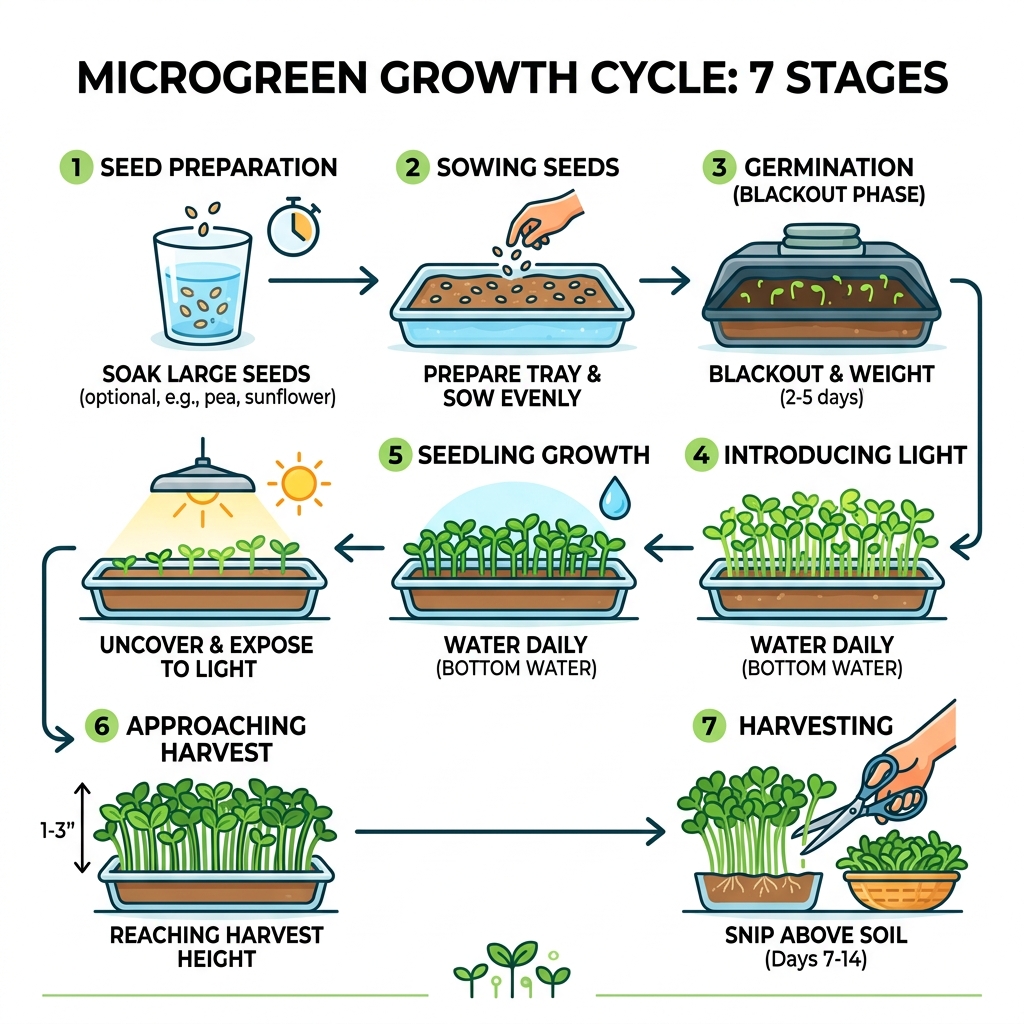
Learning how to grow microgreens step by step takes less than two weeks and requires only a few basic supplies — here’s the quick version:
- Prepare your tray – Fill a shallow tray with 1-2 inches of moist growing medium
- Sow your seeds – Spread seeds evenly at the right density (soak large seeds like sunflower or pea for 8-12 hours first)
- Blackout phase – Cover the tray and weigh it down for 2-5 days until seeds germinate
- Introduce light – Uncover and give your greens 6-8 hours of natural light (or up to 18 hours under grow lights)
- Water daily – Bottom-water to keep the medium moist without soaking the stems
- Harvest – Cut just above soil level when seedlings reach 1-3 inches tall, usually days 7-14
That’s the whole process in a nutshell.
Most first-time growers are surprised by how forgiving microgreens are. You don’t need a garden, a green thumb, or expensive equipment. A windowsill, a tray, some seeds, and a spray bottle are enough to get started.
And the payoff is real. Microgreens can contain 4 to 40 times more vitamins and antioxidants than their fully-grown counterparts. A single tray costs roughly $2-4 to grow — yet produces the equivalent of several store-bought clamshells that can run $5-8 each.
Whether you’ve killed every plant you’ve ever owned or you’re just starting your home gardening journey, this guide will walk you through every step without overwhelming you.
Understanding Microgreens: More Than Just a Garnish
We often see microgreens as a tiny, colorful tuft sitting atop a fancy restaurant steak, but they are so much more than a pretty face. To master how to grow microgreens step by step, we first need to understand what they actually are. Microgreens are young vegetable greens that fall somewhere between a sprout and a baby green. They are typically harvested when they are about 1 to 3 inches tall, usually once the first set of “true leaves” appears.
A common point of confusion for beginners is the difference between sprouts and microgreens. While they look similar, the growing process and safety profiles are quite different. Sprouts are grown in water, usually in a jar, and you eat the entire thing—root, seed, and stem. Microgreens, however, are grown in a medium like soil or coir. You only eat the stems and leaves, snipping them off at the soil line. This makes microgreens generally safer to consume because they grow in a drier, more ventilated environment than the damp, dark conditions required for sprouts.
| Feature | Sprouts | Microgreens |
|---|---|---|
| Growing Medium | Water only | Soil, coco coir, or mats |
| Light Requirement | Low to none | High (Sunlight or Grow Lights) |
| Parts Eaten | Seed, root, and stem | Stem and leaves only |
| Harvest Time | 2–5 days | 7–21 days |
| Flavor | Mild | Intense and concentrated |
The nutritional profile of these tiny plants is staggering. Research, such as this study on BROCCOLI MICROGREENS: A MINERAL-RICH CROP, highlights that they are packed with minerals. Broccoli microgreens, in particular, are famous for their high sulforaphane levels—a compound studied for its anti-inflammatory and cancer-fighting properties. If you want to dive deeper into the basics, check out our microgreens-101-a-beginners-guide.
In the kitchen, we love using them to add a “punch” to salads, sandwiches, smoothies, and even pizzas. They aren’t just a garnish; they are a functional, living food that adds years to your life and flavor to your plate.
Best Microgreen Varieties for Beginners
If you are just starting out, we recommend choosing “forgiving” seeds. Some varieties are like the golden retrievers of the plant world—they just want to succeed.
- Radish: These are the undisputed champions for beginners. They germinate in 2-3 days and can be ready to eat in just 6-7 days. They have a spicy, peppery kick that wakes up any sandwich.
- Broccoli: Very easy to grow and incredibly healthy. They have a mild flavor, making them a great “stealth health” addition to kids’ meals.
- Pea Shoots: These are sweet, crunchy, and taste exactly like fresh peas. Kids love them because they look like tiny vines. They also tend to be very hardy.
- Sunflower: These require a bit more work (soaking the seeds), but the result is a thick, nutty, crunchy green that is high in protein.
For a full list of what to buy, see our guide on the top-microgreens-seeds-for-home-gardening.
Essential Supplies for Your Indoor Garden
To get your indoor farm running, you don’t need a tractor, but you do need a few essentials. We believe in keeping things simple and cost-effective.
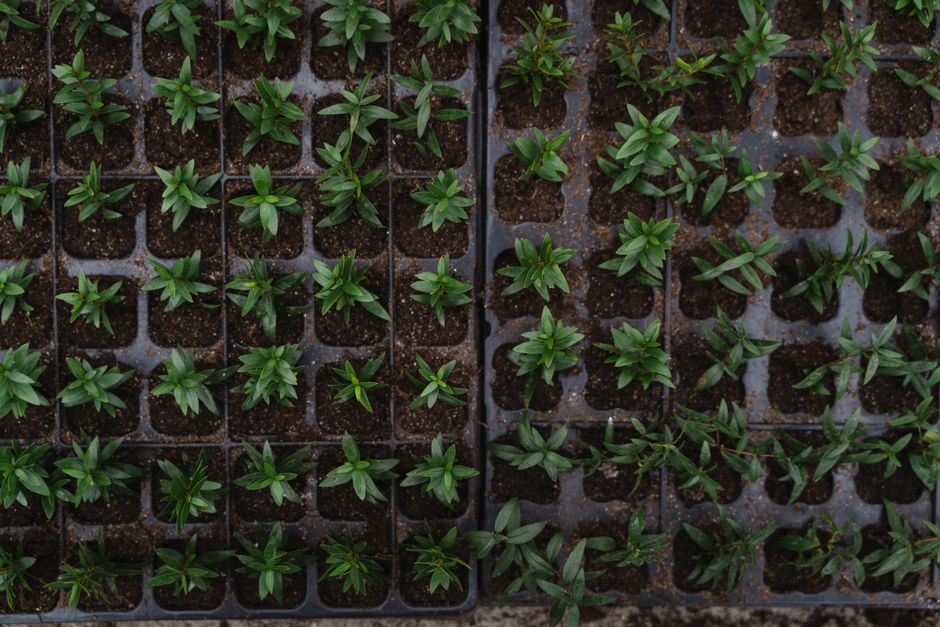
Growing Trays The industry standard is the “1020 tray” (which is 10 inches by 20 inches). We recommend having two types: one with drainage holes and one without. The tray with holes sits inside the solid tray, allowing you to “bottom-water” your plants, which keeps the leaves dry and prevents mold.
Growing Medium You have options here, and we cover them extensively in our soil-and-growing-medium-for-microgreens guide.
- Seed Starting Mix: A sterile, peat-based mix that provides great drainage.
- Coconut Coir: Made from coconut husks, this is a sustainable, pH-neutral option that holds water beautifully.
- Growing Mats: These are clean and easy (no dirt in the kitchen!), though some varieties like sunflowers prefer the “grip” of soil.
Other Basics You’ll also need a high-quality spray bottle for misting during the early stages, and a sharp pair of scissors or a knife for harvest. For a complete checklist, visit our beginners-guide-to-microgreens-garden-setup.
Choosing the Right Lighting for Growing Microgreens
Light is the fuel for your microgreens. While they don’t need much light during the first few days (the blackout phase), they need plenty once they pop their heads up.
- Natural Sunlight: A south-facing window is ideal. We look for at least 6-8 hours of direct light. Be careful in winter, as windows can be drafty and cold, which slows growth.
- LED Grow Lights: If you don’t have a sunny window, don’t worry. Simple LED shop lights or dedicated grow lights work wonders. We recommend keeping them on for 12-18 hours a day. Position the lights about 2-5 inches above the greens to prevent them from getting “leggy” (tall and weak).
For a deep dive into spectrums and timers, read our article on choosing-the-right-lighting-for-growing-microgreens.
How to Grow Microgreens Step by Step: The Complete Process
Now we get to the “dirt” of the matter. Sowing your seeds is a therapeutic process, but precision helps ensure a high yield.
Seed density is the “secret sauce.” If you sow too thinly, you get a sparse, sad-looking tray. If you sow too thickly, you risk mold and “damping off” (where the plants collapse). For smaller seeds like broccoli, aim for 10-12 seeds per square inch. For larger seeds like peas, aim for 6-8.
Scientific reviews, such as A REVIEW OF PHYTOCHEMISTRY… SUNFLOWER SEED, show that the nutrient content is locked in the seed and released during this early growth phase. To understand the biology behind this, check out demystifying-the-sprouting-process-for-microgreens. Timing is also key; you can plan your harvests by following our guide on scheduling-your-microgreen-growing-for-beginners.
How to Grow Microgreens Step by Step: Preparing Your Trays
First, ensure your trays are clean. We like to wash ours with hot, soapy water between uses to prevent any lingering pathogens.
Fill your tray with about 1-1.5 inches of your chosen medium. You don’t need a deep tray because microgreens have shallow roots. Use a flat object (or another tray) to gently press the soil down so it’s level. This prevents water from pooling in low spots. Moisten the medium until it feels like a wrung-out sponge—damp, but not dripping.
If you’re torn between methods, we compare the pros and cons in soil-vs-hydroponics-which-is-best-for-microgreens.
How to Grow Microgreens Step by Step: The Sowing and Blackout Phase
Soaking Seeds For large, hard seeds like peas, sunflowers, and wheatgrass, we recommend a “pre-soak.” Submerge them in water for 8-12 hours. This softens the shell and tells the seed, “Hey, it’s time to wake up!” Smaller seeds like radish or arugula do not need soaking.
The Blackout Period Once you’ve sown your seeds evenly across the surface, mist them one more time. Now comes the weird part: cover them. We use another tray (flipped upside down) or a piece of cardboard to block out all light.
Weighted Trays For many varieties, we actually place a weight (like a 5lb stone or a brick) on top of the cover tray. This mimics the pressure of soil and forces the roots to grow deep and strong. It also helps the seedlings shed their hulls. Keep them in this dark, weighted state for 2-5 days at a room temperature of 65-75°F.
Troubleshooting Common Growing Issues
Even the best of us run into trouble. The most common “scare” for beginners is seeing white fuzz at the base of the plants.
Mold vs. Root Hairs Don’t panic! If the fuzz is only at the root and looks like tiny, individual hairs, those are root hairs. They are a healthy part of the plant’s anatomy. If the fuzz looks like a spiderweb and moves up the stem or across the soil, that’s mold.
To prevent mold, focus on airflow. We often use a small desk fan to keep air moving around our trays. Also, ensure you aren’t overwatering. Our guide on avoid-these-common-microgreen-growing-mistake covers this in detail.
Damping Off If your healthy-looking greens suddenly fall over and die in a patch, it’s likely “damping off,” a fungal issue. This is usually caused by poor airflow or contaminated soil. If this happens, it’s best to toss that batch, sterilize your tray, and start fresh. Learn the specifics in the-right-way-to-water-your-microgreens.
Harvesting and Storing Your Homegrown Greens
The moment of truth! Most microgreens are ready when they are 1-3 inches tall and have their first set of leaves.
Harvest Timing Taste them! Radish might be perfect at day 6 for you, while someone else might want the extra spice of day 9. Use sharp, clean scissors to snip the greens just above the soil line. Try to harvest only what you need, as they are most nutritious the moment they are cut. For more pro tips, see proper-techniques-for-harvesting-microgreens.
Refrigeration and Shelf Life If you harvest a whole tray at once, make sure the greens are dry. Moisture is the enemy of shelf life. We like to place them in a sealed container or a reusable silicone bag with a dry paper towel to absorb excess moisture. They will typically last 7-14 days in the fridge (except for basil microgreens, which prefer room temperature).
Frequently Asked Questions about Microgreens
Do microgreens regrow after cutting?
Generally, no. Because we cut them below the growth node, most microgreens are a “one and done” crop. Pea shoots are the rare exception; if you leave the bottom leaf attached, they might give you a small second harvest, but it’s usually better to just replant.
How long does it take to grow microgreens step by step?
It depends on the variety! Radishes take about 6-10 days. Broccoli and sunflowers take 10-14 days. Herbs like cilantro or basil are the “slow pokes,” taking 15-25 days.
Can I reuse the soil or growing mats?
We don’t recommend reusing growing mats, as the roots become part of the mat. For soil, you can compost it and reuse it later, but we don’t recommend replanting in the same soil immediately. The old roots can rot and cause mold issues for your next batch. Start fresh for the best results!
Conclusion
At FinanceOrbitX, we believe that growing your own food is one of the smartest investments you can make for your health and your wallet. Mastering how to grow microgreens step by step is a gateway to sustainable living and year-round freshness, even in the dead of winter.
It’s magical to see those first tiny seeds push up against a heavy weight, reaching for the light. It’s a reminder of how resilient nature is—and how easy it is for us to tap into that power right on our kitchen counters.
Ready to take your indoor garden to the next level? Explore our ultimate-guide-to-growing-microgreens-at-home or browse our other resources for More info about indoor gardening. Happy planting!
