
Why Growing Microgreens Indoors Is Easier Than You Think
The best way to grow microgreens indoors is a simple, repeatable process that anyone can master in a single weekend — no garden, no experience, and no fancy equipment required.
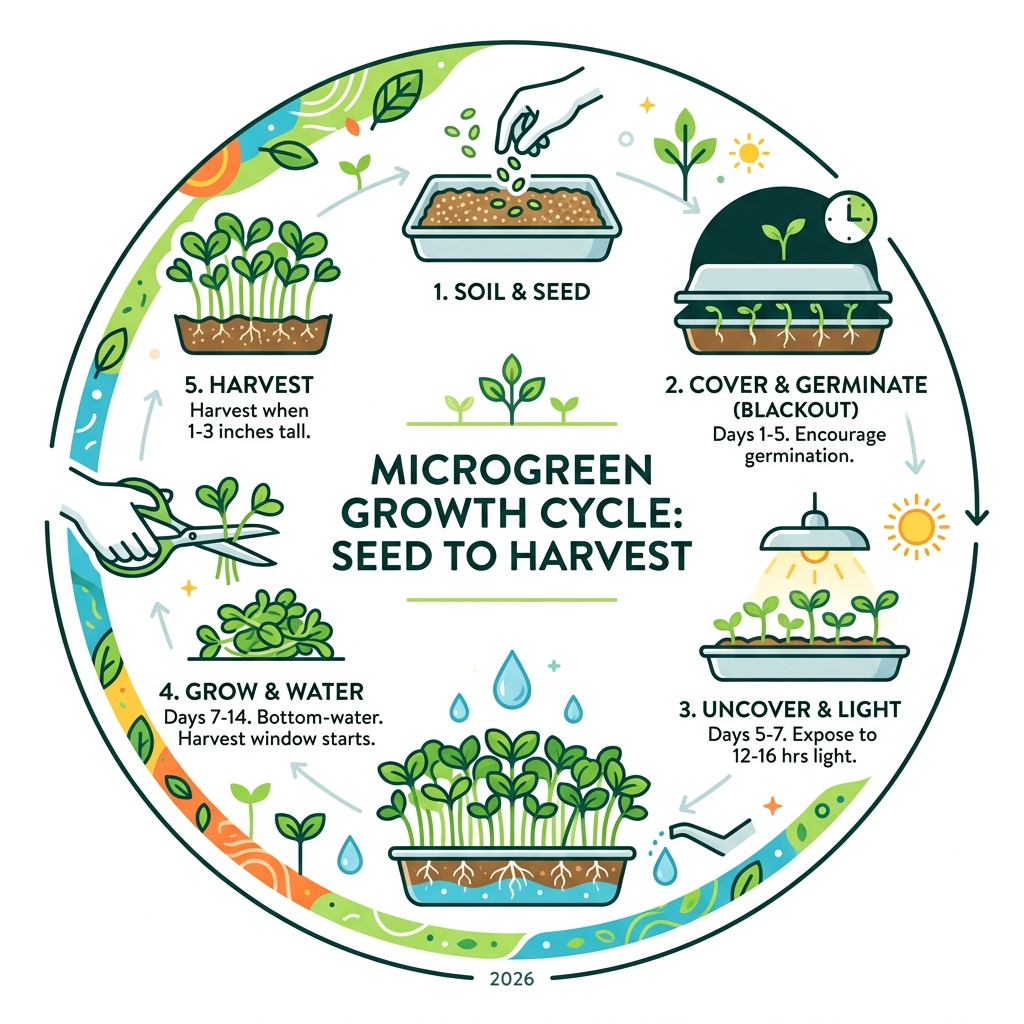
Here’s the quick answer:
- Fill a shallow tray with 1-2 inches of moist seed-starting mix or coconut coir
- Sow seeds densely and evenly across the surface
- Cover with a blackout lid for 3-5 days to encourage germination
- Uncover and place under a grow light (or a sunny south-facing windowsill) for 12-16 hours daily
- Water from the bottom to keep roots moist without wetting the stems
- Harvest with clean scissors when seedlings reach 1-3 inches tall — usually within 7-14 days
Most varieties go from seed to table in under two weeks. A single tray costs just $2-4 to grow at home, compared to $5-10 for the same amount at a grocery store or farmers market.
Beyond the savings, microgreens pack a serious nutritional punch. Research suggests they can contain up to 40 times more nutrients than their fully mature plant counterparts — all concentrated into those tiny first leaves.
Whether it’s the middle of winter or the height of summer, a small corner of your kitchen counter is all the “garden” you need.
Microgreens vs. Sprouts: Understanding the Basics
To achieve indoor gardening success, we first need to clear up a common misconception: microgreens are not sprouts. While they both start from the same seeds, the “yield on investment” and the growing process differ significantly.
Sprouts are the earliest stage of a plant’s life. They are typically grown in water (no soil), kept in the dark, and harvested within 3 to 7 days. When you eat a sprout, you eat the whole thing—seed, root, and stem. Because they grow in warm, humid conditions without much airflow, sprouts carry a higher risk of bacterial contamination.
Microgreens, on the other hand, are the “toddlers” of the plant world. We grow them in a medium like soil or coconut coir and expose them to light. They are harvested after they develop their first set of leaves, known as cotyledons, and sometimes their first “true leaves.” We only eat the stems and leaves, cutting them above the soil line.
The Nutritional Dividend
If you’re looking for the best way to grow microgreens indoors for health reasons, you’ll be pleased to know the science backs up the hype. One study that assayed 25 microgreen varieties found that red cabbage, cilantro, and garnet amaranth had the highest concentrations of vitamin C, carotenoids, and vitamin K.
In fact, research published in Microgreens: Novel, Fresh and Functional Food to Explore All the Value of Biodiversity highlights how these tiny greens are functional foods that can help limit weight gain and provide a massive boost of antioxidants. For a deeper dive into the biology of these plants, check out our Microgreens 101: A Beginner’s Guide.
Essential Supplies for the Best Way to Grow Microgreens Indoors
Setting up your indoor farm doesn’t require a massive capital outlay. Think of these supplies as your “fixed assets”—once you have them, your only recurring cost is seeds and a bit of soil.

- Growing Trays: Most professionals use “1020 trays” (roughly 10 by 20 inches). We recommend using these trays with drainage holes, nested inside a second tray without holes. This setup allows for “bottom watering,” which is the gold standard for preventing mold.
- Growing Medium: You have options here. A high-quality seed starting mix or organic potting soil works beautifully. Alternatively, coconut coir is a sustainable, sterile option that holds moisture well. For more on this, see our guide on Soil and Growing Medium for Microgreens.
- Mister and Watering Can: A simple spray bottle for the early stages and a small watering can for bottom watering later.
- Humidity Dome: A clear plastic cover (or even saran wrap) helps maintain the “micro-climate” seeds need to pop.
For a side-by-side comparison of equipment, visit our Tray Reviews: The Best for Indoor Microgreens.
Choosing Seeds for the Best Way to Grow Microgreens Indoors
Not all seeds are created equal. When buying seeds, look for “untreated” or “organic” varieties specifically labeled for microgreen use. This ensures they haven’t been coated in fungicides.
If you are just starting, we suggest these high-yield “blue chip” varieties:
- Radish: The “fastest” investment. They germinate in 2 days and are ready to harvest in 6.
- Pea Shoots: Crunchy, sweet, and great for kids. Try these pea shoots for a reliable harvest.
- Broccoli: The nutritional powerhouse. Broccoli microgreens contain high levels of sulforaphane, a potent anti-inflammatory compound.
- Sunflower: These have a nutty flavor and a satisfying crunch.
If you want a curated experience, we’ve had great luck with these beet seeds, these basil blends, and these mellow mixes. For a full list of our favorites, see Top Microgreens Seeds for Home Gardening.
Lighting Requirements for the Best Way to Grow Microgreens Indoors
While a sunny south-facing windowsill can work in a pinch, it often leads to “leggy” plants that stretch toward the sun, resulting in weak stems. For consistent, market-quality results, artificial lighting is the way to go.
We recommend full-spectrum LED grow lights. They are energy-efficient (keeping your “utility overhead” low) and don’t emit much heat, which prevents the soil from drying out too fast. Aim for 12 to 16 hours of light per day.
When setting up your lights, keep them close—usually 6 to 12 inches above the trays. If the lights are too far away, the plants will work too hard to reach them, wasting energy that should be going into leaf production. For technical details on PAR levels and lumens, refer to Enlightening Indoor Microgreens: A Guide to Lighting.
Step-by-Step Process: From Sowing to Harvest
Ready to get your hands dirty? Follow this proven workflow to ensure your indoor garden thrives.
Step 1: Preparation and Soaking
For larger, tougher seeds like peas and sunflowers, we recommend a pre-soak. Place them in a bowl of water for 8 to 12 hours. This “jumpstarts” the germination process. Smaller seeds like broccoli or arugula don’t need this.
Step 2: Sowing the Seeds
Fill your tray with about 1.5 inches of growing medium. Tamp it down so the surface is flat—this prevents water from pooling in low spots. Spread your seeds densely. You want them to look like a thick carpet, but not so thick that they are piled on top of each other.
Step 3: The Blackout Period
This is a “pro-tip” that many beginners skip. After sowing and misting your seeds, cover them with another tray or a piece of cardboard to block out all light. Place a small weight (like a brick or a heavy book) on top.
Why the weight? It forces the roots to push deep into the soil and helps the seedlings shed their seed hulls. Keep them in the dark for 3 to 5 days until you see the seedlings pushing up against the cover.
Step 4: Introduce Light and Bottom Water
Once the seedlings are about an inch tall and looking a bit pale (don’t worry, they’ll turn green quickly!), remove the cover and turn on your lights.
From this point on, stop misting the tops. Instead, pour water into the bottom tray. The soil will wick up the moisture through the drainage holes. This keeps the delicate stems dry and significantly reduces the risk of mold. For a deeper look at this process, see The Ultimate Step-by-Step Guide to Growing Microgreens Without Killing Them.
Growth Timeline Table
| Variety | Germination Time | Harvest Ready | Flavor Profile |
|---|---|---|---|
| Radish | 1-2 Days | 5-7 Days | Spicy, peppery |
| Broccoli | 2-3 Days | 10-14 Days | Mild, earthy |
| Pea Shoots | 2-3 Days | 12-14 Days | Sweet, crunchy |
| Sunflower | 2-3 Days | 12-14 Days | Nutty, robust |
| Basil | 4-6 Days | 15-20 Days | Sweet, aromatic |
Managing Temperature and Humidity
Microgreens are like us—they prefer a comfortable room temperature. The “sweet spot” is between 65-70°F. If it’s too cold, growth will stall; if it’s too hot (above 80°F), you’re inviting mold and pathogens to the party.
Humidity should ideally stay between 40-60%. We highly recommend using a small oscillating fan to keep air moving around your trays. This strengthens the stems and prevents “damping off,” a fungal disease that can wipe out a tray overnight. You can learn more about climate control in our guide on Maintaining Optimum Temperatures for Your Microgreens.
Troubleshooting Common Indoor Growing Issues
Even with the best way to grow microgreens indoors, you might run into a few hurdles. Don’t panic—it’s all part of the learning curve.
Mold vs. Root Hairs
This is the most common beginner mistake. Many people see fine white fuzz at the base of their seedlings and think it’s mold. Often, these are just root hairs—tiny microscopic roots seeking moisture.
- Root Hairs: Grow only from the root, look like a uniform fuzz, and disappear when you mist them.
- Mold: Looks like spiderwebs, grows on top of the seeds or stems, and has a slimy or “off” smell.
If you do find mold, you can often save the tray by increasing airflow and spraying a diluted mixture of 3% hydrogen peroxide and water. For more preventative measures, see How to Avoid Mold in Your Microgreen Garden.
Leggy, Weak Growth
If your greens are tall, thin, and falling over, they are “starving” for light. Move your grow lights closer or increase the duration they are on. 12-16 hours is the goal.
Uneven Germination
This usually happens because the seeds didn’t have good contact with the soil. Make sure to tamp down the soil before sowing and use the “weighted blackout” method mentioned earlier.
Frequently Asked Questions about Indoor Microgreens
Can microgreens regrow after harvesting?
For the vast majority of varieties, the answer is no. Because we harvest them so young, they haven’t established the root energy or the “true leaves” necessary to bounce back after a haircut. Once you cut them, compost the soil (roots and all) and start a fresh batch.
The one notable exception is pea shoots. If you cut them just above the lowest leaf node, they may produce a second, smaller harvest, though the quality is usually lower than the first.
Do I need special grow lights or is a windowsill enough?
A windowsill is the “budget-friendly” option, but it’s rarely the best way to grow microgreens indoors. Unless you have a bright, south-facing window that gets 6+ hours of direct sun, your plants will likely become leggy. LED shop lights or dedicated grow lights provide the consistent intensity needed for dense, nutrient-rich trays.
How do I store harvested microgreens to keep them fresh?
The “enemy” of a harvested microgreen is moisture.
- Harvest dry: Don’t wash them until you are ready to eat them.
- Paper towel trick: Place the cut greens in an airtight container or a glass jar with a dry paper towel to absorb any excess humidity.
- Refrigerate: They will typically stay fresh and crunchy for 5 to 10 days in the fridge.
Conclusion
At FinanceOrbitX, we believe that self-sufficiency is the ultimate form of wealth. Mastering the best way to grow microgreens indoors allows you to bypass inflated grocery store prices and take control of your nutrition. It’s a low-risk, high-reward hobby that pays dividends in flavor and health every single week.
Ready to expand your indoor empire? Check out our Year-Round Indoor Microgreen Growing Tips or explore more indoor gardening guides to see what else you can grow from the comfort of your home. Happy planting!
