
Why Micro Greens Nutritional Information Surprises Even Health Experts
Micro greens nutritional information reveals something most people don’t expect: these tiny seedlings often pack far more vitamins, minerals, and antioxidants than the full-grown vegetables they come from.
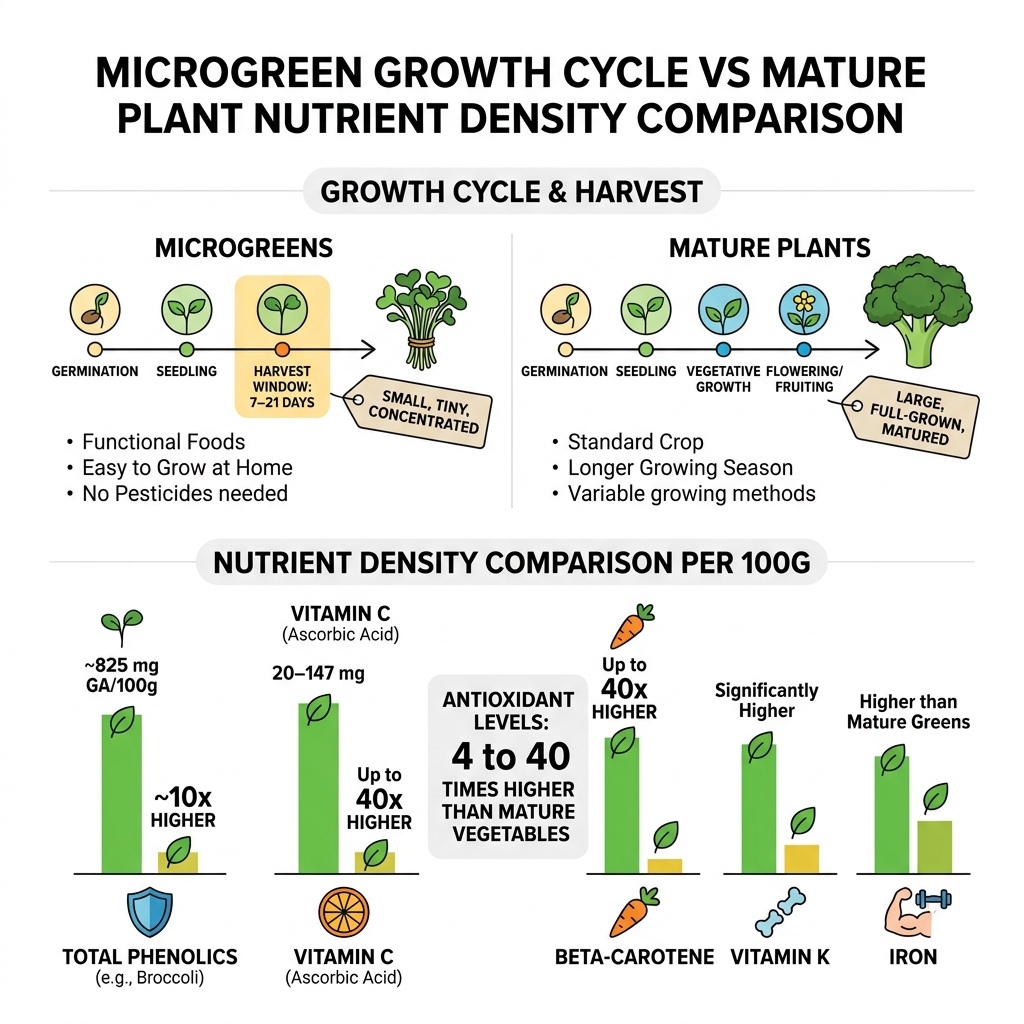
Here’s a quick snapshot of what microgreens deliver per 100g compared to mature plants:
| Nutrient | Microgreens | vs. Mature Plant |
|---|---|---|
| Vitamin C (Ascorbic Acid) | 20–147 mg | Up to 40x higher |
| Vitamin K (Phylloquinone) | 0.6–4.1 µg/g FW | Often significantly higher |
| Beta-Carotene | 0.6–12.1 mg | Up to 40x higher |
| Vitamin E (α-Tocopherol) | 4.9–87.4 mg | Higher in most varieties |
| Iron | 524–2,610 µg | Higher than mature greens |
| Total Phenolics (Broccoli) | ~825 mg GA/100g | ~10x higher |
Key facts at a glance:
- Microgreens are harvested just 7–21 days after germination
- They contain concentrated vitamins A, C, E, and K
- Antioxidant levels can be 4 to 40 times higher than mature vegetables
- One cup (25g) has roughly 7.8 calories — extremely low calorie, very high nutrient density
- Varieties like red cabbage, broccoli, and cilantro are among the most nutrient-dense
Microgreens first appeared in upscale California restaurants in the 1980s — originally used as colorful garnishes, sometimes called “vegetable confetti.” Since then, scientists have discovered there’s a lot more going on than just good looks.
These young plants are technically functional foods — meaning they don’t just feed you, they may actively support your health. Researchers have found them rich in bioactive compounds like glucosinolates, anthocyanins, and carotenoids that are linked to reduced risk of chronic disease.
The best part for beginners? They’re remarkably easy to grow at home, require minimal space, and need no pesticides or complex equipment.
Micro greens nutritional information terms to learn:
What Are Microgreens and Why Is Their Nutritional Profile Unique?
To understand why micro greens nutritional information is so impressive, we first need to look at what they actually are. Microgreens are young vegetable greens that fall somewhere between a sprout and a baby green. They are typically harvested 7 to 21 days after germination, once they have developed their “cotyledon” leaves (the first set of leaves) and perhaps the very first “true” leaves.
Unlike sprouts, which are grown in water and eaten whole (roots, seed, and all), microgreens are grown in soil or a substrate and harvested by cutting the stem above the root line. This distinction is vital for both flavor and safety.
The reason they are so nutrient-dense is that the seed contains all the energy and “building blocks” required for a plant to grow into a massive mature version of itself. When we harvest at the microgreen stage, we are capturing all those concentrated nutrients before they get diluted across a larger plant body.
According to a scientific review on bioactive molecules and health benefits, microgreens are packed with phytochemicals. These include ascorbic acid (Vitamin C), tocopherols (Vitamin E), and various carotenoids. Research shows that these tiny greens can have 4 to 40 times the nutrient concentration of their mature counterparts. If you’ve ever wondered how microgreens improve nutrition, it’s this biological “concentration” effect that makes them a powerhouse for anyone looking to boost their health without eating massive quantities of salad.
Comparing Micro Greens Nutritional Information Across Popular Varieties
Not all microgreens are created equal. Just as a mature radish tastes different from a mature head of cabbage, their microgreen versions offer unique nutritional strengths. If you’re looking for the best “bang for your buck,” comparing micro greens nutritional information across varieties is essential.
| Microgreen Variety | Primary Nutritional Strength | Key Bioactive Compound |
|---|---|---|
| Red Cabbage | Vitamin C & Vitamin K | Anthocyanins |
| Broccoli | Sulforaphane & Magnesium | Glucoraphanin |
| Radish | Vitamin E & Protein | Anthocyanins & Phenolics |
| Cilantro | Carotenoids & Vitamin K | Lutein/Zeaxanthin |
| Garnet Amaranth | Vitamin C & Phylloquinone | Betalains |
| Pea Shoots | Protein & Folic Acid | Vitamin C (7x more than blueberries) |
Each variety brings something different to the table. For instance, red cabbage microgreens have been found to contain 69 times more Vitamin K than mature red cabbage. Meanwhile, radish microgreens are surprisingly high in protein, often reaching up to 30% protein content. For a deeper dive into the specifics, check out our guide on vitamins in popular microgreens.
High-Antioxidant Micro Greens Nutritional Information
Antioxidants are our body’s defense against free radicals, which cause cellular damage. The micro greens nutritional information regarding antioxidants is particularly staggering. A key study, the assessment of vitamin and carotenoid concentrations in edible microgreens, analyzed 25 commercial varieties and found that nearly all of them outperformed mature vegetables in antioxidant capacity.
Broccoli microgreens, for example, have a total phenolic content about 10 times higher than mature broccoli. These phenolics, along with anthocyanins (found in purple varieties like red cabbage and radish) and glucosinolates, provide high DPPH scavenging capacity—a fancy scientific way of saying they are excellent at neutralizing harmful molecules in your body. If you want to start your own antioxidant factory at home, we have a list of antioxidant-rich microgreens to grow that can help you get started.
Mineral-Dense Micro Greens Nutritional Information
While vitamins often get all the glory, minerals like iron, zinc, calcium, and magnesium are the unsung heroes of our diet. Micro greens nutritional information shows that these tiny plants are excellent sources of minerals.
- Iron: Fenugreek and beet microgreens are standout performers. Fenugreek microgreens have been shown to have higher iron bioavailability than the mature plant.
- Magnesium: Broccoli and sunflower microgreens provide significant amounts of magnesium, which is essential for over 300 biochemical reactions in the body.
- Calcium: Sunflower microgreens contain about 145mg of calcium per 100g—a great plant-based source for bone health.
We often emphasize why your diet needs nutrient-dense kale microgreens because they provide a balanced profile of both vitamins and minerals. Interestingly, microgreens can also be “biofortified.” This means growers can adjust the nutrient solution to increase specific minerals like selenium or iron. Conversely, for people with kidney issues, researchers have successfully grown low-potassium microgreens using specialized hydroponic setups, making them a safe “superfood” even for restricted diets.
Proven Health Benefits of Concentrated Microgreen Nutrients

Because they are so dense in bioactive compounds, microgreens offer several established health benefits. We like to think of them as a “natural insurance policy” for your long-term wellness.
- Cardiovascular Disease: Red cabbage microgreens have been shown in animal studies to lower LDL (“bad”) cholesterol and reduce weight gain on high-fat diets. This suggests they may help protect against heart disease and clogged arteries.
- Diabetes Management: Research into fenugreek microgreens showed they could inhibit α-amylase (an enzyme that breaks down carbs into sugar) by up to 70% and enhance glucose uptake by cells. This makes them a promising tool for managing blood sugar levels.
- Cancer Risk Reduction: Brassicaceae microgreens (like broccoli, kale, and radish) are rich in glucosinolates. When you chew them, these turn into sulforaphane, a compound widely studied for its ability to protect cells from cancer.
- Anti-Inflammatory Properties: Chronic inflammation is the root of many modern diseases. According to our microgreens health benefits guide, the high concentration of polyphenols in these greens helps dampen the body’s inflammatory response.
- Immunity and Gut Health: The fiber and antioxidants in microgreens support a healthy gut microbiome. Since a large portion of our immune system resides in the gut, there are clear benefits of microgreens for immunity.
Optimizing Growth and Storage for Maximum Nutrient Retention
If you’re growing your own—which we highly recommend at FinanceOrbitX—how you grow them affects the micro greens nutritional information of your final harvest.
Lighting and Substrate
Light is the “food” that allows plants to create vitamins. Research suggests an optimal light intensity of 440 μmol/m²/s maximizes both yield and antioxidant levels. Using LED grow lights with a mix of blue and red spectra can further enhance specific nutrients; for example, blue light often increases phenolic content.
Growing in soilless substrates like peat moss, vermiculite, or coconut coir is generally safer and can lead to higher mineral levels compared to some traditional soils. We also suggest using Trichoderma species (a beneficial fungus) as a seed treatment to boost growth and protect against pathogens without using chemicals.
Harvesting and Storage
To keep your superfood microgreens for health as potent as possible, follow these tips:
- Harvest Timing: Most varieties reach their nutritional peak between 7 and 21 days.
- The “Clean Cut”: Always cut the stems above the soil line to avoid contamination from the growing medium.
- Cold Storage: Microgreens have a short shelf life. Store them at 5°C (41°F) in a sealed container or bag. Under these conditions, they can stay fresh and nutrient-dense for up to 10–14 days.
- Eat Them Raw: Heat can destroy sensitive enzymes like myrosinase (needed for sulforaphane) and Vitamin C. To get the full benefits, use them as a garnish or in smoothies rather than cooking them.
Frequently Asked Questions about Microgreen Nutrition
Do microgreens have more nutrients than mature vegetables?
Yes, in almost every category measured, microgreens show a 4 to 40 times higher concentration of nutrients than mature leaves of the same plant. While you might eat a whole cup of mature kale but only a handful of micro-kale, the density of Vitamin K1, Vitamin C, and carotenoids in that handful is significantly higher. They are essentially a “concentrated” version of the plant.
Can microgreens be grown for specific medical diets?
Absolutely. This is one of the most exciting areas of micro greens nutritional information research. Because they are often grown hydroponically, the nutrient solution can be tailored. For instance, “low-potassium” microgreens can be grown for patients with chronic kidney disease (CKD) who need to limit potassium but still want the benefits of fresh greens. Similarly, they can be biofortified with extra iron or selenium to help address specific deficiencies.
Is it safe to eat microgreens every day?
For most people, yes! They are a fantastic addition to a daily diet. However, like any raw produce, there is a small risk of microbial contamination (like Salmonella or E. coli). You can mitigate this by:
- Buying seeds from reputable sources.
- Using clean, food-grade growing mediums.
- Maintaining good airflow and avoiding over-seeding (which creates a damp environment for bacteria).
- Washing your hands and tools before harvesting.
Conclusion
At FinanceOrbitX, we believe that investing in your health is the best financial decision you can ever make. Micro greens nutritional information proves that you don’t need a massive farm or a huge budget to access world-class nutrition.
By incorporating these “vegetable confetti” into your meals, you’re getting a massive return on investment in the form of vitamins, minerals, and disease-fighting compounds. Whether you’re tossing them on a pizza, blending them into a smoothie, or growing them on your windowsill, microgreens are a sustainable, accessible, and delicious way to level up your diet.
Ready to start your journey? Check out our microgreens health benefits guide for more tips on how to make these tiny powerhouses a staple in your home.
