
What It Means to Grow Microgreens in Soil (And Why It Works So Well)
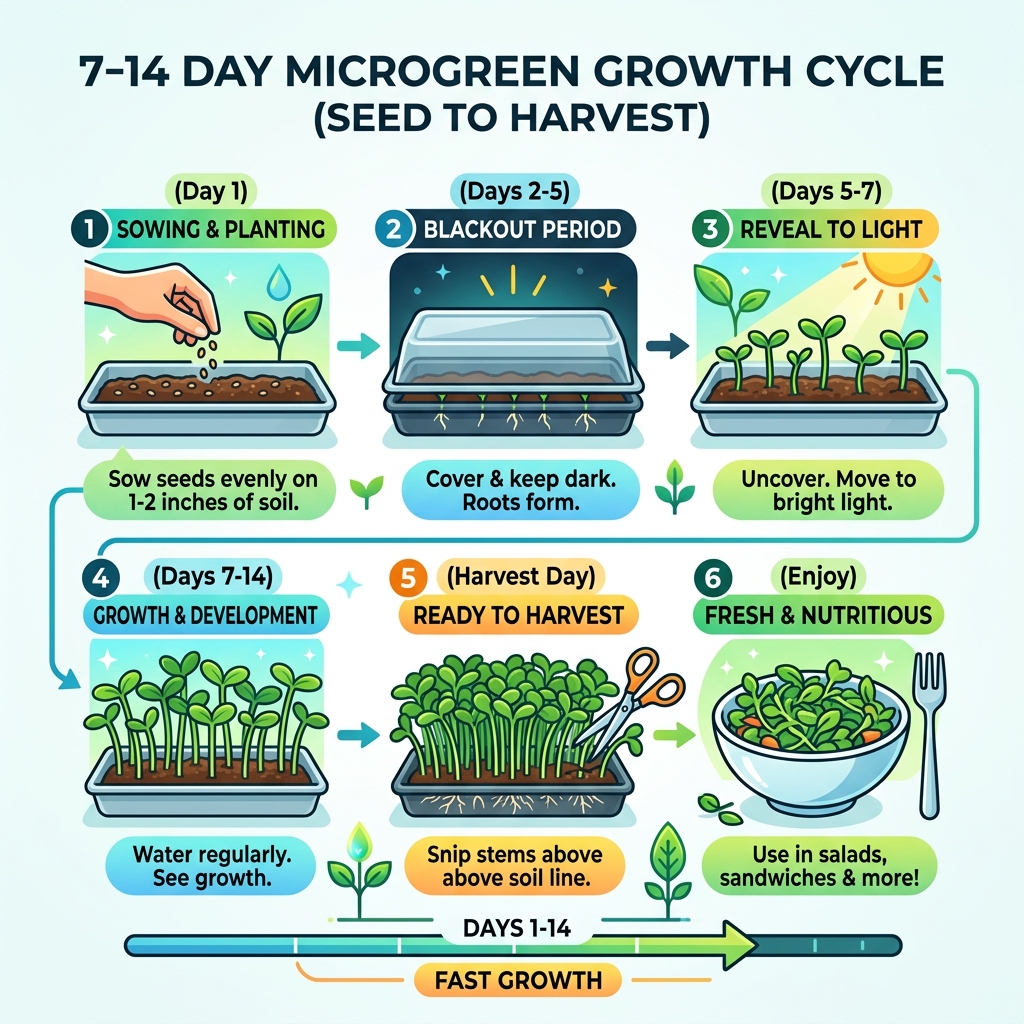
Growing microgreens in soil is one of the fastest and most rewarding things you can do as a home gardener. Most varieties go from seed to harvest in just 7 to 14 days, using nothing more than a shallow tray, some potting mix, and a sunny windowsill.
Here is a quick overview of how it works:
- Fill a shallow tray with 1 to 2 inches of sterile potting mix or coco coir
- Sow seeds densely and evenly across the surface
- Cover and keep in a dark, warm spot for 2 to 5 days (the “blackout period”)
- Uncover and move to light once seedlings are about 1 inch tall
- Water from the bottom to keep roots moist without wetting the leaves
- Harvest by snipping stems just above the soil line when cotyledon leaves are fully open
Microgreens are simply young seedlings of common edible plants — think broccoli, radish, pea shoots, or sunflower — harvested before they grow into full plants. They are not sprouts (which are grown in water and eaten root and all) and they are not baby greens (which are left to grow longer with full true leaves). Microgreens sit right in the middle: grown in soil, harvested above the soil line, usually at 1 to 3 inches tall.
Research shows they can contain 4 to 40 times the concentration of vitamins and antioxidants found in their mature counterparts. That is a lot of nutrition from a very small tray.
The soil-based method is especially beginner-friendly. It is forgiving, low-cost, and does not require any special equipment to get started.
Why You Should Grow Microgreens in Soil at Home
We often get asked why someone should bother with a tray of dirt on their kitchen counter when they could just buy a bag of spinach. The answer lies in the incredible “return on investment” for your health and your palate.
First, let’s talk about nutritional density. Multiple studies, including those from the USDA, have shown that these tiny greens pack a massive punch. They contain considerably higher levels of vitamins and carotenoids—about five times greater—than their mature plant counterparts. For some varieties, that concentration can soar to 40 times the antioxidant levels of a full-grown vegetable. When you grow microgreens in soil, you are essentially cultivating a living multivitamin.
Then there is the cost-effectiveness. A single tray can yield a retail value of $10 to $20 worth of greens, yet it only costs about $2 to $4 to produce once you have your basic supplies. When “superfoods” often come with a premium price tag, microgreens are a budget-friendly way to upgrade your diet.
Space efficiency is another huge win. You don’t need a backyard or even a balcony. A simple windowsill or a small corner of a desk is enough. Because they are harvested so young, they don’t develop deep root systems, allowing us to grow them in very shallow containers.
Finally, the flavor profiles are intense. A radish microgreen tastes more like a radish than a radish does! They add crunch, spice, and vibrant color to sandwiches, soups, and salads. If you’re curious about how this compares to other methods, check out our guide on soil vs hydroponics which is best for microgreens to see why we often prefer the “earthy” route.
Essential Supplies and Choosing the Best Medium
To get started, we need to gather a few basics. You don’t need a “green thumb,” but you do need the right kit.
- Trays: The industry standard is the “1020 tray” (10 inches by 20 inches), but for home use, even recycled berry containers or take-out tubs work.
- Drainage Holes: This is non-negotiable. Your growing container must have holes to allow excess water to escape and to facilitate bottom watering.
- Seeds: Look for organic, untreated seeds specifically labeled for microgreens or sprouting.
- Watering Tools: A simple spray bottle for the early stages and a small watering can or pitcher for later.
- Lighting: A sunny south-facing window is great, but LED grow lights provide the most consistent results.
When it comes to the “dirt,” we want to be picky. Using garden soil from your backyard is a recipe for disaster; it’s too heavy and often contains pests or pathogens. Instead, we use a high-quality organic soil for microgreens.
| Medium | Pros | Cons |
|---|---|---|
| Potting Soil | Excellent nutrient retention, easy to find, supports slow growers. | Can be messy, potential for “damping off” fungus. |
| Coco Coir | Sustainable, holds 10x its weight in water, pH neutral. | Lacks nutrients; may need supplementation for longer grows. |
| Hemp Mats | Cleanest option, fully compostable, no soil mess. | Dries out quickly, roots can struggle to anchor. |
Choosing the Best Grow Microgreens in Soil Medium
For most of us, a sterile seedling starter mix is the gold standard. These mixes are usually “soilless,” consisting of peat moss or coco coir blended with perlite or vermiculite for aeration.
Coco coir is a fan favorite because it’s incredibly fluffy and easy to store. A single one-pound brick of compressed coco coir can expand to fill three 1020 trays once you add water! If you choose a peat-based mix, look for one that includes mycorrhizae, which are beneficial fungi that help the tiny roots establish themselves quickly. For more details on the chemistry of your dirt, read up on soil and growing medium for microgreens.
Beginner-Friendly Varieties for Soil Cultivation
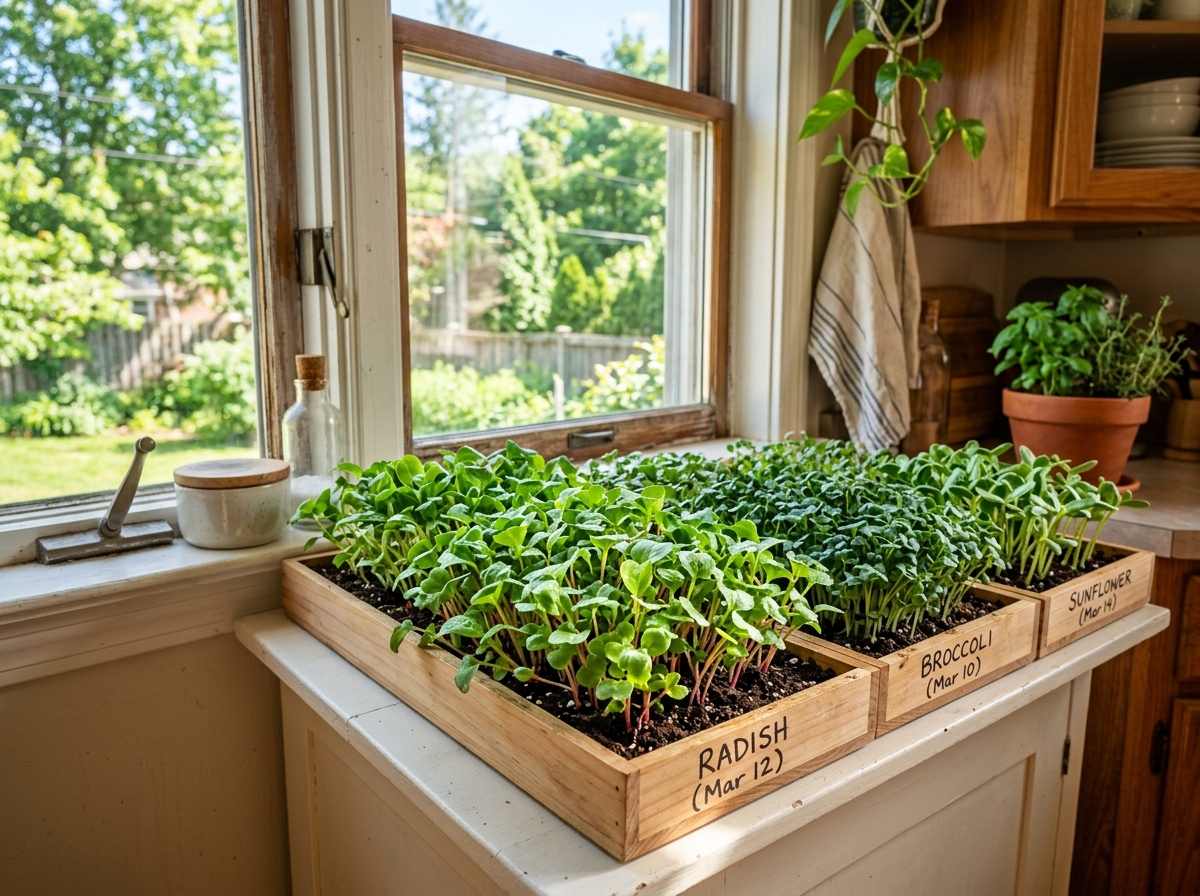
If this is your first time, we recommend starting with the “big four.” These varieties are forgiving, fast, and yield great results in soil:
- Radish: The undisputed king of beginner microgreens. It germinates in 24 hours and can be harvested in as little as 6 days.
- Broccoli: Very mild flavor and incredibly healthy. It grows straight and uniform, making it easy to harvest.
- Pea Shoots: Kids love these because they are sweet and crunchy. They are also one of the few varieties that might give you a second harvest if you cut them high enough.
- Sunflower: These require a bit more work (soaking and removing hulls), but the nutty, fatty flavor is unmatched.
For those who want a bit of a culinary challenge, arugula is a fantastic choice, though it can be a bit more sensitive to moisture. You can find more variety-specific tips in our organic soil for microgreens 2 guide.
The Best Way to Grow Microgreens in Soil for Beginners
Success starts before the seeds even hit the soil. For larger, tougher seeds like peas, sunflowers, or beets, we recommend pre-soaking. Soaking these seeds in water for 6 to 12 hours “wakes them up” and ensures more even germination. Small seeds like broccoli or radish do not need soaking; they are ready to go straight into the tray.
When you are ready to plant, fill your tray with about 1.5 inches of moistened soil. Level it out with a piece of cardboard or your hand, but do not pack it down hard. You want it firm but breathable.
Seeding density is the secret to a lush tray. We aren’t planting a garden where every plant needs 10 inches of space. We want a dense carpet. For a 1020 tray, you might use 1 to 1.5 ounces of small seeds. Broadcast them evenly across the surface, aiming for a single layer where seeds are close but not overlapping in big clumps.
Mastering Soil Depth and the Blackout Period
One of the biggest mistakes beginners make is using too much soil. You only need 1 to 2 inches of depth. Microgreens are harvested so young that they don’t have time to utilize a deep pot of soil, so anything more than 2 inches is just a waste of medium.
Once the seeds are sown and misted, we enter the Blackout Period. This is where the magic happens. We cover the tray with another tray (flipped upside down) or a piece of cardboard to keep it completely dark.
Pro Tip: Place a small weight (about 2-5 lbs) on top of the cover. This mimics the pressure of soil and forces the seedlings to grow stronger, thicker stems. It also ensures the roots push deep into the soil rather than lifting the seed off the surface. This phase usually lasts 3 to 5 days. For a deeper dive into this technique, see how to start microgreens at home without losing your soil.
Lighting and Watering for Your Grow Microgreens in Soil Setup
Once your seedlings are about an inch tall and are starting to push up the cover, it’s time for “the big reveal.” Move them into the light. They will look yellow at first, but within a few hours of light exposure, they will turn a vibrant green as they begin photosynthesis.
Microgreens need about 6 to 8 hours of light per day. If you are using grow lights, position them just 3 to 5 inches above the plants. If you’re using a windowsill, rotate the tray daily so the greens don’t lean too far in one direction.
Watering changes during this phase. We stop misting from the top because wet leaves can lead to mold and rot. Instead, we use bottom watering. Simply pour water into the bottom tray (the one without holes) and let the soil tray sit in it for about 10 minutes to soak up moisture through the drainage holes. This keeps the “canopy” dry and the roots happy. You can find more advanced watering schedules in our organic soil for microgreens 3 resource.
Harvesting, Storage, and Troubleshooting Common Issues
The best time to harvest is when the first set of leaves (the cotyledons) are fully developed and looking “fat.” Some growers wait for the first “true leaves” to appear for a different flavor profile, but for most varieties, 2 to 3 inches of height is the sweet spot.
We recommend a morning harvest. This is when the plants are most hydrated and crisp. Use clean, sharp scissors or a knife and snip the stems just above the soil line. Try to avoid getting any soil on the greens so you don’t have to wash them, which can shorten their shelf life.
To store your harvest, place the unwashed greens in an airtight container or a glass jar. Adding a dry paper towel to the container helps absorb any excess moisture. Most microgreens will stay fresh in the fridge for about 5 to 7 days, though they are always best when eaten immediately!
Troubleshooting Mold and Leggy Growth
If you see white, fuzzy stuff on your soil, don’t panic. It might just be root hairs, which are a natural part of the plant. However, if the fuzz is “spiderwebby” and climbing up the stems, it’s likely mold.
To prevent mold:
- Improve Airflow: Use a small fan to keep air moving around the trays.
- Lower Humidity: Aim for 40-60% humidity.
- Reduce Seeding Density: If seeds are too crowded, air can’t circulate.
- Hydrogen Peroxide: A light mist of food-grade hydrogen peroxide (diluted) can stop mold in its tracks without harming the plants.
If your microgreens are tall, thin, and falling over, they are “leggy.” This usually means they aren’t getting enough light. Move your light source closer or find a sunnier spot.
Can You Reuse Soil? Best Practices for Sustainability
A common question in our community is: “Can I just plant more seeds in the same tray?”
The short answer is no, not directly. When you harvest microgreens, you leave behind a dense mat of roots and the bottom “stubble” of the stems. If you try to sow new seeds on top, the old roots will begin to decay, creating a breeding ground for mold and pathogens. Furthermore, the first crop has already used up the most readily available nutrients in that thin layer of soil.
However, we don’t just throw it away! The “spent” root mats are excellent for composting. If you have a backyard compost pile or a worm bin, toss the entire mat in. It will break down into rich organic matter that you can eventually use in your outdoor garden.
For those looking to scale up, we recommend moving to a rack system. By using vertical space, you can grow 4 to 5 times as many microgreens in the same footprint. Just remember the safety basics: never grow nightshades (tomatoes, peppers, eggplant) as microgreens, as their stems and leaves contain toxic alkaloids. Stick to the edible greens we’ve discussed for a safe and healthy harvest.
Frequently Asked Questions about Soil-Grown Microgreens
How deep should the soil be for microgreens?
We recommend a soil depth of 1 to 2 inches. Anything deeper is unnecessary because microgreens are harvested before they develop a mature root system. Keeping the soil shallow also saves money and reduces waste.
Can I reuse the soil after one harvest?
It is not recommended to reuse the soil directly in the tray. The leftover root mass and stems will rot, leading to mold and poor germination for the next batch. Instead, compost the spent soil and start each new tray with fresh, sterile medium.
How do I prevent mold in soil-based trays?
The best ways to prevent mold are to bottom water (keeping the leaves dry), ensure good airflow with a fan, and maintain a consistent temperature between 65-75°F. Avoid over-seeding, as crowded plants trap moisture.
Conclusion
At FinanceOrbitX, we believe that gardening is one of the best investments you can make—not just for your health, but for your peace of mind. By learning to grow microgreens in soil, you are taking control of your food supply and ensuring your family has access to the freshest, most nutrient-dense greens possible, even in the dead of winter.
The “return on investment” here is clear: for a few dollars and ten minutes of care a day, you get a gourmet product that would cost five times as much at a high-end grocery store. Plus, the joy of watching a tray of seeds transform into a lush forest in just one week is a reward in itself.
Ready to get your hands dirty? Start your indoor garden with the right supplies and join the growing community of home microgreen farmers today. Happy planting!
