
Why the Best Microgreens to Grow Are Taking Over Home Gardens
The best microgreens to grow at home are radish, sunflower, pea shoots, broccoli, and arugula — all beginner-friendly, fast to harvest, and packed with nutrients.
Here’s a quick look at the top picks:
| Microgreen | Days to Harvest | Difficulty | Flavor |
|---|---|---|---|
| Radish | 5-7 days | Very Easy | Spicy, peppery |
| Sunflower | 10-12 days | Easy | Nutty, mild |
| Pea Shoots | 10-14 days | Easy | Sweet, fresh |
| Broccoli | 7-10 days | Easy | Mild, earthy |
| Arugula | 10-14 days | Easy | Peppery, bold |
Most microgreens go from seed to plate in under two weeks. Research shows they can contain 4 to 40 times more nutrients than their fully grown counterparts. And you only need a single square foot of windowsill space to get started.
That’s the appeal. No garden. No complicated setup. Just a tray, some seeds, water, and light.
Whether you want a quick confidence boost from your first harvest or a steady supply of fresh, healthy greens, microgreens deliver fast results — even if you’ve never grown anything before.
The Best Microgreens to Grow for Beginners
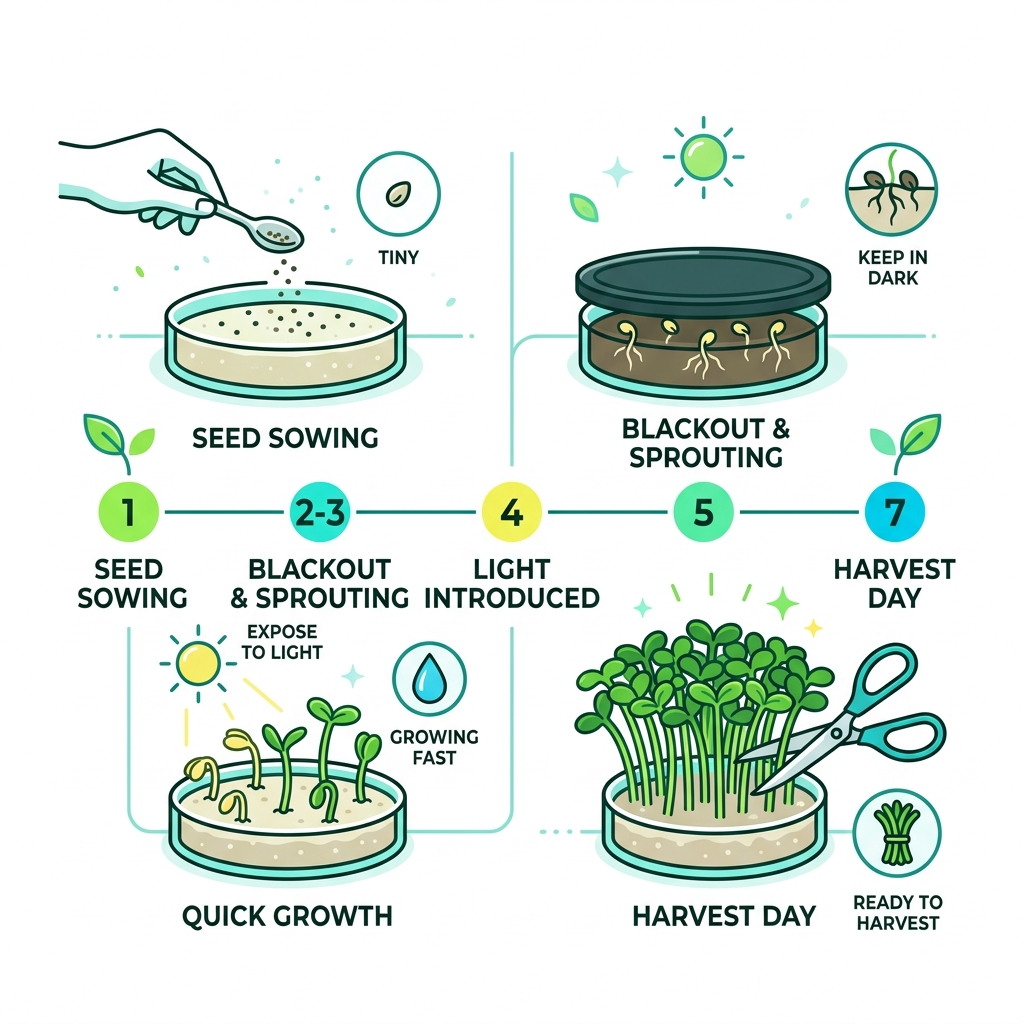
When we talk about the best microgreens to grow, we usually look for three things: speed, resilience, and flavor. For those of us just starting our indoor gardening journey, we want a “win” as quickly as possible. There is nothing quite like seeing a tray of dry seeds transform into a lush green carpet in just a few days to make you feel like a master horticulturist.
Radish Microgreens: The Speed Demon
If you are looking for instant gratification, radish microgreens are our absolute top recommendation. They are essentially “bomb-proof.” Radish seeds germinate in as little as 24 to 48 hours and can be ready to harvest in just 5 to 6 days. While a traditional radish takes weeks to form a bulb, these tiny greens give you that signature zesty, peppery kick almost immediately. Varieties like ‘Daikon,’ ‘China Rose,’ or ‘Red Rambo’ offer stunning colors ranging from bright green to deep purple.
Pea Shoots: The High-Yield Favorite
Pea shoots are a fantastic choice for families. Kids love watching the large seeds sprout and grow long, curly tendrils. From a financial perspective, pea shoots offer an incredible return on investment. We’ve found that about 250 grams of dry pea seeds can yield up to 500 grams of fresh shoots. They taste exactly like fresh snap peas—sweet, crunchy, and refreshing.
Sunflower Microgreens: The Nutty Heavyweight
Many experienced growers consider sunflower microgreens to be the single best variety overall. They are thick, crunchy, and have a rich, nutty flavor that makes them a great base for salads rather than just a garnish. We recommend using black oil sunflower seeds. They do require a bit of “babying”—specifically a weighted blackout period—but the results are worth it.
For a deeper dive into starting your first tray, check out our guide on easy-to-grow-microgreens-for-your-kitchen-garden/.
The Secrets to Beginner Success: Blackout and Bottom Watering
To get the most out of these varieties, we use two professional techniques:
- The Blackout Period: After sowing, we cover the seeds with another tray (often with a weight on top) for 2–4 days. This forces the seedlings to stretch and search for light, creating longer, stronger stems that are easier to harvest.
- Bottom Watering: Once the roots have established, we stop misting from the top and instead pour water into the bottom tray. This keeps the leaves dry, which is the best way to prevent mold and “damping off” issues.
We harvest most of these when they reach the cotyledon stage—that is, when the first set of “seed leaves” have fully expanded but before the “true leaves” appear. This is when the flavor is most concentrated and the texture is most tender.
Choosing the Best Microgreens to Grow for Flavor
Once you’ve mastered the basics, it’s time to curate your indoor garden based on your palate. The best microgreens to grow for culinary impact are those that provide a concentrated burst of the mature plant’s flavor.
- Arugula Microgreens: Also known as Rocket, these are for the spice lovers. They deliver a sophisticated, peppery bite that is much more intense than adult arugula. Interestingly, arugula seeds are mucilaginous—they form a gel-like coating when wet—so they shouldn’t be pre-soaked.
- Beet Microgreens: If you want to add visual flair to your dishes, beets are the way to go. Varieties like ‘Bull’s Blood’ feature striking ruby-red stems and green leaves. The flavor is pleasantly earthy and sweet, just like a roasted beet but in a delicate, leafy form.
- Cilantro Microgreens: While cilantro can be a bit finicky—taking 14 to 21 days to harvest—it provides a refined, aromatic version of the herb. It’s perfect for those of us who want a steady supply for winter tacos without worrying about the plant “bolting” in the sun.
- Basil Microgreens: These are a concentrated version of summer. They are wonderful on pizza or caprese salads. Because basil seeds are also mucilaginous, we sprinkle them directly onto moist soil without soaking.
The Best Microgreens to Grow Without Soil
You don’t need a bag of potting mix to enjoy fresh greens. Many of the best microgreens to grow thrive in a soil-free environment, making them perfect for urban apartments or anyone who wants a “mess-free” kitchen garden.
Broccoli Microgreens: The Cleanest Grow
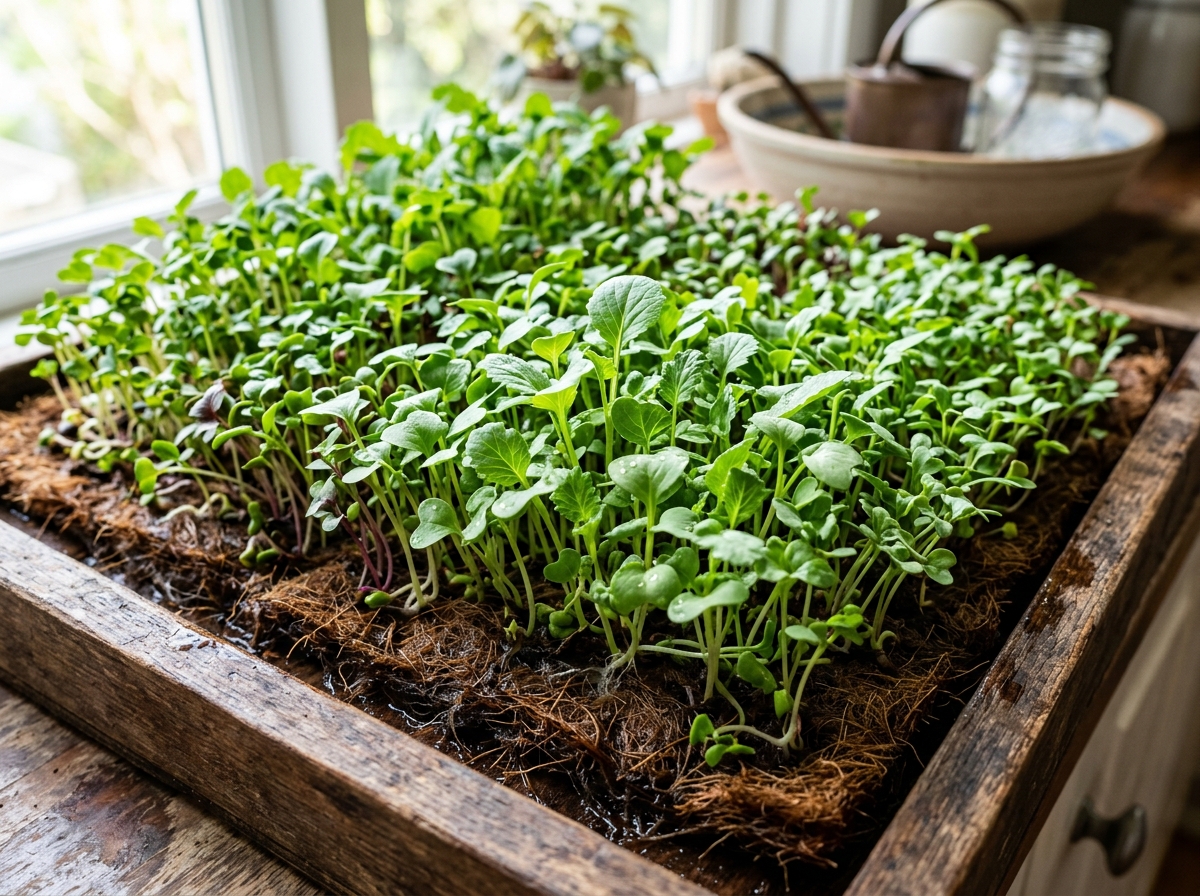
Broccoli is perhaps the most reliable variety to grow without soil. It grows beautifully on coconut coir or hydroponic mats (like hemp or bamboo). Broccoli microgreens are mild and earthy, making them a “stealth health” addition to smoothies because you can’t even taste them.
Wheatgrass: The Juice Bar Staple
Wheatgrass is almost exclusively grown without soil. It is incredibly resilient and can be grown on simple paper towels or reusable mats. It is famous for containing over 100 nutrients and is typically harvested around day 10 for juicing.
Growing without soil is the ultimate hack for small spaces. For more tips on speed, see our article on the-fastest-growing-microgreens-to-try-at-home/.
Superfood Nutrition and Fast Harvest Cycles
At FinanceOrbitX, we love a good “efficiency play,” and microgreens are the ultimate high-yield asset for your health.
The 40x Nutrient Rule
Research, including studies highlighted by Johns Hopkins Medicine, has found that microgreens can contain up to 40 times the nutrients of their mature counterparts. Because the seedling contains all the energy and nutrition needed to grow into a giant plant, harvesting it early means you get those vitamins in a highly concentrated dose.
- Kale Microgreens: These contain four times the nutrients of adult kale. They are a powerhouse of Vitamin C, K, and A, but without the tough, fibrous texture of mature leaves.
- Broccoli Microgreens: These are famous for their high levels of sulforaphane, a compound studied for its anti-cancer properties. A small handful of broccoli microgreens can offer the same sulforaphane benefits as several heads of mature broccoli.
- Arugula: These tiny leaves contain eight times the calcium and four times the iron of iceberg lettuce.
With harvest cycles as short as 6 to 10 days for varieties like radish and cabbage, you can rotate your “crops” weekly. To learn more about specific health boosts, read our guides on vitamins-in-popular-microgreens/, superfood-microgreens-for-health/, and best-microgreens-for-weight-loss/.
Essential Equipment and Common Mistakes to Avoid
You don’t need a greenhouse to be successful, but a few key pieces of gear will make your life much easier.
The Basic Kit
- 1020 Trays: These are the industry standard (10 inches by 20 inches). We recommend a “two-tray system”: one tray with drainage holes nested inside a solid tray without holes. This allows for easy bottom watering.
- Full-Spectrum LEDs: While a sunny windowsill works, it can often lead to “leggy” (tall and weak) plants. A simple LED shop light or dedicated grow light provides the 12–16 hours of consistent light needed for vibrant color and flavor.
- Growing Medium: Coconut coir (the “king” of mediums) or high-quality potting soil are our favorites for beginners.
Rookie Mistakes to Dodge
Even the best microgreens to grow can fail if the environment isn’t right.
- Overwatering: This is the #1 killer of microgreens. It leads to mold and root rot. Always aim for moist, not soggy.
- Poor Air Circulation: If your trays are in a stagnant corner, mold will thrive. We often use a small desk fan to keep air moving.
- High Seed Density: Sowing too thickly can lead to “clumping” and mold. For broccoli, we aim for about 15–20g of seed per 1020 tray.
- The Solanaceae Family: Never grow tomatoes, peppers, or potatoes as microgreens. Their leaves contain toxic alkaloids that can cause stomach upset.
Root Hairs vs. Mold: Don’t Panic!
One of the most common questions we get is, “Is this mold on my roots?” Usually, it’s just root hairs. These are tiny, fuzzy filaments the plant uses to drink. The Test: Spray them with a little water. If they disappear, they are root hairs. If they stay visible and look like a spider web, it might be mold.
For more on staying safe and healthy, check out our microgreens-health-benefits-guide/.
Frequently Asked Questions about Microgreens
Can microgreens regrow after harvesting?
Most microgreens are a “one and done” crop. Once you snip the stem above the soil line, they won’t grow back. However, pea shoots and wheatgrass are the exceptions. If you leave at least one leaf node on the pea shoot, it can often produce a second, albeit smaller, harvest. Wheatgrass can also be cut a second time, though the nutrient density is highest in the first cut.
Are there any microgreens I should avoid eating?
As mentioned, stay away from the Nightshade (Solanaceae) family. This includes tomatoes, eggplants, and peppers. Beyond that, always ensure you are using food-grade, untreated seeds. Some garden seeds are treated with fungicides that are not safe for microgreen consumption.
How do I harvest and store microgreens?
Use sharp, clean scissors to snip the greens just above the soil line. The best time to harvest is in the morning when the plants are most hydrated. For storage, the key is keeping them dry. We recommend placing them in a container with a paper towel to absorb excess moisture and keeping them in the refrigerator. Most will last 5–7 days, though arugula and radish are best eaten sooner.
Conclusion
At FinanceOrbitX, we believe that gardening should be accessible, profitable (in terms of health and savings!), and fun. Choosing the best microgreens to grow—like radish, pea shoots, or broccoli—is the ultimate way to bring fresh, high-density nutrition into your home without the need for a backyard.
By growing your own, you can yield roughly four times the amount of greens at a quarter of the cost of store-bought clamshells. It’s a smart investment for your kitchen and your well-being.
Ready to start your first tray? Whether you’re in a tiny apartment or a suburban home, you have the space to grow. Start your indoor garden journey today and enjoy the magic of a fresh harvest every single week!
