
Turn Kitchen Scraps Into Plant Food: Your Quick Guide to Indoor Composting
Indoor composting for gardeners is one of the easiest ways to turn food waste into free, rich fertilizer for your plants — no backyard required.
Here are the best indoor composting options to get you started fast:
| Method | Best For | Time to Finished Compost | Space Needed |
|---|---|---|---|
| Worm Bin (Vermicomposting) | Beginners, apartment dwellers | 1-4 months | Very small (fits under sink) |
| Bokashi Bucket | Those who want to compost meat/dairy | 2-4 weeks (fermentation) + burying | Very small (countertop) |
| Aerobic Tote Bin | Larger households, no worms | 2-4 months | Small-medium |
| Electric Composter | Fastest results, minimal effort | As little as 3 hours | Countertop |
So you’re growing plants indoors — microgreens, herbs, houseplants — and you’re watching vegetable peels, coffee grounds, and eggshells pile up in your trash every day.
That’s a missed opportunity.
Those scraps are packed with nutrients your plants would love. And composting them indoors is simpler than most people think. You don’t need a yard, a big budget, or any special skills to get started.
Whether you live in a studio apartment or a house without much outdoor space, there’s an indoor composting system that fits your life. Some use worms. Some use fermentation. Some just plug into the wall.
This guide walks you through the best products and methods — so you can pick the right one and start turning your trash into “black gold” for your plants.
Why Indoor Composting for Gardeners is a Game Changer
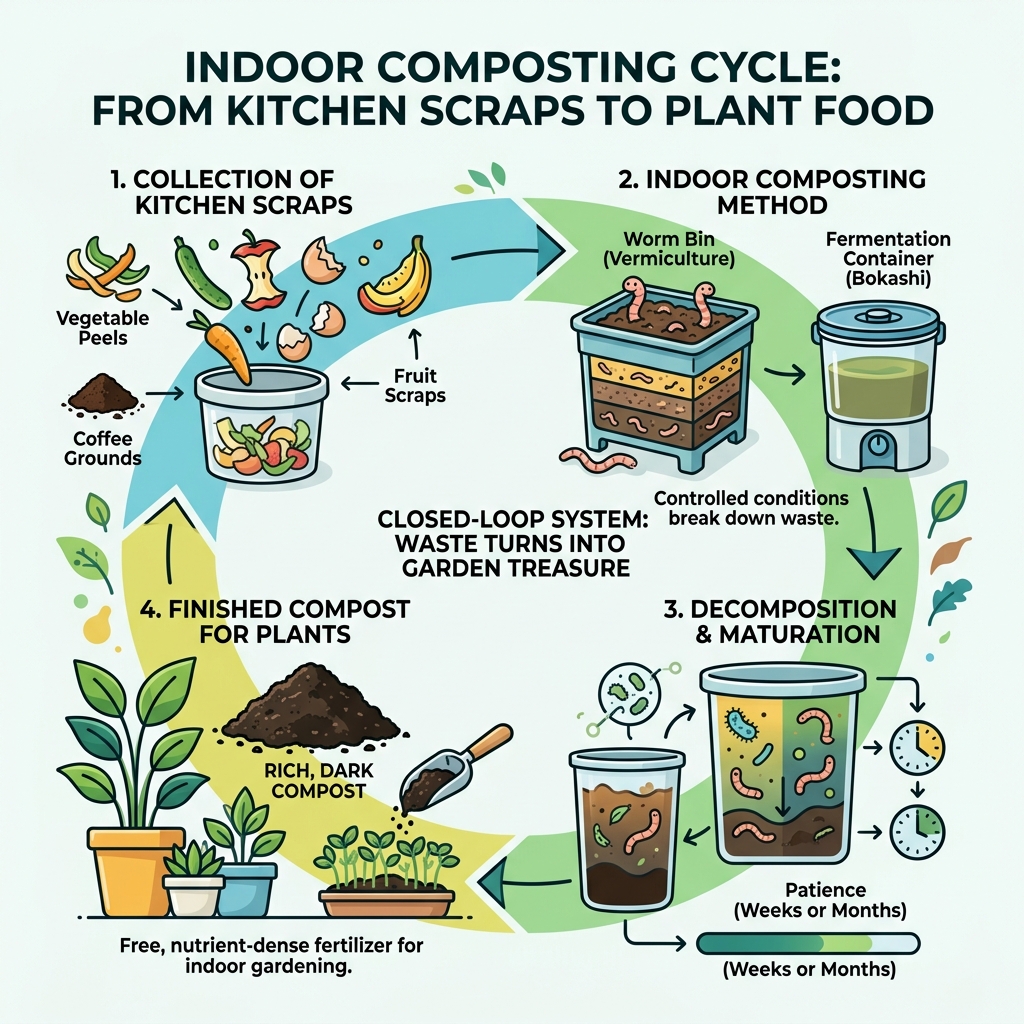
If you’ve ever felt a pang of guilt tossing a handful of nutrient-dense kale stems or coffee grounds into the bin, you’re not alone. For those of us focused on Starting an Indoor Garden: A Beginner’s Guide, waste feels like a lost asset. Indoor composting isn’t just about being “eco-friendly”; it’s about creating a closed-loop system where your kitchen feeds your garden, and your garden feeds you.
Traditional outdoor piles require a minimum of three-by-three-by-three feet to generate enough heat to break down materials. Most urban dwellers simply don’t have that kind of real estate. Indoor composting for gardeners solves this by utilizing smaller, controlled environments that thrive year-round at temperatures between 40°F and 80°F.
According to the Composting At Home | US EPA, composting is the managed aerobic biological decomposition of organic materials. By doing this inside, you prevent organic waste from heading to landfills, where it would otherwise produce methane—a potent greenhouse gas. Instead, you’re building healthy soil that conserves water and absorbs carbon dioxide.
The Benefits of Indoor Composting for Gardeners
Why do we call finished compost “black gold”? Because it is a pharmaceutical-grade multivitamin for your plants. When you transition From Tiny Apartments to Lush Gardens: Indoor Gardening, you quickly realize that store-bought fertilizers can be expensive and sometimes harsh.
Indoor compost provides:
- Chemical-Free Fertilizer: It’s packed with nitrogen, phosphorus, and potassium (NPK) in a form that plants can easily absorb.
- Superior Water Retention: Compost acts like a microscopic sponge, helping your potting soil hold onto moisture longer.
- Disease Resistance: High-quality vermicompost (worm compost) contains beneficial microorganisms that help plants fight off pathogens.
- Cost Savings: You stop buying bags of soil and synthetic feeds, effectively turning your “trash” into a financial asset for your hobby.
Choosing Your Method: Indoor Composting for Gardeners in Small Spaces
Selecting the right system depends on your “ick” factor, your available space, and how much “green” waste your household produces. For instance, a household of four might need an 18-gallon bin, while a single person or couple can easily get by with a 5-to-10-gallon container. Finding the Best Containers for Indoor Gardening is the first step toward a successful setup.
| Feature | Vermicomposting | Bokashi | Aerobic Bin |
|---|---|---|---|
| Primary Agent | Red Wiggler Worms | Effective Microbes (EM) | Aerobic Bacteria |
| Odor Level | Earthy (if balanced) | Pickly/Fermented | Mild Earthy |
| Meat/Dairy? | No | Yes | No |
| Maintenance | Weekly feeding | Daily pressing/drainage | Weekly turning |
As noted in the guide on Indoor Composting with a Worm Bin, these systems are highly adaptable for apartment life.
Vermicomposting with Red Wigglers
If you can get past the idea of sharing your home with a few thousand “pets,” vermicomposting is arguably the most efficient method of indoor composting for gardeners. You specifically want Eisenia fetida, commonly known as Red Wigglers. Unlike standard garden earthworms, these guys are surface dwellers that thrive in the confined, high-organic-matter environment of a bin.
Fascinating worm facts to share at your next dinner party:
- Worms have five hearts.
- They can eat about 25% to 50% of their body weight every single day.
- One mature worm can produce about 100 offspring a year.
- They use sand or grit to create friction in their gizzards to “chew” food.
To start, we recommend purchasing about one pound of worms (roughly 1,000 worms), which costs between $20 and $50. This population can process about 3.5 pounds of food scraps per week. According to Using Redworms for Indoor Composting – Brooklyn Botanic Garden, the resulting castings contain ten times the nitrogen of traditional compost.
Bokashi and Electric Pre-Processors
If worms aren’t your style, or if you cook a lot of meat and dairy, Bokashi is your best friend. This Japanese method uses an anaerobic (oxygen-free) fermentation process. You layer scraps in a sealed bucket with a special “bran” inoculated with microbes. It’s fast—Bokashi can ferment waste twice as quickly as other methods.
Then there are electric “composters.” While the Essential Tools for Indoor Gardening often include these sleek countertop devices, keep in mind they are technically “pre-processors.” They use heat and grinding to dehydrate food by up to 90% in just three hours. The result is a dry “pre-compost” that still needs a little time in soil to fully break down, but it’s a fantastic space-saver.
Setting Up and Maintaining Your System
Setting up an indoor bin is a bit like baking—it’s all about the ratios. You need a balance of “Greens” (nitrogen-rich food scraps) and “Browns” (carbon-rich bedding). A good rule of thumb is a 2:1 or 3:1 ratio of browns to greens.
For a DIY aerobic bin, you can use a plastic tote. Drill a grid of 25 to 36 quarter-inch holes in the lid and bottom for ventilation, and two rows of holes along the sides. Proper aeration is key to ensuring you don’t end up with a stinky mess. This is similar to choosing the right Organic Soil for Microgreens; the texture and drainage of your Soil and Growing Medium for Microgreens dictate the health of the system.
Best Practices for Indoor Composting for Gardeners
To keep your system thriving, follow these expert tips:
- The Sponge Test: Your bedding should always feel like a wrung-out sponge—moist but not dripping. If it’s too wet, add dry shredded paper. If it’s too dry, mist it with a spray bottle once a week.
- Chop Your Scraps: Microbes and worms have small mouths. Chopping food into 1-inch pieces speeds up decomposition significantly.
- Bury the Food: Never leave food sitting on top of the bedding. Dig a small hole, drop the scraps in, and cover them with at least two inches of bedding to prevent odors and pests.
- Monitor Temperature: Keep your bin in a dark, temperate spot (55°F–80°F). Under the kitchen sink or in a pantry closet is usually perfect.
Just as you must learn How to Avoid Mold in Your Microgreen Garden, keeping your compost bin aerated prevents the growth of unwanted fungi and “sour” smells.
Troubleshooting Odors and Pests
The most common fear with indoor composting for gardeners is that it will smell or attract flies. In a healthy bin, this shouldn’t happen!
- Odors: A foul smell usually means the bin is too wet or has too much food. Stop feeding for a week, add more “browns” (shredded cardboard or paper), and fluff the bedding to let in oxygen.
- Fruit Flies: These are usually brought in on fruit peels. You can freeze your scraps for 24 hours before adding them to the bin to kill any eggs. If you already have them, use a simple cider vinegar trap nearby.
- Worms Escaping: If your worms are trying to climb the walls, they are unhappy. Check if the bin is too acidic (too many citrus peels) or too hot. Adding more bedding usually solves this.
For more on managing a clean indoor growing environment, check out our Apartment-Friendly Tips for Growing Microgreens.
Harvesting and Using Your “Black Gold”
After about three to six months, your bin should be filled with dark, crumbly material that smells like a fresh forest floor. This is your finished compost.
To harvest from a worm bin, you can use the “Light Method.” Dump the contents onto a tarp under a bright light. Worms hate light and will burrow to the center of the pile. You can gently brush away the outer layers of finished castings, wait ten minutes for them to burrow deeper, and repeat until you’re left with a pile of worms to put back into fresh bedding.
Alternatively, the “Migration Method” involves pushing all the finished compost to one side of the bin and placing fresh food and bedding on the other. Within a few weeks, the worms will move to the new side, leaving the finished “black gold” ready for collection. This nutrient-dense material is the secret behind the Year-Round Indoor Microgreen Growing Tips we share, as it provides a steady release of Everything You Need to Know About Microgreen Nutrients.
Using Compost for Houseplants and Microgreens
Now for the fun part: feeding your plants! You don’t need much of this potent stuff to see results.
- Top Dressing: Sprinkle a 1/2-inch layer of compost on top of your houseplant soil. Every time you water, nutrients will leach down to the roots.
- Potting Mix: When repotting, mix 1 part compost with 3 or 4 parts regular potting soil. This is excellent for those following our Ultimate Guide to Growing Microgreens at Home.
- Compost Tea: Steep a handful of compost in a gallon of water for 24-48 hours. Strain it and use the liquid to water your plants for a gentle nutrient boost.
- Seed Starting: Mix a small amount of finely sifted compost into your seed starting mix to give young seedlings a head start.
Ensure you are using The Best Containers for Nurturing Indoor Microgreens to make the most of your home-grown fertilizer.
Frequently Asked Questions about Indoor Composting
Does indoor composting smell bad?
No! A healthy indoor compost bin should have a mild, earthy scent, similar to rain-dampened soil. If it smells like ammonia or rotting garbage, it’s a sign that the bin is anaerobic (lacks oxygen) or too wet. Simply adding more “brown” materials like shredded paper and stirring the bin to increase airflow will fix the issue. Many commercial bins also come with charcoal filters in the lid to trap any stray scents.
What materials should I avoid in an indoor bin?
To keep your indoor system clean and odor-free, avoid:
- Meat and Fish: These will rot and smell before they compost (unless using Bokashi).
- Dairy and Fats: Butter, milk, and oils can coat the materials and slow down the process, leading to smells.
- Large Amounts of Citrus: Too much acidity can hurt worms and slow down microbial activity.
- Pet Waste: Never use cat or dog waste in compost intended for food crops.
How long does it take to get finished compost?
Depending on the method, it takes anywhere from two to four months. Worm bins are generally the fastest, especially if you chop your scraps small. The speed is influenced by the temperature (aim for 65°F–75°F) and how often you “turn” or aerate the pile.
Conclusion
At FinanceOrbitX, we believe that gardening is one of the best investments you can make for your health and the planet. By mastering indoor composting for gardeners, you’re not just reducing your environmental footprint—you’re creating a sustainable, “waste-to-wealth” system right in your kitchen.
Whether you choose a high-tech electric composter or a simple DIY worm bin, the result is the same: happier plants and a greener home. Don’t let those kitchen scraps go to waste. Start your indoor gardening journey today and turn your trash into the treasure your garden deserves!
