
The Tiny Greens With a Big Flavor Punch
The types of micro herbs you choose to grow can completely transform what lands on your plate — and how much nutrition you pack into every bite.
Here’s a quick overview of the main categories:
| Category | Examples | Best Used For |
|---|---|---|
| Culinary | Basil, Cilantro, Dill, Chives, Mint, Parsley | Garnishes, salads, pasta, pizza |
| Medicinal | Turmeric, Fennel, Echinacea, Lemon Balm | Teas, infusions, digestive support |
| Aromatic | Lavender, Lemongrass, Peppermint, Chamomile | Aromatherapy, desserts, cocktails |
Micro herbs are young seedlings harvested just 7 to 21 days after germination. They’re smaller than baby greens but bigger than sprouts — and they carry a surprisingly intense flavor and nutrient punch for their size.
Think of them as the concentrated version of the herbs you already love. Micro basil tastes like basil, but brighter. Micro cilantro skips the soapy edge that mature cilantro can have. A small pinch does the work of a large handful.
Chefs have known this for decades — micro herbs have been a fine-dining staple since the 1980s. But today, home gardeners are discovering they’re just as easy to grow on a windowsill as they are in a professional kitchen.
Whether you want to elevate your cooking, boost your nutrition, or just grow something satisfying in a small space, micro herbs are one of the best places to start.
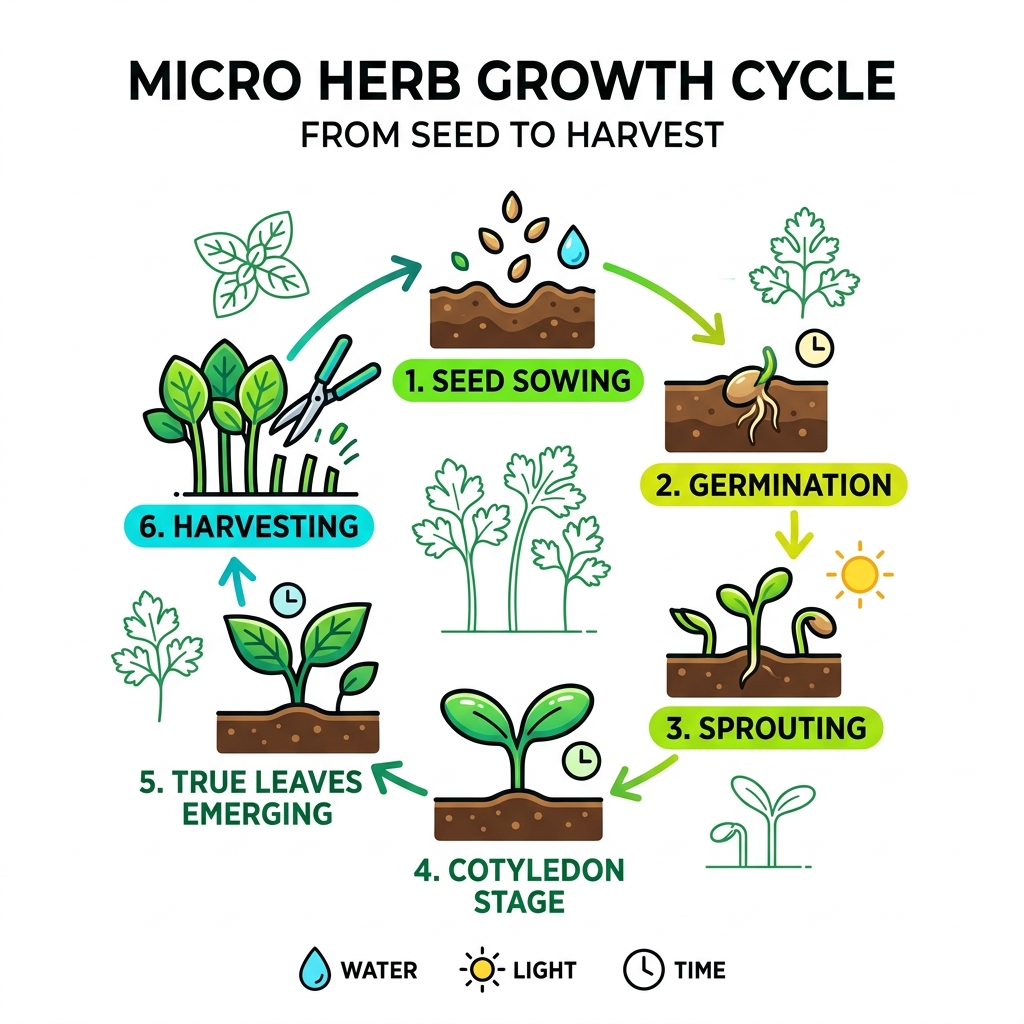
Micro Herbs vs. Microgreens: Key Differences
When we dive into miniature gardening, it’s easy to get tangled up in the terminology. Are micro herbs just fancy microgreens? Not exactly. While they share the same family tree, the nuances lie in their botanical origin and the specific harvest window.
According to research by Di Gioia and Santamaria 2015, microgreens are typically harvested when the cotyledon leaves (the very first “seed leaves”) have fully developed and the first true leaves have just emerged. Micro herbs, however, are often allowed to grow slightly longer to develop those true leaves more fully, as this is where the intense aromatic compounds reside.
The growth cycle for micro herbs generally spans 7 to 21 days, though some slower-growing varieties might take up to 28 days. In contrast, standard microgreens like radishes are often ready in as little as a week. Physically, micro herbs tend to have slightly longer stems and more intricate leaf shapes compared to the simpler cotyledon-heavy look of basic microgreens.
Texture is another big differentiator. While a pea shoot (a microgreen) is crunchy and substantial, a micro basil leaf is delicate and tender. The essential oils that give herbs their signature scent are much more concentrated in these young stages. If you’re just starting your journey, we recommend checking out our Microgreens 101: A Beginner’s Guide to get a handle on the basics.
As noted in Sprouts, microgreens and “baby leaf” vegetables, micro herbs fall into a unique category because they provide visual garnishing, intense flavor, and a “superfood” nutritional profile all at once. They aren’t just a side dish; they are a functional ingredient.
Essential Culinary Varieties for the Kitchen
If you want to invest your time in a “high-yield” culinary portfolio, starting with the most popular types of micro herbs is a smart move. These are the workhorses of the kitchen that pair with almost any meal.

The Culinary Heavy Hitters
| Micro Herb | Flavor Profile | Best Culinary Uses | Average Growth Time |
|---|---|---|---|
| Micro Basil | Sweet, peppery, clove-like | Pizza, pasta, caprese salads | 12-18 days |
| Micro Cilantro | Citrusy, fresh (less soapy) | Tacos, curries, guacamole | 10-14 days |
| Micro Dill | Sweet, feathery, earthy | Seafood, potatoes, egg dishes | 14-21 days |
| Micro Chives | Mild onion, garlic notes | Omelets, soups, baked potatoes | 15-20 days |
Micro Basil is arguably the king of the tray. It’s a bit of a diva—it loves warmth and hates the refrigerator—but the flavor it adds to a homemade margarita pizza is unparalleled. We often suggest beginners look at our Top Microgreens Seeds for Home Gardening to find the best heirloom basil varieties.
Micro Cilantro is another fascinating case. Many people who find mature cilantro tastes like soap actually enjoy the micro version! It’s milder, brighter, and lacks the heavy chemical aftertaste. It’s perfect for finishing off a spicy salsa or a rich curry.
Micro Dill is prized for its delicate, feathery appearance. It’s a favorite for “plating” because it adds height and a soft texture to dishes like smoked salmon or deviled eggs. For a deeper look at how these tiny plants pack such a punch, the research in Microgreens-Novel fresh and functional food highlights how these species express a rich agrobiodiversity in both shape and taste.
Popular Types of Micro Herbs for Home Chefs
Beyond the basics, there are several “lifestyle” herbs that every home chef should have in their rotation.
- Micro Mint: This isn’t just for mojitos. Micro mint is incredible when sprinkled over a summer fruit salad or even mixed into a spicy lamb dish. It’s refreshing and acts as a palate cleanser.
- Micro Chives: These are much more delicate than their adult counterparts. Because they are so thin, they are best used whole as a garnish. They add a sophisticated “fine-dining” look to scrambled eggs or sushi.
- Micro Parsley: Often overlooked, micro parsley is a nutritional powerhouse. It has a clean, grassy flavor that cuts through the richness of stews and roasted meats.
When it comes to health, these aren’t just garnishes. Our guide on Vitamins in Popular Microgreens explains how these tiny leaves can contain significantly higher concentrations of vitamins C and E compared to mature plants. For instance, red cabbage micro herbs are famous for their sky-high vitamin C content!
Unique and Specialty Types of Micro Herbs
If you’re looking to diversify your “green portfolio,” specialty types of micro herbs can offer some of the most exciting flavors in the garden.
- Micro Sorrel: This is a hidden gem. It has a sharp, citrusy tang that tastes like a burst of lemon. It’s fantastic with fish or mixed into a bland salad to give it some “zing.”
- Micro Fennel: If you like anise or licorice, you’ll love micro fennel. It’s sweet and crunchy, making it a great addition to citrus salads or even as a garnish on desserts.
- Micro Chervil: Often called “French parsley,” micro chervil has a subtle flavor of anise and parsley. It’s a bit trickier to grow because it prefers cooler temperatures, but the gourmet result is worth the effort.
- Shiso (Green or Red): Common in Japanese cuisine, shiso micro herbs have a complex flavor that sits somewhere between mint, basil, and cinnamon.
Specialty varieties like these are often Antioxidant Rich Microgreens to Grow, providing unique phytochemicals like anthocyanins (in red varieties) that help fight oxidative stress.
Medicinal and Aromatic Micro Herb Varieties
We don’t just grow micro herbs for the taste; we grow them for the “wellness dividends.” Many herbs traditionally used in medicine can be grown as microgreens to capture their bioactive compounds at their peak.
According to Di Gioia and Santamaria 2015, microgreens have gained the “superfood” label because they are a great source of minerals, vitamins, and antioxidants. When we grow medicinal varieties, we are essentially growing a tiny pharmacy on our windowsill.
Healing Greens
- Micro Turmeric: While we usually eat the root, the micro leaves of turmeric contain curcumin and have a mild, earthy spice. They are great for adding to anti-inflammatory smoothies.
- Micro Fennel: Beyond its culinary use, fennel is known for easing digestive discomfort and bloating.
- Micro Lemon Balm: This herb is famous for its calming effects. Growing it as a micro herb allows you to snip fresh leaves for a soothing evening tea that helps with anxiety and sleep.
- Micro Echinacea: Known for immune support, these tiny leaves can be a great addition to your wellness routine during flu season.
For those interested in the science of health, our Superfood Microgreens for Health and Microgreens Health Benefits Guide provide deep dives into how these plants support everything from heart health to skin vitality.
Aromatic and Sensory Uses
Aromatic micro herbs like Lavender, Lemongrass, and Peppermint serve a dual purpose. While they can be eaten, they are also prized for their scent.
- Micro Lavender: Use these sparingly in desserts like lemon tarts or infused into syrups. The scent alone is therapeutic.
- Micro Lemongrass: These shoots provide a bright, citrusy aroma that is essential for authentic-tasting Thai-inspired soups and teas.
How to Grow Different Types of Micro Herbs at Home
Growing micro herbs is like managing a small, high-frequency trading account—it requires attention to detail, but the payouts happen fast! You don’t need a backyard; a simple windowsill will do.
The Setup
As Di Gioia et al. 2019 points out, microgreens can be grown in tiny spaces with very limited inputs. You don’t even need fertilizer because the seed contains all the energy the plant needs for its first few weeks of life.
- Trays and Soil: Use shallow plastic trays with drainage holes. Fill them with about 1-2 inches of high-quality potting soil or a coconut coir mix.
- Seed Density: This is the “secret sauce” of a good harvest. Smaller seeds (like basil) need about 10-12 seeds per square inch, while larger seeds (like peas or cilantro) need about 2-4 seeds per square inch.
- The Blackout Period: Most seeds need to be covered for the first 3-5 days. This mimics being underground and encourages the stems to stretch upward in search of light.
- Bottom Watering: This is crucial! Never spray your micro herbs from above once they’ve sprouted. It can lead to mold and “damping off.” Instead, place your tray in a larger tray of water and let the soil wick the moisture up.
- Light and Air: Once they outgrow the blackout phase, they need 12-16 hours of light. A sunny window is great, but LED grow lights ensure uniform growth. Good air circulation is also a must to prevent fungal issues.
For a full breakdown of the process, check out our Ultimate Guide to Growing Microgreens at Home.
Beginner-Friendly Varieties to Start With
If you’re nervous about your “green thumb,” start with these “low-risk” options:
- Radish: Grows in 7 days, almost impossible to kill.
- Mustard: Quick germination and a fun, spicy kick.
- Broccoli: Very forgiving and incredibly healthy (up to 40 times more nutritious than mature broccoli!).
- Kale: Sturdy and has a long “tray life,” meaning it stays tasty for several days after reaching maturity.
Frequently Asked Questions about Micro Herbs
Which micro herbs are easiest for beginners to grow?
We always recommend starting with the “Brassica” family. This includes Radish, Mustard, and Broccoli. These seeds have high germination rates and grow very uniformly. They are the “blue-chip stocks” of the micro herb world—reliable and fast. For more easy wins, see our guide on Easy to Grow Microgreens for Your Kitchen Garden.
Are there any micro herbs to avoid?
Yes! This is the most important safety rule: Avoid any plants in the Solanaceae (Nightshade) family. This includes tomatoes, potatoes, eggplants, and peppers. The stems and leaves of these plants contain toxic alkaloids like solanine, which can make you very ill. Stick to known edible herbs and vegetables, and never grow unidentified wild plants as microgreens.
How long is the harvest timeline for micro herbs?
The general window is 7 to 21 days. However, environmental factors like temperature and light play a huge role. In a warm kitchen, your basil might be ready in 12 days, whereas in a chilly basement, it might take 20. You’ll know they are ready when the cotyledons are fully open and you see the first hint of “true leaves” (the ones that actually look like the herb).
Research on Zinc and Iron Agronomic Biofortification shows that the nutrient density is at its peak right around this 2-week mark, so don’t wait too long or the stems may become woody!
Conclusion
At FinanceOrbitX, we believe that gardening shouldn’t be a “locked box” reserved for those with massive backyards. By exploring the different types of micro herbs, you’re not just growing food; you’re building a sustainable, high-yield portfolio of nutrition and flavor right in your kitchen.
Whether you’re starting with a simple tray of spicy radish or venturing into the exotic world of micro shiso and sorrel, the barrier to entry is low and the rewards are delicious. These tiny greens prove that you don’t need a lot of “capital” in the form of space or expensive equipment to produce gourmet-quality results.
Ready to start your first tray? Visit FinanceOrbitX for more gardening guides and let us help you grow your way to a healthier, more flavorful life. Happy planting!
