
The Best Way to Grow Microgreens at Home (Quick Answer)
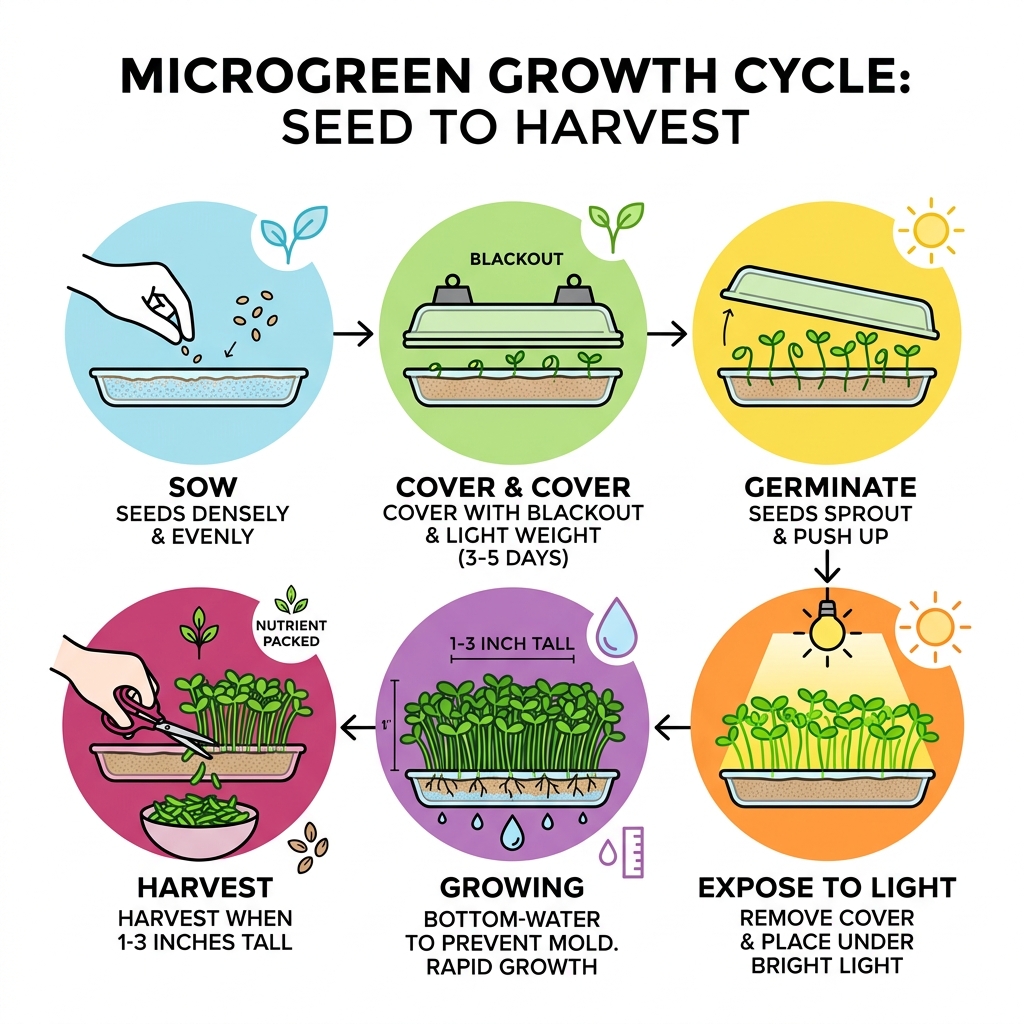
The best way to grow microgreens at home is simple: fill a shallow tray with moist seed-starting mix, sow seeds densely, keep them in the dark for 3-5 days to germinate, then move them under bright light and harvest in as little as 7-14 days.
Here’s the core process at a glance:
- Fill a shallow tray with 1-2 inches of moist, well-draining growing medium
- Sow seeds densely and evenly across the surface
- Cover with a blackout lid or second tray and weigh down for 3-5 days
- Uncover and place under grow lights or a sunny window
- Water from the bottom to prevent mold
- Harvest by cutting just above the soil line when seedlings are 1-3 inches tall
Most people are surprised by how fast this works. You can go from seed to plate in under two weeks — no garden, no outdoor space, no special skills required.
Microgreens are young seedlings of common vegetables and herbs, harvested at the cotyledon stage — right when the first seed leaves open up. At that moment, nutrients are packed into a tiny plant that takes up almost no space on your counter.
Store-bought microgreens can cost $5-$10 per small tray. Growing your own costs just a few dollars in seeds and soil. And the health payoff is real: research shows microgreens can contain significantly higher concentrations of vitamins and minerals than their mature counterparts.
Whether you’re a complete beginner or you’ve killed every houseplant you’ve ever owned, this guide walks you through everything — from picking your first seeds to harvesting a full tray.
Introduction
At FinanceOrbitX, we love a good return on investment, and few things in the gardening world offer a higher “yield” than microgreens. These tiny powerhouses are harvested just 7 to 21 days after sowing, compared to 30 to 40 days for baby greens. Because they are harvested so young, they exhibit “juvenile vigor”—a state where the plant is packed with all the energy and nutrients it needs to become a giant vegetable, but concentrated into a tiny, two-inch stem.
Research published in the Journal of Agricultural and Food Chemistry indicates that microgreens can have 4 to 40 times the nutrient density of mature plants. For example, broccoli microgreens are famous for high levels of sulforaphane, a compound studied for its anti-inflammatory properties. Growing them at home is the best way to grow microgreens at home because it ensures maximum freshness; once cut, these greens begin to lose their nutritional edge quickly. Plus, it’s a fantastic way to keep your “green thumb” active during the winter months without needing a backyard.
Essential Supplies for the best way to grow microgreens at home
Setting up your indoor farm doesn’t require a massive budget, but having the right tools makes the process much more “profitable” in terms of your time and success rate.
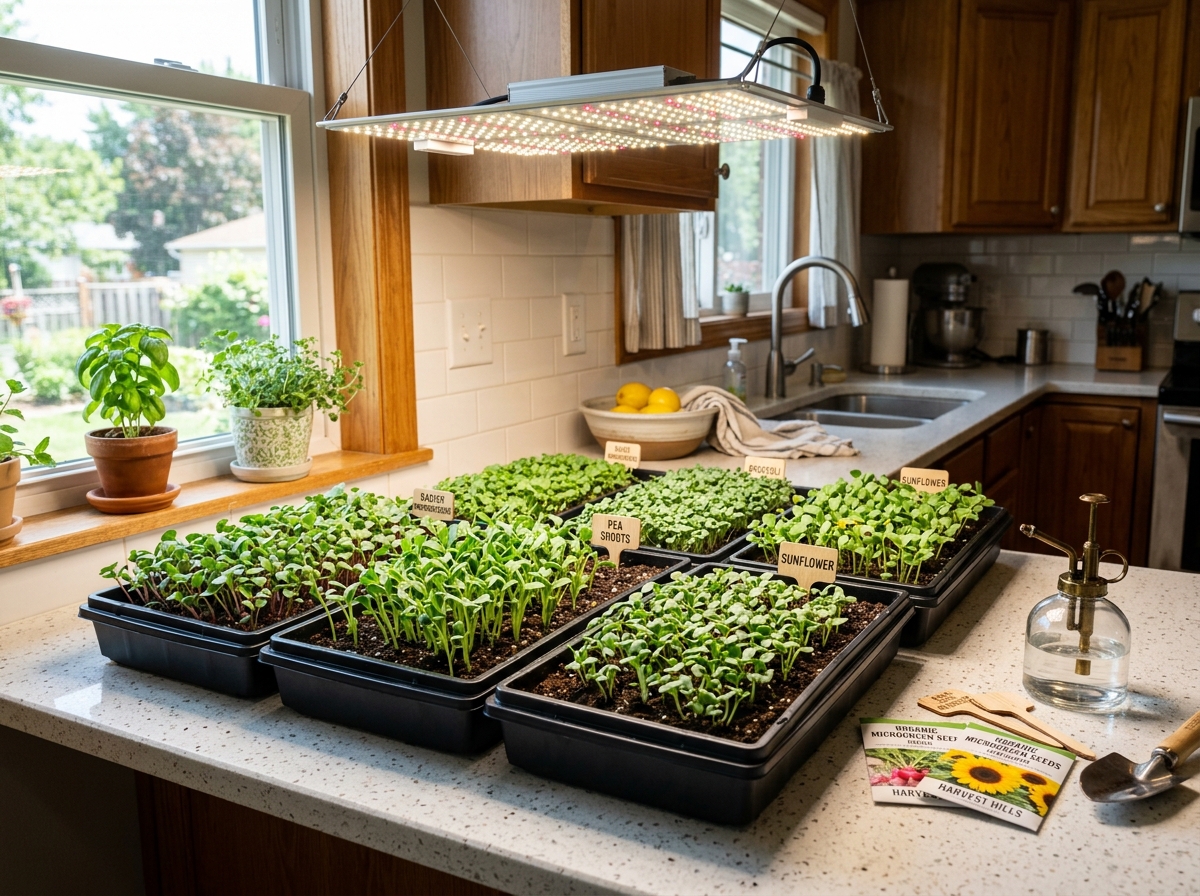
To get started, we recommend a “two-tray system.” You will need Microgreens trays with holes to hold your soil and plants, and Trays without holes to act as a reservoir for bottom-watering. This setup is crucial for preventing mold and ensuring even moisture.
If you are new to this, our Starting an Indoor Garden: A Beginner’s Guide can help you find the perfect corner of your home for your setup. While a sunny windowsill can work, professional-grade results often require LED Grow Lights for Microgreens. We suggest full-spectrum lights, such as the Barrina T8 units, which focus on the blue and red wavelengths plants crave.
Other essential “financial” tools for your garden include:
- A digital Scale to measure seed density accurately.
- A Light timer to ensure your plants get a consistent 14–16 hours of light daily.
Choosing the best way to grow microgreens at home Seeds
Not all seeds are created equal. When selecting Top Microgreens Seeds for Home Gardening, always look for “untreated” or organic seeds. Since you are eating the entire young plant, you want to avoid any seeds coated in fungicides or pesticides.
For beginners, we recommend starting with “The Big Four”:
- Radish: The fastest and easiest. It germinates in 2 days and is ready in 6.
- Broccoli: Mild flavor and incredibly healthy.
- Pea Shoots: Sweet, crunchy, and great for kids.
- Sunflower: Nutty and substantial, though they require a bit more attention to hull shedding.
Growth Comparison Table
| Variety | Seed Weight (per 10×20 tray) | Days to Harvest | Flavor Profile |
|---|---|---|---|
| Broccoli | 10g – 12g | 7 – 10 | Mild, earthy |
| Radish | 20g – 25g | 6 – 8 | Spicy, peppery |
| Pea Shoots | 300g – 350g | 10 – 14 | Sweet, like fresh peas |
| Sunflower | 150g – 200g | 10 – 14 | Nutty, crunchy |
Selecting the best way to grow microgreens at home Medium
Your choice of “real estate” (the growing medium) matters. While you can use Soil and Growing Medium for Microgreens, we recommend a high-quality, soilless peat or coco coir-based mix.
Pro-Mix HP is a favorite among pros because it is sterile and provides excellent drainage. Coconut coir is another great option as it holds up to 10 times its weight in water, reducing the risk of your crop drying out. To boost your “dividends,” consider adding an organic fertilizer like Gaia Green 4-4-4. Research shows that using fertilizer can increase protein levels by 41% and iron levels by 200% in certain varieties.
Step-by-Step Guide to Sowing and Germination
Success in microgreens is all about density. If you sow too thinly, you waste space; too thickly, and you risk mold.
Follow The Ultimate Step-by-Step Guide to Growing Microgreens Without Killing Them to master the broadcast method. Start by filling your tray with about 1.5 inches of moistened soil. Use a flat object to gently press the soil down, creating a level surface.
Weigh your seeds using your digital scale. For a standard 10×20 tray, 10g of broccoli or 25g of radish is ideal. Spread them evenly—think of it like “seasoning” a piece of steak. Once sown, mist the seeds with a spray bottle to ensure they are tucked in and moist. This is the first step in Demystifying the Sprouting Process for Microgreens.
The Blackout Period and Weighted Germination
This is the “secret sauce” of the best way to grow microgreens at home. Instead of covering seeds with soil, we use a “blackout period.” Place an empty tray directly on top of the seeds and add a weight (like a brick or a heavy stone).
This accomplishes three things:
- Root Penetration: The weight forces the roots to dive deep into the soil.
- Stem Strength: The seedlings have to “push” the weight up, resulting in thicker, crunchier stems.
- Seed Hull Detachment: The friction helps the plants shed their seed coats.
Keep the tray in total darkness for 3 to 5 days. Check it daily; once the seedlings are about an inch tall and are starting to lift the weighted tray, it’s time to introduce them to the light.
Managing Growth: Light, Water, and Nutrition
Once the blackout period is over, your microgreens will look pale and slightly squished. Don’t panic! Within hours of exposure to light, they will turn a vibrant green.
Choosing the Right Lighting for Growing Microgreens is vital at this stage. Place your LED lights 3 to 6 inches above the plants. If they are too far away, the plants will become “leggy” as they stretch for the sun.
Watering is the most common place where home growers “lose money” (or crops). We must emphasize The Right Way to Water Your Microgreens: Bottom water only. Pour water into the bottom tray (the one without holes) and let the soil tray sit in it. Capillary action will pull the moisture up to the roots while keeping the delicate leaves and stems dry. This drastically reduces the risk of mold and rot.
Maintaining high Nutrient concentrations in microgreens requires keeping them in a “sweet spot” of 65–75°F with 40–60% humidity.
Troubleshooting Common Growing Issues
Even the best “investors” face market volatility. In microgreens, that volatility usually looks like fuzzy white mold.
Using Tools to Prevent Mold in Microgreens, such as a small oscillating fan, can improve air circulation and keep “damping-off” (a fungal disease) at bay. It is important to Avoid These Common Microgreen Growing Mistakes, like overwatering or using old, contaminated soil.
Pro Tip: Don’t confuse root hairs with mold! Root hairs are tiny, microscopic white fibers that grow directly out of the main root and disappear when misted. Mold looks like a spiderweb and has an unpleasant, musty smell.
Harvesting, Storage, and Culinary Uses
The moment of truth arrives 7 to 14 days after planting. You’ll know they are ready when the first set of leaves (cotyledons) are fully open and vibrant.
Follow Proper Techniques for Harvesting Microgreens by using sharp, clean kitchen shears. Hold a small bunch of greens in one hand and snip them about half an inch above the soil line. It is essential to keep the greens clean; if you get soil on them, they will spoil faster.
After harvest, sanitation is key. We use ZeroTol or a simple vinegar solution to disinfect trays before the next “investment cycle.”
Maximizing Shelf Life and Flavor
Microgreens are best eaten immediately, but they can last 5 to 10 days in the fridge if handled correctly. The trick is to keep them dry. Never wash your microgreens until right before you eat them. Store them in an airtight container with a paper towel to absorb any excess moisture.
In the kitchen, the possibilities are endless:
- Smoothies: Add a handful of broccoli microgreens for a sulforaphane boost.
- Salads: Use pea shoots as a base for a sweet, crunchy salad.
- Garnish: Sprinkle radish microgreens over tacos or avocado toast for a peppery kick.
Frequently Asked Questions about Growing Microgreens
Do microgreens regrow after cutting?
For most varieties, the answer is no. Because we harvest them at such a young stage, they haven’t developed the “true leaves” or complex root systems needed to bounce back. You are essentially taking the plant’s entire “capital” in one go. The exception is pea shoots, which can sometimes provide a second, smaller harvest if you leave at least one node on the stem. However, for maximum flavor and nutrition, we recommend composting the old soil and starting a fresh batch.
Can you grow microgreens without soil?
Absolutely. Check out Your Guide to Soil-Free Microgreens Growing for details on using hydroponic mats made of hemp, jute, or coco coir. While soil-free methods are cleaner (no dirt in your kitchen!), some growers find that soil-grown greens have a more robust flavor and higher mineral content because of the nutrients present in the growing medium.
How long does it take to grow microgreens at home?
Most beginner varieties take 7 to 14 days from seed to harvest. Radishes are the “day traders” of the microgreen world, ready in about 6 days, while herbs like cilantro or basil can take up to 21 days. The temperature of your home plays a big role; warmer rooms (around 75°F) will see much faster growth than cool basements.
Conclusion
At FinanceOrbitX, we believe that the best way to grow microgreens at home is to treat your indoor garden like a small, high-yield business. By mastering these simple steps, you can save hundreds of dollars a year on high-end produce while significantly boosting your family’s nutrition.
If you are working with limited space, don’t miss our Apartment-Friendly Tips for Growing Microgreens. Whether you’re growing one tray for fun or an entire rack to scale up your production, the ROI on home-grown greens is unbeatable.
Ready to diversify your indoor portfolio? Explore more indoor gardening guides and start your first tray today!
