
Your Quick Start Microgreens Guide: From Seed to Harvest in Under 2 Weeks
If you’re looking for a quick start microgreens guide, here’s everything you need to know right now:
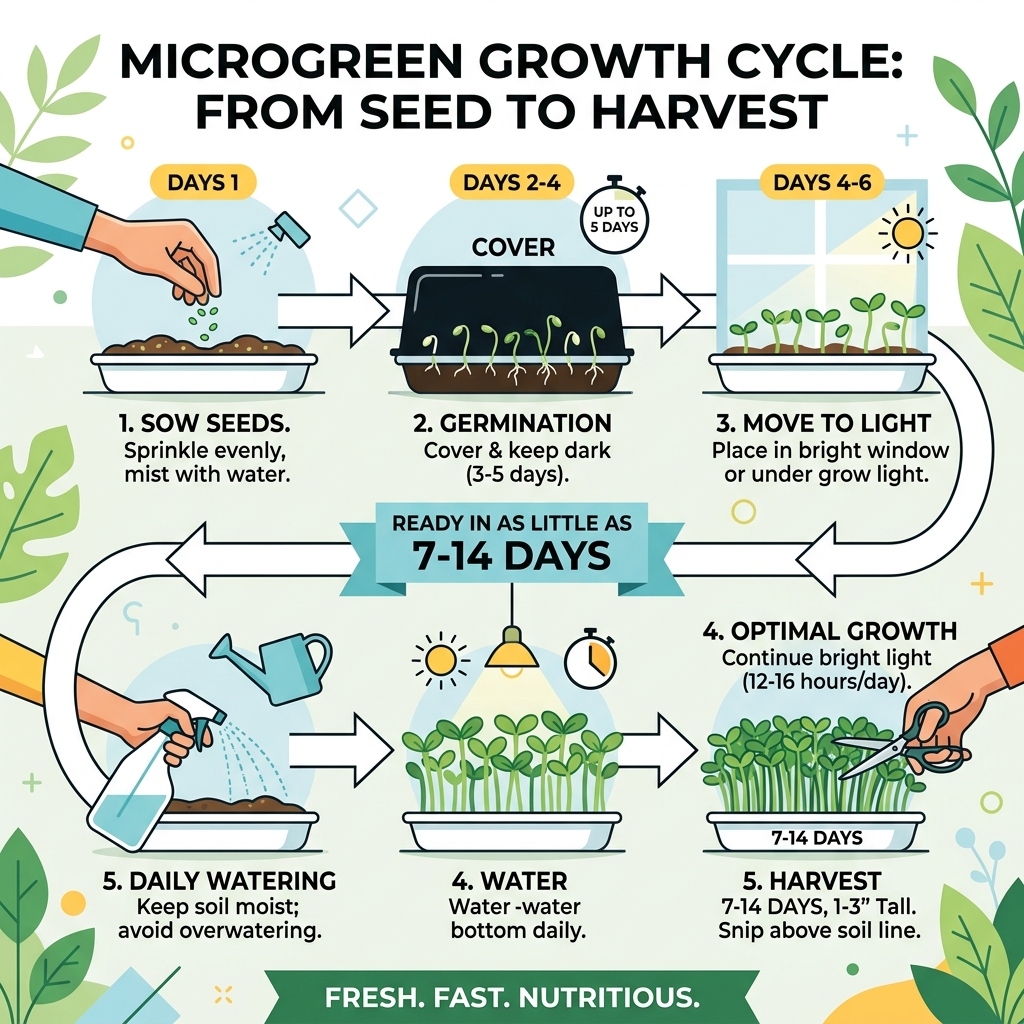
How to grow microgreens fast (7-14 days):
- Fill a shallow tray with 1-1.5 inches of seed-starting mix
- Spread seeds evenly and mist with water
- Cover and keep in a dark spot for 3-5 days (germination)
- Move to a bright window or grow light (12-16 hours/day)
- Water from the bottom daily
- Harvest when 1-3 inches tall by snipping above the soil line
Tiny. Fast. Packed with nutrition.
Microgreens are the seedlings of everyday vegetables like broccoli, radish, and kale — harvested just after the first leaves appear. They’re ready in as little as 7 days, require almost no space, and can contain up to 40 times the nutrients of their fully grown counterparts.
You don’t need a garden. You don’t need a green thumb. You need a tray, some seeds, and a sunny windowsill.
Whether you’re trying to eat healthier, stretch your grocery budget, or just grow something alive on your kitchen counter — microgreens are one of the easiest wins in home gardening.
This guide walks you through every step, from picking your seeds to plating your first harvest.
Quick start microgreens guide terms to learn:
Why You Should Grow Your Own Superfoods
In high-yield investments, microgreens are the “blue chip” stocks of the vegetable world. We often talk about maximizing returns at FinanceOrbitX, and nothing offers a better return on your time and space than these tiny greens. According to Microgreens 101: A Beginner’s Guide, these plants are not just “baby” versions of vegetables; they are nutritional powerhouses.
Research indicates that microgreens can pack between 3 to 40 times the nutritional content of mature plants. When you eat a handful of broccoli microgreens, you are potentially getting the same vitamin concentration as you would from a much larger portion of full-grown broccoli. They are incredibly rich in antioxidants and polyphenols, which are essential for fighting off cellular stress.
Another reason we love them? They are immune to the seasons. While your outdoor garden might be buried under snow or scorched by a heatwave, your indoor microgreen setup stays productive year-round. This is sustainable living at its most efficient. As noted in this Step-By-Step Guide for Growing Microgreens at Home, anyone can turn a kitchen counter into a high-production mini-farm.
The Quick Start Microgreens Guide to Sprouts vs. Microgreens
We often see beginners confuse sprouts and microgreens, but they are different “assets” in your culinary portfolio. Understanding the difference is key to a successful quick start microgreens guide.
| Feature | Sprouts | Microgreens |
|---|---|---|
| Growth Medium | Water only | Soil, coco coir, or mats |
| Harvest Time | 4-6 days | 1-3 weeks |
| Light Needs | Low to none | High (12-16 hours) |
| Parts Eaten | Seed, root, and stem | Stem and leaves only |
| Bacterial Risk | Higher (warm, wet conditions) | Lower (better ventilation) |
| Flavor | Mild/Crunchy | Intense/Vibrant |
Microgreens are generally considered safer because they are grown with better airflow and light, reducing the risk of the bacterial contamination often associated with the damp, dark environments sprouts require. Plus, the flavor profile of a microgreen is much more sophisticated—think of it as the “premium” version of the plant.
Essential Supplies for Your Quick Start Microgreens Guide
You don’t need to break the bank to get started, but having the right tools makes the process “fast and furious” rather than “slow and frustrating.” If you want to skip the guesswork, you can look into The Best Microgreen Growing Kit Options for Your Home, but building your own kit is also simple.
Here is our “must-have” inventory list:
- Shallow Trays: You don’t need deep pots. Containers that are 2-3 inches deep are perfect. When Choosing the Best Containers for Your Microgreens, look for ones that allow for drainage.
- Drainage Holes: This is non-negotiable. Stagnant water is the enemy of healthy roots.
- Spray Bottle: Essential for the early days when seeds need a gentle misting.
- Sharp Shears: Kitchen scissors or specialized harvesting snips will give you a clean cut.
- Kitchen Scale: Professional growers use this to measure seed density, ensuring they don’t overcrowd the tray.
Choosing the Right Seeds and Growing Medium
Your choice of “raw materials” determines the quality of your final product. For the medium, we recommend a fine seed-starting mix or coconut coir. These provide the loose, well-drained environment seedlings crave. You can learn more about the pros and cons of different options in our guide on Soil and Growing Medium for Microgreens.
When it comes to seeds, look for high-quality, untreated heirloom seeds. While you can technically use regular garden seeds, microgreen-specific seeds are usually sold in bulk, which is much more cost-effective.
For beginners, we suggest starting with these Easy-to-Grow Microgreens for Your Kitchen Garden:
- Radish: The “sprint runner” of microgreens. Ready in 6-8 days with a spicy kick.
- Broccoli: Mild flavor and incredibly high in sulforaphane.
- Kale: Robust and grows very evenly.
- Pea Shoots: Sweet, crunchy, and one of the few that might give you a second harvest.
Step-by-Step Instructions for Planting and Growth
Ready to get your hands dirty? Follow this sequence from The Ultimate Step-by-Step Guide to Growing Microgreens Without Killing Them to ensure a 100% success rate.
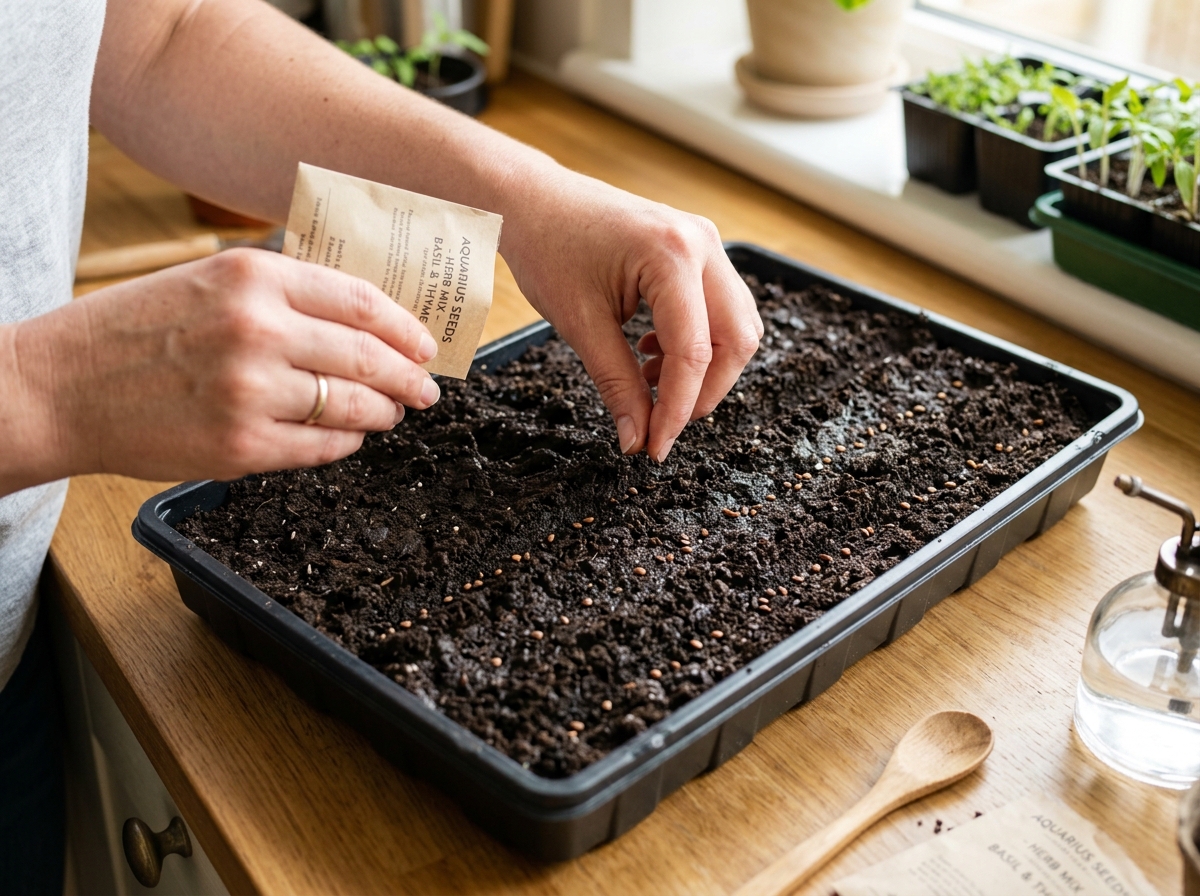
1. Tray Preparation Fill your tray with about 1 to 1.5 inches of your chosen growing medium. Level it out with a flat object (like another tray) but don’t pack it down too hard. You want it firm but breathable.
2. Even Sowing This is where the “art” comes in. You want to broadcast your seeds evenly across the surface. For small seeds (like broccoli), aim for about 1-1.5 ounces per 10×20 tray. For larger seeds (like peas or sunflowers), you might need 3-4 ounces. Avoid clumping, as this leads to mold.
3. Misting and Initial Watering Mist the seeds generously with your spray bottle. You want the surface to be moist so the seeds can “lock” into the medium.
4. The Blackout Period This is the secret sauce. Most microgreens need a “blackout” phase to germinate properly. Cover your tray with another inverted tray or a lid to keep it in total darkness for 3-5 days. Many experts suggest placing a weight (like a brick or a heavy book) on top of the lid. This pressure forces the roots to dive deep into the soil and helps the seedlings shed their seed hulls.
5. Germination Phase During these first few days, check the moisture once a day. If it feels dry, give it a quick mist. Most microgreens will germinate in just 2 to 3 days. Once they are about an inch tall and looking a bit pale (because they haven’t seen light yet), it’s time to move them.
Managing Light and Water in Your Quick Start Microgreens Guide
Once the blackout period is over, your “babies” need two things: light and consistent hydration.
Lighting Needs Microgreens generally require about 12-16 hours of light per day. If you have a bright, south-facing window, that might work, but for consistent results, we recommend LED grow lights. Position them 6-12 inches above the tray. To dive deeper into tech specs, check our post on Choosing the Right Lighting for Growing Microgreens.
The Bottom Watering Technique Stop misting once the plants are upright! Misting the leaves now can encourage mold. Instead, use “bottom watering.” Place your growing tray inside a solid tray (without holes) and pour water into the bottom tray. Let the soil wick up the moisture for about 10-15 minutes, then drain any excess. This keeps the stems dry and the roots happy. We cover this in detail in Stop Guessing and Learn Exactly How Often to Water Microgreens.
Temperature and Airflow Most varieties thrive between 65-75°F. Good air circulation is vital—if your room feels “stuffy,” your microgreens might struggle with fungal issues. A small oscillating fan can work wonders.
Harvesting and Troubleshooting Your Home Crop
The finish line is in sight! Most microgreens are ready for harvest within 1-3 weeks, typically when they reach 2-3 inches in height.
When to Harvest: You are looking for the “cotyledon” stage—this is when the first set of “seed leaves” has fully expanded. Some growers wait for the “true leaves” (the second set that looks like the mature plant) to appear for a more developed flavor, but the cotyledon stage is usually the peak for nutrition.
How to Harvest: Using Proper Techniques for Harvesting Microgreens, grab a small clump of greens and snip the stems about half an inch above the soil line. Try to avoid getting any soil or growing medium in your harvest.
Storage and Shelf Life: Harvested microgreens will stay fresh for 5 to 7 days in the refrigerator. The secret is to keep them dry. We recommend placing them in an airtight container or a silicone bag lined with a dry paper towel. Pro tip: Do not wash them until right before you are ready to eat them! Washing them before storage drastically reduces their shelf life.
How to Prevent Mold and Wilting
Even the best growers run into issues. If you want to Avoid These Common Microgreen Growing Mistake, keep an eye out for these red flags:
- Root Hairs vs. Mold: This is the #1 beginner mistake. Tiny, white, fuzzy structures at the base of the stem are often just root hairs (which are healthy!). If the fuzz disappears when you mist it, it’s a root hair. If it stays and looks like a spiderweb, it might be mold.
- Damping Off: This is a soil-borne fungus that causes seedlings to collapse at the base. It’s usually caused by overcrowding or overwatering. If you see this, remove the affected area immediately and improve your airflow.
- Hydrogen Peroxide: A 3% food-grade hydrogen peroxide solution mixed with water can be misted on the soil surface to combat early mold growth.
- Seed Spacing: If your tray looks like a tangled jungle, you probably used too many seeds. Next time, use a scale to measure your seed density more accurately.
Frequently Asked Questions about Microgreens
Can I grow microgreens with regular garden seeds?
Yes, you certainly can! A seed is a seed. However, “regular” garden seeds from the hardware store often come in tiny packets that are quite expensive for the volume you need. Furthermore, some garden seeds are treated with fungicides or pesticides. For a quick start microgreens guide, we always recommend buying seeds specifically labeled for microgreens, as they are untreated and sold in bulk quantities (like 1lb bags), which is much more cost-effective.
Do microgreens regrow after the first harvest?
For about 95% of varieties, the answer is no. Once you snip the stem, the plant has used up the energy stored in the seed and will not regrow. You should compost the remaining soil and roots and start fresh.
The Exception: Pea shoots! If you cut pea shoots just above the lowest leaf node, they will often grow back for a second, slightly smaller harvest.
How do I use microgreens in my daily meals?
The possibilities are endless, but here are our favorites:
- Raw Consumption: This is the best way to preserve all those 30-40x nutrients.
- Salad Toppers: Add a handful of radish or arugula microgreens to a standard salad for a massive flavor boost.
- Smoothie Boost: Kale and broccoli microgreens blend perfectly into fruit smoothies without changing the taste much.
- Sandwich Crunch: Replace boring iceberg lettuce with crunchy sunflower shoots or spicy mustard greens.
- Garnishes: Elevate a simple avocado toast or a bowl of soup to restaurant-quality with a sprinkle of purple kohlrabi greens.
Conclusion
Growing microgreens is one of the most rewarding “fast-track” projects you can start today. It fits perfectly into the FinanceOrbitX philosophy: low overhead, high returns, and a focus on long-term sustainability. By spending just 10 minutes a day on your “indoor farm,” you can ensure your family has access to the freshest, most nutrient-dense produce available—no grocery store trip required.
Ready to scale up your operation? Check out More info about microgreen supplies to find the best gear for your next crop. Whether you’re growing for health, for flavor, or just for the fun of it, microgreens are a winning investment every time.
