
When Your Tiny Garden Goes Wrong: A Quick Guide to Microgreens Troubleshooting
Microgreens troubleshooting comes down to a handful of common problems — and almost every one has a straightforward fix.
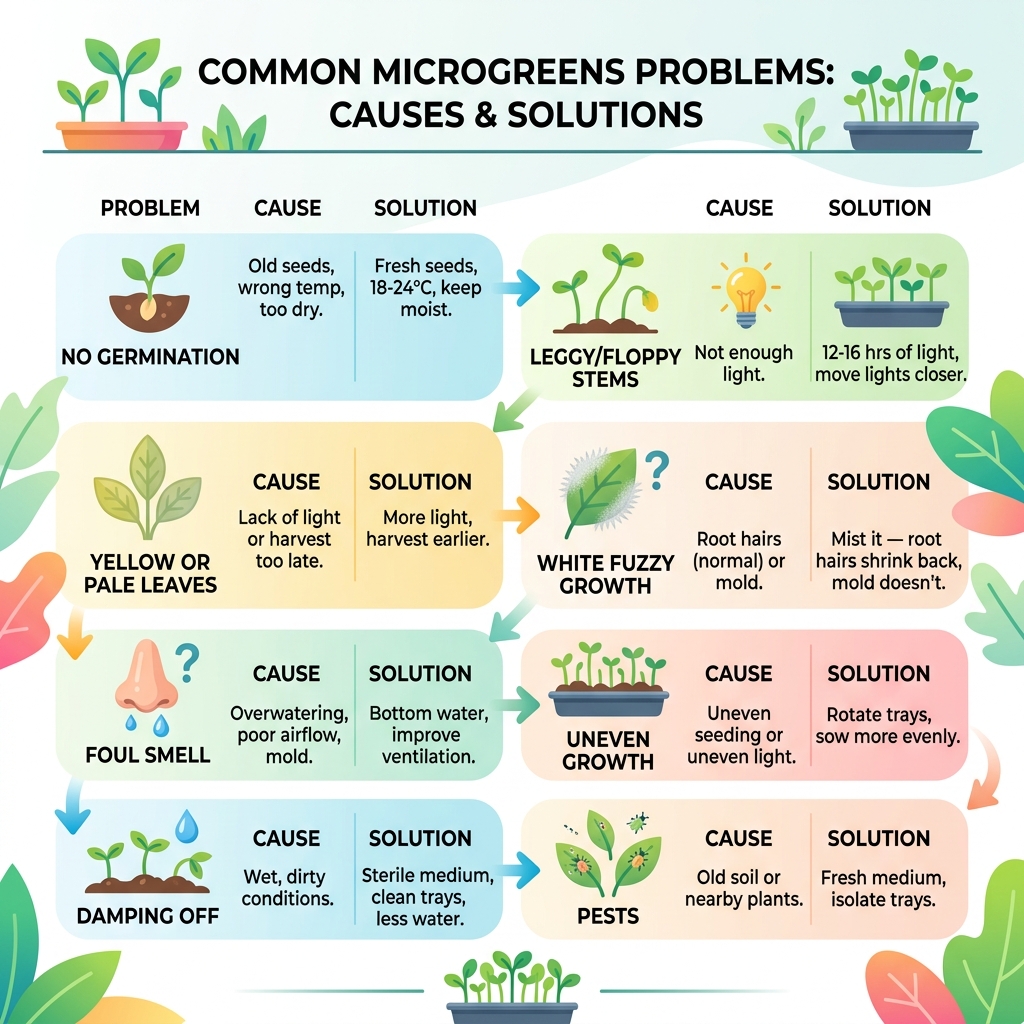
Quick answers for the most common microgreen problems:
| Problem | Most Likely Cause | Quick Fix |
|---|---|---|
| No germination | Old seeds, wrong temp, too dry | Fresh seeds, 18-24°C, keep moist |
| Leggy/floppy stems | Not enough light | 12-16 hrs of light, move lights closer |
| Yellow or pale leaves | Lack of light or harvest too late | More light, harvest earlier |
| White fuzzy growth | Root hairs (normal) or mold | Mist it — root hairs shrink back, mold doesn’t |
| Foul smell | Overwatering, poor airflow, mold | Bottom water, improve ventilation |
| Uneven growth | Uneven seeding or uneven light | Rotate trays, sow more evenly |
| Damping off | Wet, dirty conditions | Sterile medium, clean trays, less water |
| Pests | Old soil or nearby plants | Fresh medium, isolate trays |
Growing microgreens is one of the most beginner-friendly ways to grow your own food at home. Most crops go from seed to harvest in just 7 to 14 days. But that speed also means problems show up fast.
A sparse, patchy tray. Stems that flop over. That mystery white fuzz you’re not sure is mold or something harmless. These are the moments that make new growers think they’ve failed.
You haven’t. Almost every microgreens problem has a clear cause — and a clear fix.
This guide walks you through the most common issues, what’s causing them, and exactly what to do about them.
Master the Basics of Microgreens Troubleshooting
When we first start our journey into Indoor Gardening, we often expect a perfect “Instagram-worthy” carpet of green. But behind those perfect photos is usually a grower who has mastered the art of the pivot. Successful cultivation isn’t about never having a problem; it’s about knowing how to read the signs your plants are giving you.
Think of your microgreen tray like a high-yield savings account. If you don’t put in the right initial investment (quality seeds and environment), you won’t see the returns you’re looking for. To avoid a total disaster, we need to focus on the “Big Three”: seed quality, density, and environmental control.

Choosing High-Quality Seeds
The most common reason for a “non-starter” tray is poor seed quality. If your seeds have a germination rate below 75%, you’re fighting an uphill battle from day one. We always recommend sourcing seeds from reputable suppliers who provide germination testing and disease-free certificates.
One mistake we often see in the DIY community is the use of birdseed. While it might seem like a cost-effective “life hack,” birdseed is not regulated for human consumption. It can carry pathogens or be treated with chemicals that have no place in your salad bowl. Stick to seeds specifically labeled for sprouting or microgreens to ensure safety and high yields.
Optimizing the Germination Environment
Microgreens are like Goldilocks—they want everything just right. Most varieties thrive in a temperature range of 18–24°C (65–75°F). If your grow room is too cold, germination will be sluggish or non-existent. If it’s too hot, you’re essentially inviting mold to a buffet.
To ensure success, focus on these environmental pillars:
- Seed-to-Medium Contact: After sowing, we like to gently press the seeds into the medium. This ensures they can actually soak up the moisture they need to “wake up.”
- The Blackout Period: Most microgreens need 2 to 5 days of total darkness to germinate. This simulates being buried under soil. Using a “blackout dome” or an inverted tray helps retain humidity and encourages the seeds to stretch upward.
- Moisture Retention: During the first few days, the medium should be damp like a wrung-out sponge, but never swimming in water. A light misting once or twice a day is usually plenty.
For more on getting your setup right, check out our guide on Supplies.
Solving Growth Failures: Leggy, Yellow, and Wilted Sprouts
If your seeds have sprouted but now look like they’ve had a very long, very bad night, you’re likely dealing with a light or water imbalance. This is where most microgreens troubleshooting happens.
Fixing Leggy and Floppy Stems
“Leggy” microgreens have long, pale, thin stems that eventually collapse under their own weight. This is almost always a cry for more light. When plants don’t get enough light, they put all their energy into growing taller to “reach” for a source, resulting in weak cell walls.
The Fix:
- LED Positioning: If you’re using grow lights, ensure they are 8–12 inches above the canopy.
- Light Duration: We recommend 12–16 hours of light per day.
- Tray Rotation: If you’re growing on a windowsill, your plants will lean toward the glass. Rotate the tray 180 degrees every day to keep them standing straight.
- Airflow: A gentle breeze from a small fan helps strengthen the stems by mimicking natural wind.
Why Microgreens Turn Yellow or Pale
Seeing yellow leaves can be alarming, but context is everything. If your microgreens just came out of the blackout period, they should be yellow. They haven’t started photosynthesis yet! Once they hit the light, they should turn vibrant green within 24 hours.
However, if they stay yellow or turn pale later in the cycle, you might be looking at:
- Light Deficiency: The light isn’t strong enough to produce chlorophyll.
- Nutrient Exhaustion: Most microgreens get all the food they need from the seed itself for the first 10-14 days. If you’re growing them longer (like cilantro or basil), they may need a half-strength organic fertilizer.
- Harvest Timing: If you wait too long to harvest, the “baby” leaves (cotyledons) will naturally turn yellow and die as the plant tries to grow “true” leaves.
For more specific advice on timing, see our Growing Tips.
The War on Fungus: Mold vs. Root Hairs
This is the #1 question we get: “Is this mold, or am I okay?” Mistaking harmless root hairs for mold is a tragedy because it leads many beginners to throw away perfectly healthy food.
Distinguishing Mold from Root Hairs
Root Hairs (Cilia): These are tiny, microscopic hairs that help the plant drink.
- They look like a uniform, white “fuzz” around the root.
- They are odorless.
- The Water Test: If you mist them with water, they disappear or shrink back against the root.
Mold: This is a fungal intruder.
- It looks like grey, blue, or yellow “spiderwebs” or clumps.
- It often has a musty, earthy, or foul smell.
- It does not disappear when misted.
Eliminating Foul Smells and Rot
If your tray smells like a swamp, you have an anaerobic environment. This happens when there is too much water and not enough oxygen. Stagnant air and overwatering are the primary culprits.
To prevent this, we swear by bottom watering. Instead of pouring water over the top of the plants (which keeps the stems wet and invites rot), place your growing tray inside a second tray without holes. Pour water into the bottom tray, and let the medium wick it up. This keeps the “canopy” dry and the roots hydrated.
If you do spot a small patch of mold, don’t panic. You can often save the tray by:
- Increasing airflow immediately.
- Misting the affected area with a dilute solution of 3% hydrogen peroxide (about 2 teaspoons per cup of water).
- Removing the affected clump entirely.
For the right tools to keep things clean, visit our Supplies page.
Preventing Total Disaster with Proper Sanitation
In microgreens, cleanliness is next to… well, a successful harvest. Because we grow these plants in high-density, warm, and moist environments, they are susceptible to damping off—a condition where soil-borne pathogens kill the seedlings at the base.
Managing Damping Off and Seedling Rot
Damping off looks like your microgreens have been mowed down in a specific patch. The stems turn mushy and brown right at the soil line.
Prevention is the only real cure:
- Sterile Medium: Use high-quality coco coir or sterilized seed-starting mix. Never reuse soil from your outdoor garden.
- Tray Sterilization: Between every single crop, wash your trays with hot, soapy water. For an extra layer of protection, soak them in a 1:10 bleach-to-water solution or spray them with 70% isopropyl alcohol.
- Natural Antifungals: Some growers find success dusting the soil with a bit of cinnamon powder or misting with cooled chamomile tea, both of which have mild natural antifungal properties.
Pest Prevention and Organic Control
While indoor microgreens are generally safe from the “big” garden pests, you might encounter fungus gnats or aphids. Fungus gnats love overwatered soil. If you see tiny black flies, you are likely watering too much.
Our Pest Strategy:
- Isolate: Keep your microgreens away from your regular houseplants.
- Yellow Sticky Traps: These are great for catching adult gnats before they lay eggs.
- Neem Oil: If aphids appear, a very light application of food-safe neem oil can help, though we usually recommend simply harvesting early and starting fresh if an infestation takes hold.
Learn more about maintaining a healthy environment in our Growing Tips section.
Frequently Asked Questions about Microgreens Troubleshooting
Why is my microgreens troubleshooting not fixing slow growth?
If you’ve adjusted the light and water but growth is still stalled, check your temperature. If the room is below 15°C (60°F), the plants’ metabolism slows down significantly. Also, check your water pH. Microgreens prefer a slightly acidic pH (around 6.0). If your tap water is very alkaline, the plants may struggle to absorb nutrients.
How do I start microgreens troubleshooting for mold?
First, perform the “water test” to ensure it isn’t just root hairs. If it is mold, immediately increase airflow with a fan (not aimed directly at the plants, but across the room). Reduce your watering frequency and ensure you are bottom watering. If the mold is fuzzy and white, a light mist of diluted hydrogen peroxide can often stop it in its tracks.
How do I know when my microgreens are ready to harvest?
The sweet spot is usually when the first “true leaves” just begin to appear between the two “seed leaves” (cotyledons). For most varieties, this is when they are 1.5 to 3 inches tall. The best way to know? The taste test! If they taste bright and flavorful, they are ready. If they start to taste bitter, you’ve waited a day or two too long.
Conclusion
At FinanceOrbitX, we believe that growing your own food is one of the smartest investments you can make for your health and self-sufficiency. While microgreens troubleshooting might feel overwhelming at first, every “failed” tray is just data for your next success.
We highly recommend keeping a “grow log.” Note down the seed variety, the amount of water you used, and how long the blackout period lasted. Over time, you’ll develop a “feel” for the plants that no guide can replace.
Don’t let a little mold or a few leggy stems stop you. Clean your trays, grab some fresh seeds, and get growing again! For more deep dives into successful cultivation, check out more growing tips.
