
Why Timing Your Microgreens Harvest Makes All the Difference
A microgreens harvest time guide is exactly what every new grower needs before picking up a pair of scissors. Here’s the quick answer:
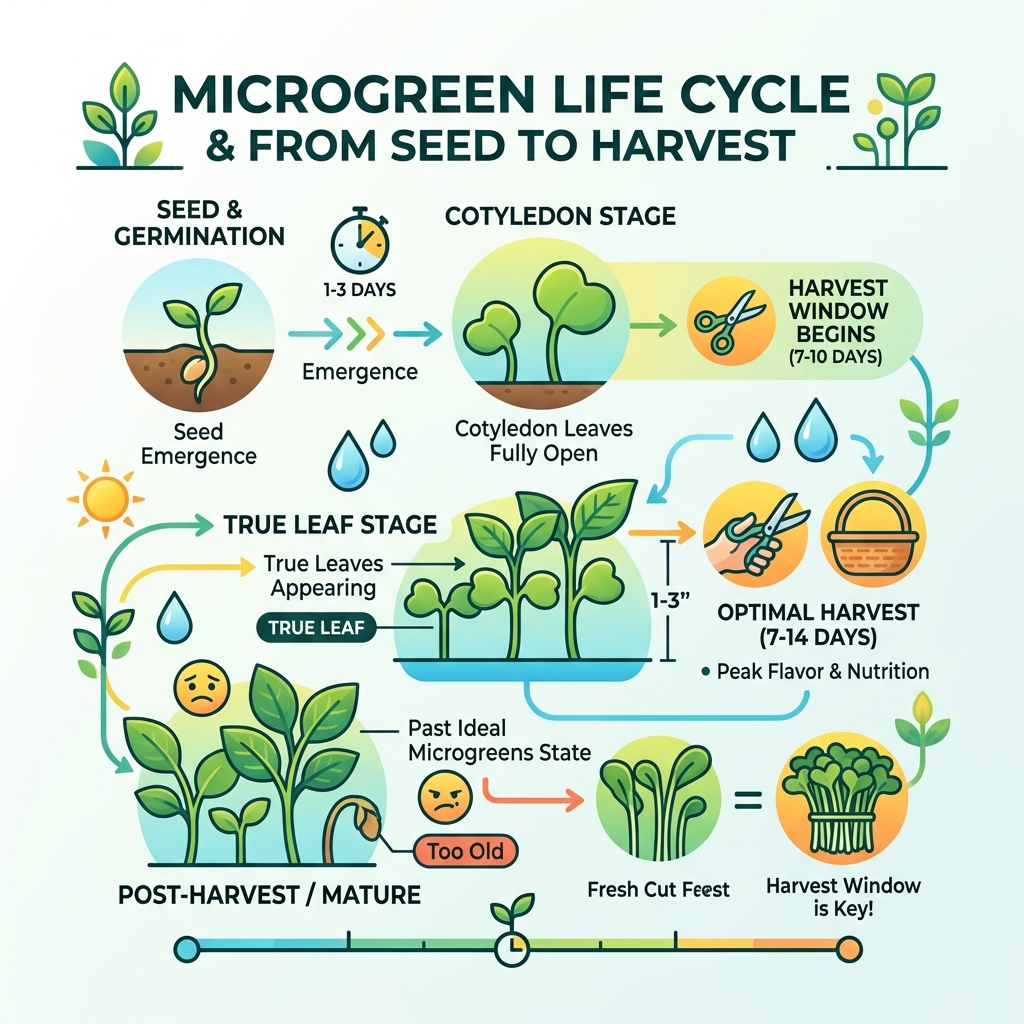
Most microgreens are ready to harvest 7-14 days after germination. The best signal is when the cotyledon leaves are fully open and the first true leaves are just beginning to emerge.
| Variety | Harvest Window | Height at Harvest |
|---|---|---|
| Cress / Mustard | 5-7 days | 1-2 inches |
| Radish | 7-10 days | 1-2 inches |
| Broccoli / Kale | 8-12 days | 1-2 inches |
| Pea Shoots / Sunflower | 10-14 days | 2-3 inches |
| Basil | 20-25 days | 2-3 inches |
Harvest too early and the flavor hasn’t fully developed. Wait too long and bitterness creeps in, stems get tough, and nutritional value starts to drop.
That narrow window is the key challenge for most beginners. You plant your seeds, watch them sprout, and then suddenly you’re second-guessing yourself — are they ready yet?
The good news: once you know what to look for, it becomes second nature fast.
Microgreens harvest time guide further reading:
Understanding the Microgreens Harvest Time Guide: Growth Stages
To master the art of the harvest, we first need to understand the biological journey these tiny plants take. Unlike full-grown vegetables that take months to mature, microgreens operate on a “fast-forward” schedule. At FinanceOrbitX, we like to think of this as a high-yield investment with a very short maturity date.
The journey begins with the germination phase. This typically lasts 1 to 3 days. During this time, the seeds soak up moisture, crack open, and send out a primary root (radicle). Many growers use a “blackout period” here, covering the trays to mimic being underground.
Next comes the cotyledon development. These are the “seed leaves” that were already tucked inside the seed. They are usually simple, rounded, and don’t look much like the adult plant’s leaves. For many varieties, this is the first possible harvest point.
Finally, we see true leaf emergence. These are the leaves that actually resemble the plant—for example, a tiny serrated arugula leaf or a lacy cilantro leaf. According to research from the University of Maryland Extension, this stage often represents the peak of nutrient concentration. Understanding these stages is the foundation of any microgreens-101-a-beginners-guide.
Identifying the Ideal Harvest Point
The “sweet spot” for harvesting is usually just as the first true leaves begin to peek out between the cotyledons. At this moment, the plant has exhausted the energy stored in the seed but hasn’t yet shifted its resources toward building a complex root system or woody stems.
This point offers the perfect balance of three factors:
- Peak Nutrition: Microgreens can contain 4 to 40 times more vitamins and antioxidants than their mature counterparts.
- Flavor Profile: The taste is concentrated and bright.
- Texture Quality: The stems are crisp and tender, not fibrous or “leggy.”
If you want to dive deeper into the setup that leads to this point, check out our ultimate-guide-to-growing-microgreens-at-home.
Using the Microgreens Harvest Time Guide for Fast Growers
If you’re the impatient type (and in indoor gardening, who isn’t?), you’ll want to start with the “sprinters.” Varieties like cress, mustard, and radish are the speed demons of the tray.
These varieties often hit their stride in a 5-7 day window. Radish microgreens, in particular, are famous for being ready in less than a week, offering a spicy, peppery punch that can elevate any sandwich. Because they grow so quickly, they are perfect for the-fastest-growing-microgreens-to-try-at-home.
Visual Cues and Sensory Tests for Readiness
While a calendar is helpful, your eyes and taste buds are the ultimate authorities. Environmental factors like the temperature in your kitchen or the intensity of your grow lights can shift the microgreens harvest time guide by several days.

The Taste and Texture Check
We always recommend the “daily nibble” method starting around day 7.
- Bitterness: If a variety that should be sweet (like sunflower) starts tasting bitter, you’ve waited too long.
- Sweetness: Peas and corn shoots should have a distinct sugary snap.
- Fiber Content: If the stem feels like you’re chewing on a piece of string, the plant is becoming too mature.
- Crunch Factor: A ready microgreen should “snap” when bitten, indicating high turgidity (water pressure in the cells).
Physical Indicators of Maturity
Beyond taste, look for these physical signs:
- Height: Most varieties are ready when they reach 1-3 inches tall.
- Open Leaves: The cotyledons should be fully expanded and horizontal, not curled or pointing upward.
- Tray Density: A healthy tray should look like a lush, miniature forest. If you see significant yellowing at the base, it might be overcrowded, signaling it’s time to harvest immediately to prevent mold.
For more on maintaining this balance, see the-ultimate-step-by-step-guide-to-growing-microgreens-without-killing-them.
Variety-Specific Timelines for Popular Microgreens
Not all greens are created equal. Some take their time to develop complex aromas, while others are in a rush to finish.
| Variety | Growth Days | Ideal Height | Primary Flavor |
|---|---|---|---|
| Radish | 7-10 | 1-2″ | Spicy/Peppery |
| Pea Shoots | 10-14 | 3-4″ | Sweet Pea |
| Sunflower | 10-14 | 2-3″ | Nutty/Crunchy |
| Broccoli | 8-12 | 1-2″ | Mild/Earthy |
For a broader look at which seeds to buy, explore our list of top-high-yield-microgreens-varieties-to-boost-your-production.
Radish and Broccoli: The Quick Turnaround
Radish is the gold standard for beginners. It’s hard to mess up and provides an almost instant reward. Its spicy bite is perfect for tacos or salads. Broccoli is another favorite, valued for its high sulforaphane levels (an anti-cancer compound). It typically takes 8-12 days to reach its peak. If you’re focusing on speed, the-beginner-guide-to-rapid-radish-microgreen-success is a must-read.
Pea Shoots and Sunflowers: The Heavy Hitters
These are the “meaty” microgreens. Sunflowers are a fan favorite for their substantial crunch and nutty flavor. However, they are finicky; if you wait past 14 days, the leaves become bitter and the hulls (shells) become difficult to remove.
Pea shoots are unique because they can be harvested slightly later. Many growers wait 10-14 days until the first delicate tendrils appear. These tendrils add a beautiful aesthetic to gourmet dishes. To master these specific crops, check out how to master-the-art-of-the-microgreen-harvest-today.
Master the Technique: How to Harvest and Store Your Crop
Once your microgreens harvest time guide tells you it’s “go time,” you need the right technique to preserve all that hard work.
We recommend harvesting in the morning. Why? Because plants are most “turgid” (hydrated and crisp) after a night of rest without the heat of lights or sun.
The Steps:
- Clean Tools: Use sharp, sanitized scissors or a dedicated harvest knife. Dull blades crush the stems, which leads to faster wilting.
- The Cut: Hold a small bunch of greens gently and cut about 1/2 to 1 inch above the soil line. Avoid pulling or tugging, as you don’t want soil or growing medium in your harvest.
- Sectioning: If you aren’t going to eat the whole tray, only harvest what you need. However, keep in mind that the remaining plants will continue to grow and may pass their flavor peak.
Learn more about these methods in our guide on proper-techniques-for-harvesting-microgreens.
Post-Harvest Handling and Rinsing
If you are eating them immediately, a quick rinse in cool water is fine. If you are storing them, moisture is the enemy.
- Dry Thoroughly: Use a salad spinner or lay them out on a clean towel with a fan nearby.
- Contamination Prevention: Ensure your hands and surfaces are clean. Microgreens are often eaten raw, so food safety is paramount.
Storage Strategies for Maximum Shelf Life
If stored correctly, microgreens can last 7 to 14 days in the fridge.
- Container: Use an airtight glass or plastic container.
- The Paper Towel Trick: Place a dry paper towel at the bottom and top of the container to wick away excess moisture.
- Temperature: Aim for 40°F (4°C) in the vegetable crisper drawer.
Environmental Factors and Common Harvesting Mistakes
Your home environment acts as a “speed controller” for your plants.
- Temperature: Warmer rooms (70-75°F) speed up growth. Cooler rooms (60-65°F) can add 2-3 days to your timeline.
- Light Intensity: Stronger light prevents “legginess” (stems that are too long and weak).
- Humidity: High humidity can lead to mold, while low humidity might dry out your medium too fast.
Common Mistakes in Your Microgreens Harvest Time Guide
We’ve seen it all, and usually, the mistakes fall into these categories:
- Waiting Too Long: The most common error. Beginners often wait for the plants to look like “real” vegetables, but by then, the flavor is gone.
- Dull Blades: Crushing the stem during the cut significantly reduces shelf life.
- Soil Contamination: Cutting too close to the dirt makes the greens gritty and hard to clean.
- Overwatering Pre-Harvest: Don’t water your trays right before you plan to cut them; it makes the leaves too wet for storage.
Can Microgreens Regrow After Cutting?
This is the question we get most often. For 90% of varieties (like radish, broccoli, and kale), the answer is no. These are single-use crops. Once you cut the growing tip, the plant doesn’t have the energy or the structure to start over.
The Exception: Pea shoots can sometimes provide a second harvest if you cut them above the lowest leaf node. However, the second yield is usually smaller and tougher. Generally, it is more efficient to compost the old roots and start a fresh tray. It’s the “circle of life” for your garden!
Frequently Asked Questions about Microgreens Harvest Time
How do I know if I waited too long to harvest?
You’ll see yellowing leaves at the base, a bitter or “off” taste, and stems that feel woody or fibrous. If the plant starts developing its second or third set of true leaves, it’s officially moved past the microgreen stage and into the “baby green” stage.
Does the growing medium affect harvest timing?
Yes. Hydroponic systems (using water and pads) often grow slightly faster but may lack the flavor depth provided by nutrient-rich soil or coco coir. Soil-grown microgreens might take a day or two longer but often feel “sturdier.”
Should I wash microgreens immediately after harvesting?
Only if you plan to eat them right away. For storage, it is much better to keep them dry. Washing adds moisture that trapped in a container leads to “mushy” greens within 48 hours. Wash right before you use them.
Conclusion
At FinanceOrbitX, we believe that growing your own food is one of the best investments you can make for your health and your wallet. Mastering the microgreens harvest time guide ensures that every tray you grow delivers the maximum return on your time and effort.
By paying attention to visual cues, performing daily taste tests, and using sharp tools, you’ll soon be harvesting market-quality greens right from your kitchen counter. Ready to expand your indoor oasis? Start your indoor garden journey today and see how rewarding (and delicious) home horticulture can be.
