
From Seed to Plate in Under a Week: What You Need to Know
Radish microgreens quick harvest is exactly what it sounds like — one of the fastest, easiest crops you can grow at home, ready to eat in as little as 5 to 7 days.
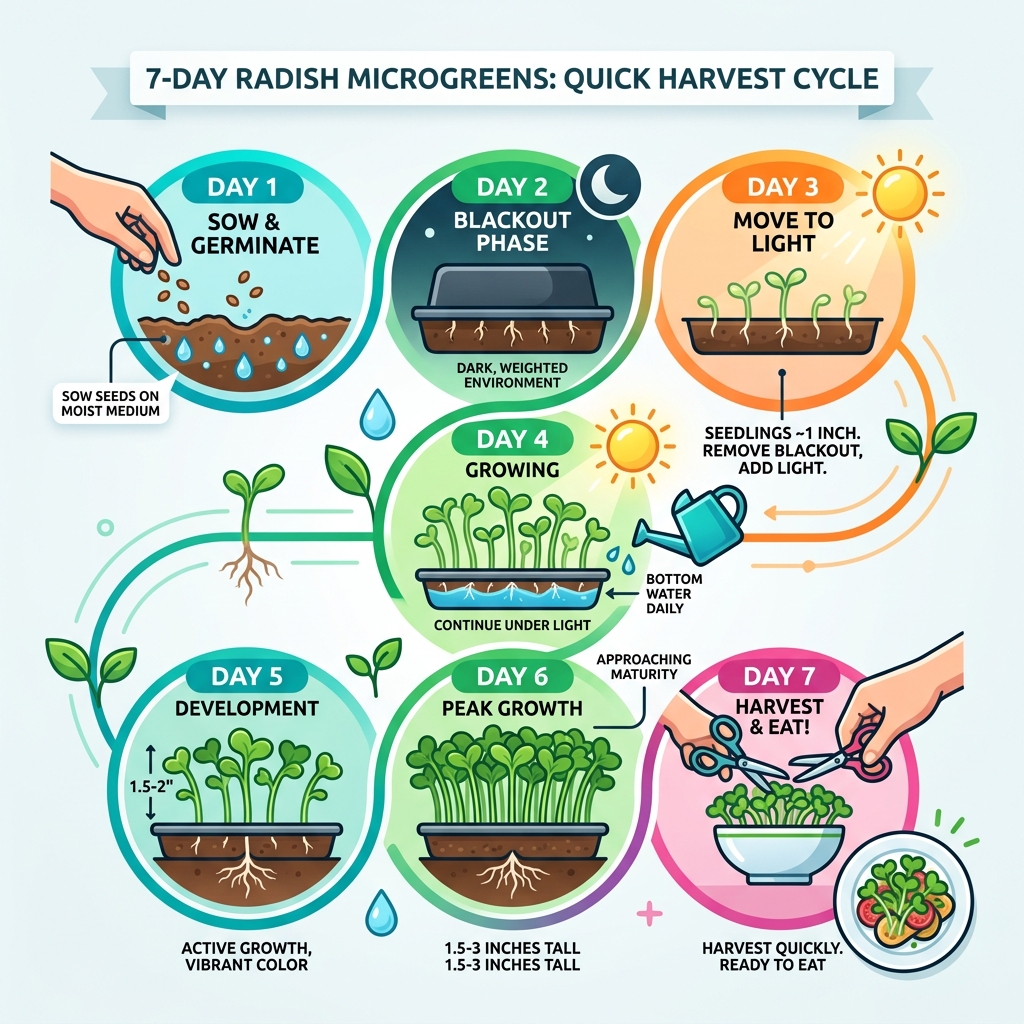
Here is a quick overview of the full process:
| Day | What Happens |
|---|---|
| Day 1 | Sow seeds on moist growing medium |
| Days 1-3 | Blackout/germination phase (dark, weighted) |
| Day 3 | Seedlings reach ~1 inch, move to light |
| Days 4-6 | Grow under light, bottom water daily |
| Days 5-7 | Harvest at 1.5-3 inches tall |
No soaking required. No special equipment. No prior gardening experience needed.
If you have ever wanted to grow something fresh and nutritious at home but did not know where to start, radish microgreens are the perfect first crop. They germinate in under 24 hours, grow to harvest height in less than a week, and pack a bold, peppery punch in every bite.
And the best part? The whole setup fits on a kitchen counter.
Radish microgreens are not just fast — they are also remarkably forgiving. High germination rates, simple care routines, and a short growth window mean there is very little that can go wrong, even for a first-time grower.
In this guide, you will learn everything you need to go from seed to plate quickly, confidently, and with a great result on your very first try.
Why Radish Microgreens are the Ultimate Quick Harvest Crop
When we talk about a radish microgreens quick harvest, we aren’t exaggerating. These little powerhouses are the undisputed speed champions of the indoor garden. While other microgreens might take two or even three weeks to reach maturity, radishes are often hitting their peak in just 4 to 9 days. This rapid cycle makes them incredibly rewarding for beginners who want to see immediate results.
The secret to this speed lies in the seed itself. Radish seeds are relatively large and packed with energy, allowing them to explode into life almost the moment they hit moist soil. They boast some of the highest germination rates in the plant world—often exceeding 90%. This means you aren’t just growing fast; you’re growing a dense, lush canopy of greens every single time.
Nutrient Density and Flavor
Beyond the speed, there is the science of nutrition. According to research from the University of Maryland, radish microgreens can be up to 40 times more nutrient-dense than their mature counterparts. They are loaded with Vitamin C, Vitamin K, and folate. If you are looking for a deep dive into why these tiny plants are so powerful, check out our Microgreens 101 a Beginners Guide.
From a culinary perspective, they offer an intense, spicy, and peppery flavor that perfectly mimics a mature radish bulb. We typically harvest them at the “cotyledon stage”—this is when the first two heart-shaped leaves have fully expanded but before the “true leaves” (which can be prickly or bitter) begin to emerge. This ensures you get the best crunch and the most vibrant flavor for your salads, tacos, or garnishes.
Fastest Growing Radish Varieties for Your Home Garden
While any radish seed can technically be grown as a microgreen, some varieties are specifically prized for their performance in a tray. Here are our top picks:
- Daikon Radish: The classic choice. It grows incredibly fast, has a clean white stem, and a traditional spicy kick.
- Rambo Purple: If you want a “wow” factor, this is it. These feature stunning deep purple stems and leaves that look amazing on any plate.
- China Rose: Known as a “workhorse” variety, it features beautiful pinkish-rose stems and bright green leaves.
- Triton: A striking variety with purple-to-pink stems and large green leaves.
- Crimson Giant & Easter Egg Blend: These are excellent for those who want a mix of colors and a reliable, uniform growth rate.
For more suggestions on what to stock in your seed bank, take a look at our guide on Top Microgreens Seeds for Home Gardening.
Essential Supplies for a Radish Microgreens Quick Harvest
Getting started doesn’t require a massive financial investment. In fact, at FinanceOrbitX, we love this hobby because it’s a high-yield, low-cost way to improve your “food equity” at home.

To ensure a successful radish microgreens quick harvest, you will need:
- 1020 Propagation Trays: These are the industry standard (10 inches by 20 inches). You’ll want one shallow tray with drainage holes to hold the soil and one solid tray without holes to act as a reservoir for bottom watering.
- Growing Medium: We highly recommend coconut coir or a high-quality seed-starting mix. Coconut coir is excellent because it retains moisture without becoming soggy, which is vital for preventing mold.
- Fine Mist Spray Bottle: Essential for the initial stages of germination to keep the seeds hydrated without washing them away.
- Lighting: While you can use a sunny windowsill, a small LED grow light provides the consistency needed for that lightning-fast 5-7 day turnaround.
- Kitchen Scissors: For a clean, easy harvest.
If you are setting up your first grow space, our Beginners Guide to Microgreens Garden Setup offers a detailed breakdown of how to arrange your equipment for maximum efficiency.
Calculating Seeding Density for Maximum Yield
One of the most common mistakes beginners make is using too few seeds. To get that lush, “carpet-like” look, you need a high seeding density. For a standard 1020 tray, we recommend 30 to 35 grams (about 1 to 1.25 ounces) of radish seeds.
| Container Size | Recommended Seed Amount |
|---|---|
| 1020 Tray | 30-35 grams |
| 1010 Tray | 15-17 grams |
| 8oz Deli Cup | 1 tablespoon |
The No-Soak Rule: Unlike some larger seeds (like peas or sunflowers), radish seeds do not need to be soaked. They are small enough to hydrate quickly on the soil surface. Simply broadcast them evenly across your moist medium, ensuring good seed-to-soil contact.
Step-by-Step Guide to Your Radish Microgreens Quick Harvest
Ready to get your hands dirty? Follow this proven method to ensure you don’t run into any roadblocks. For a broader look at avoiding common pitfalls, see The Ultimate Step-by-Step Guide to Growing Microgreens Without Killing Them.
1. Medium Preparation
Start by rehydrating your coconut coir. It should be moist enough that a few drops of water come out when you squeeze a handful, but not dripping wet. Fill your tray with about 1 inch of medium and level it out with a piece of cardboard or another tray. You want a flat, even surface so your seeds don’t roll into “clumps.”
2. Sowing
Spread your 30-35 grams of seed as evenly as possible. Think of it like seasoning a large piece of meat—you want total coverage with no big bald spots. Once sown, give the seeds a generous misting with your spray bottle to settle them in.
Mastering the Blackout and Germination Phase
This is where the magic happens. To get a radish microgreens quick harvest, you need to trigger the seeds’ “stretch” reflex.
- The Weighted Stacking Method: Place a second, empty tray directly on top of the seeds. Then, place a weight (like a 5lb brick or a large book) inside that top tray. This pressure mimics the weight of soil and forces the roots to dive deep into the medium.
- Blackout Period: Keep the trays stacked and in the dark for 2 to 3 days. Radish seeds usually germinate in under 24 hours. By day 3, the seedlings will be strong enough to actually lift the weighted tray!
- Root Hairs vs. Mold: During this phase, you might see white, fuzzy filaments near the roots. Don’t panic! These are usually root hairs, not mold. Root hairs are part of the plant; mold looks like a spiderweb and smells musty.
For more on this critical stage, read our guide on Demystifying the Sprouting Process for Microgreens.
Lighting and Watering for a Radish Microgreens Quick Harvest
On day 3 or 4, once the sprouts are about an inch tall and looking a bit yellow, it’s time to “unveil” them.
- Introduce Light: Move them under your LED grow lights for 12-16 hours a day. Within a few hours, the yellow sprouts will turn a vibrant green (or purple, depending on the variety) as they begin photosynthesis.
- Bottom Watering: This is the “pro tip” for avoiding mold. Instead of spraying the leaves, pour water into the bottom (reservoir) tray. The soil will wick the moisture up from below. This keeps the stems and leaves dry, which is the best way to prevent fungal issues.
- Airflow: Ensure there is some air movement in the room. A small fan can help strengthen the stems and prevent “damping off.”
As you approach harvest day, you’ll notice the stems elongating and the leaves broadening. If they look too tall and skinny, they might be “leggy”—this usually means they need more light. For the final steps, consult our guide on Proper Techniques for Harvesting Microgreens.
Troubleshooting and Post-Harvest Success
Even with the fastest crops, things can occasionally go sideways. The most common issue is overwatering. If the soil smells sour or the stems look mushy at the base, reduce your watering immediately and increase airflow.
When to Harvest
You’ll know it’s time for your radish microgreens quick harvest when the plants are 2 to 3 inches tall and the first set of heart-shaped leaves are fully open. This usually happens between day 5 and day 10. Don’t wait too long—if you let them grow until the true leaves appear, the stems can become woody and the flavor overly bitter.
Storage for Maximum Shelf Life
To keep your harvest fresh for up to 10 days:
- Harvest Dry: Do not water your greens for at least 12 hours before cutting. Dry greens stay fresh much longer than wet ones.
- The Paper Towel Trick: Place your cut microgreens in an airtight container or a glass jar with a clean paper towel at the bottom. The towel will absorb any excess moisture.
- Refrigerate Immediately: Keep them in the crisper drawer of your fridge.
For more long-term growing strategies, our Ultimate Guide to Growing Microgreens at Home is an invaluable resource.
Frequently Asked Questions about Radish Microgreens
Do radish microgreens regrow after the first harvest?
Unfortunately, no. Radish microgreens are a one-time crop. Because we cut them below the lowest leaves, the plant has no way to generate new growth. Once you harvest, you should compost the remaining roots and soil (or “spent” medium) and start a fresh tray. This is why we recommend “succession planting”—starting a new tray every 3 or 4 days so you always have a fresh supply ready.
Do I need to soak radish seeds before planting?
No! Radish seeds are the perfect size for rapid hydration. Soaking them can actually make them difficult to spread evenly because they become “clumpy” and slimy. For a radish microgreens quick harvest, dry sowing followed by a light misting is the most efficient method.
How do I tell the difference between mold and root hairs?
This is the #1 question we get at FinanceOrbitX.
- Root Hairs: These are tiny, white, fuzzy structures that grow directly out of the main root. They usually appear in a localized area around the root and stay close to the soil. If you mist them with water, they “disappear” or flatten against the root.
- Mold: Mold looks like a grey or white spiderweb that crawls across the top of the seeds and soil. It does not disappear when misted and often has a distinct, unpleasant odor.
Conclusion
At FinanceOrbitX, we believe that gardening is one of the best “investments” you can make in your own health and well-being. Achieving a radish microgreens quick harvest is a fantastic way to prove to yourself that you don’t need a green thumb or a massive backyard to produce high-quality, nutrient-dense food.
By following this guide, you can turn a handful of seeds and a bit of coconut coir into a gourmet harvest in less time than it takes to wait for a package in the mail. Whether you are adding a spicy kick to your morning eggs or garnishing a five-star dinner, these microgreens offer a level of freshness you simply cannot buy at the grocery store.
Ready to explore more indoor gardening projects? Head over to our Indoor Gardening Category for more tips on growing your own food, saving money, and mastering the art of the micro-harvest. Happy growing!
