
Fresh Greens in Days: What You Need to Know About Growing Micro Salads
Growing micro salads is one of the easiest and most rewarding things you can do in a small indoor space — no garden required.
Here’s a quick overview to get you started:
| Step | What to Do |
|---|---|
| 1. Choose seeds | Radish, pea shoots, sunflower, kale, mustard |
| 2. Fill a shallow tray | 1-2 inches of peat-free compost or coco coir |
| 3. Sow densely | Spread seeds thickly across the surface |
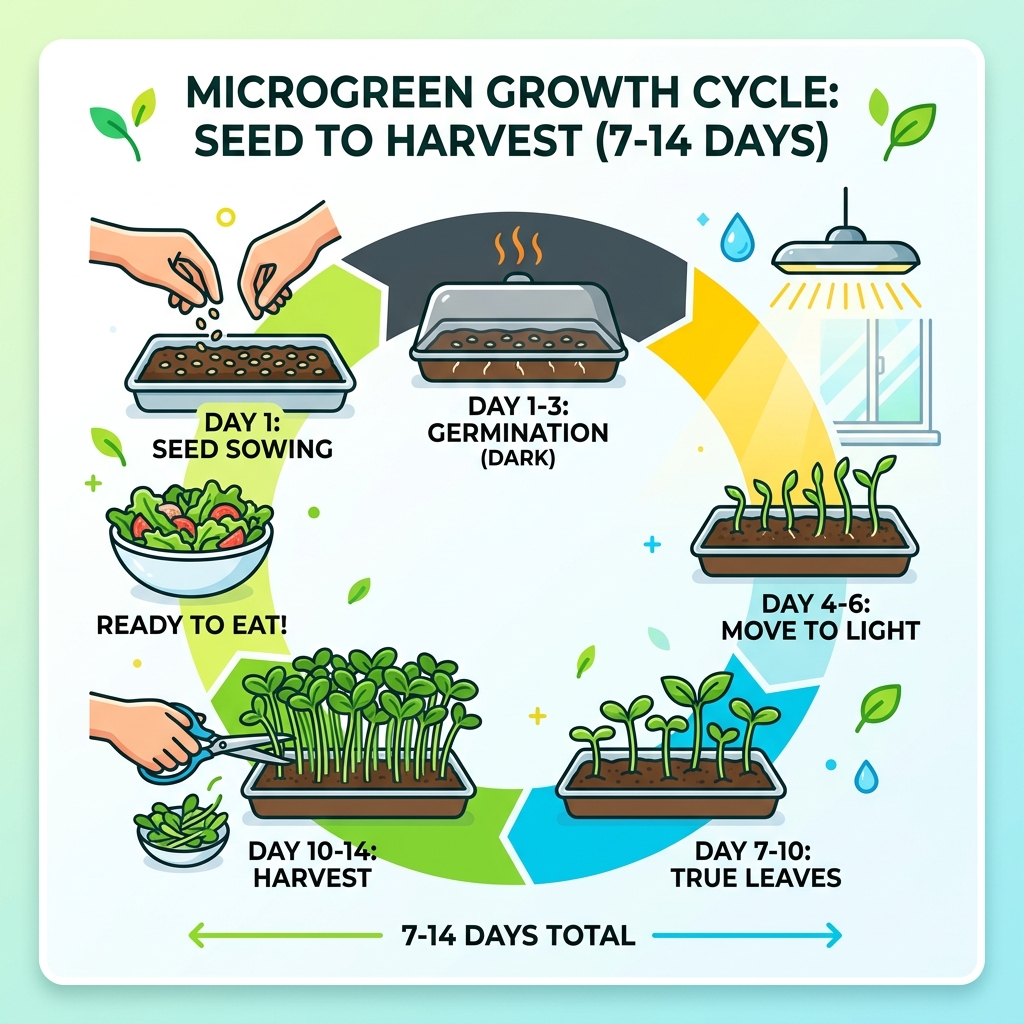
| 4. Germinate in the dark | Cover and keep warm (around 74°F) for 3-4 days |
| 5. Move to light | Place on a sunny windowsill (4-6 hours of sun) |
| 6. Water daily | Keep moist but not waterlogged |
| 7. Harvest | Snip above the soil line in just 7-14 days |
Think fresh salad greens are only for people with big gardens or big budgets? Think again.
A single 10×10 tray can yield 250-300g of microgreens — and a 3×3 foot space can produce enough for 16 full salads over six weeks. Store-bought microgreens can cost £5-£10 per 100g. Homegrown? As little as 66 pence per 100g — dropping even lower when you reuse your growing mix.
Microgreens are the young seedlings of plants like radish, kale, peas, and mustard, harvested just after the first leaves emerge. They pack a concentrated burst of flavor, vitamins, and minerals into a tiny plant. Chefs love them for their elegance. Home cooks love them for their freshness. And beginners love them because they’re genuinely hard to mess up.
Whether you’re growing on a kitchen windowsill in winter or setting up a small indoor tray system, this guide walks you through everything — from seed to salad bowl.
Microgreens vs. Sprouts: Understanding the Basics
If you are new to indoor gardening, you might wonder if microgreens are just fancy sprouts. While they share a similar “infant” stage, they are quite different in how they grow and how they taste. According to our Microgreens 101: A Beginner’s Guide, the primary difference lies in the growing medium and the stage of harvest.
Sprouts are typically grown only in water. You eat the whole thing—seed, root, and stem. Microgreens, however, are usually soil-grown or raised on a porous mat. We harvest them by snipping the stems just above the soil line, leaving the roots behind.
When growing micro salads, we look for two specific milestones: the cotyledons and the true leaves. The cotyledons are the very first “seed leaves” that appear. They contain all the stored energy the plant needs to get started. Shortly after, the “true leaves” emerge, which look like miniature versions of the adult plant’s leaves. Most microgreens are harvested right as these true leaves appear, offering a much more concentrated flavor and a crispier texture than watery sprouts.
For a deeper dive into these early stages, you can explore our resource on Demystifying the Sprouting Process for Microgreens. Essentially, by choosing to grow microgreens over sprouts, you are opting for a more culinary-focused experience with complex flavor profiles that can range from spicy radish to nutty sunflower.
The Economics of Growing Micro Salads at Home
At FinanceOrbitX, we love a good “Return on Investment,” and growing micro salads offers one of the best margins in the gardening world. If you’ve ever winced at the price of a tiny plastic clamshell of greens at the grocery store, you aren’t alone. Those store-bought packs often retail for $5 to $10 (or £5 to £10) for a mere 100 grams.
Let’s look at the numbers from a recent home-growing trial:
| Metric | Homegrown Value | Store-Bought Equivalent |
|---|---|---|
| Cost per 100g | ~66 pence ($0.92) | £5.00 – £10.00 ($7.00 – $14.00) |
| Yield (3×3 ft space) | 1.5kg (3.3 lbs) over 6 weeks | N/A |
| Time to Harvest | 7 – 14 Days | Days spent in transit |
| Nutrient Density | Peak (harvested minutes before eating) | Declining since harvest |
By reusing your potting mix, that cost can plummet to as low as 12.5 pence per 100g. Beyond the financial savings, the health dividends are massive. These tiny plants are often considered Antioxidant-Rich Microgreens to Grow because they contain highly concentrated levels of vitamins C, E, and K, as well as phytonutrients. According to research from the USDA Agricultural Research Service, microgreens can contain up to 40 times higher levels of vital nutrients than their mature counterparts. Because you eat the plant in its youth, you’re getting the nutrients that would eventually be spread across a full-sized vegetable, all packed into a single bite.
Essential Supplies for Your Indoor Garden
You don’t need a greenhouse to be successful. In fact, most of us at FinanceOrbitX grow our greens right on the kitchen counter. To get started, refer to our Beginner’s Guide to Microgreens Garden Setup.
Here is your shopping list:
- Trays: Standard 10×20 trays are the industry favorite, but for home use, 10×10 trays or even recycled mushroom containers and pie tins work perfectly. Just ensure they have drainage holes.
- Growing Medium: You can use Organic Soil for Microgreens, peat-free compost, or coconut coir. Some prefer hydroponic mats for a cleaner, soil-free experience.
- Light: A south-facing windowsill providing 4-6 hours of sun is great, but if your home is dark, we recommend the Best Indoor Grow Lights for Microgreens.
- Misters and Scissors: A simple spray bottle for misting and a sharp pair of kitchen scissors for the final harvest.
Choosing The Best Containers for Nurturing Indoor Microgreens often comes down to what you have on hand. Reusing plastic fruit punnets is a fantastic way to keep your “startup costs” low while staying eco-friendly.

Choosing the Best Varieties for Your Palate
Not all seeds are created equal. When growing micro salads, you want to pick varieties that offer high yields and flavors you actually enjoy. Here are some of our Top Microgreens Seeds for Home Gardening:
- China Rose Radish: A favorite for beginners because it is incredibly fast (harvest in 7 days) and has a pleasant spicy kick.
- Sunflower Shoots: These are thick, crunchy, and taste remarkably like raw sunflower seeds. They are a “bulk” green that makes a great base for a full salad.
- Pea Shoots: Sweet and tender, these grow well in almost any weather and can even be grown from dried marrowfat peas found in the grocery aisle.
- Black Mustard: If you like heat, this is for you. It adds a zesty punch to sandwiches.
- Amaranth: Known for its stunning vibrant red or pink color, it’s one of the most beautiful Antioxidant-Rich Microgreens to Grow.
If you are impatient (we get it!), look into The Fastest Growing Microgreens to Try at Home, which includes varieties like arugula and tatsoi that can be ready in about a week.
Step-by-Step Guide to Growing Micro Salads
Ready to get your hands dirty? Follow this Microgreens Planting Guide for the First-Time Gardener for guaranteed success.
Step 1: Prep the Bed Fill your tray with about 1.5 to 2 inches of moist soil or coco coir. Level it out and press down gently to create a flat surface.
Step 2: Sow Densely This is where microgreens differ from traditional gardening. We want a “carpet” of greens. For a 10×20 tray, you might use 48g of sunflower seeds or 150g of pea seeds. Sprinkle them evenly so they are almost touching but not overlapping in thick clumps.
Step 3: The Dark Phase (Germination) Most seeds love a bit of “blackout” time to start. Lightly mist the seeds and cover them with another tray or a piece of cardboard. Many pros place a 2-5 pound weight on top for the first 2-3 days. This “weighting” forces the roots to grow deep into the soil and results in stronger, sturdier stems. Keep the area around 74°F for optimal speed.
Step 4: Let There Be Light Once you see the sprouts pushing up against your cover, remove it! Move them to your windowsill or under your LED setup. For more tips on this transition, check out these Smart Hacks for the Microgreen Gardener.
Mastering the Art of Growing Micro Salads
To keep your greens healthy until harvest, you need to master a few “pro” moves. First, The Right Way to Water Your Microgreens is actually from the bottom. Instead of pouring water over the delicate leaves (which can cause mold), pour water into the bottom tray and let the soil wick it up.
Lighting and Airflow: If you are using artificial lights, aim for an 18-hour light cycle. Our guide on Enlightening Indoor Microgreens: A Guide to Lighting explains why consistency matters. Additionally, keep a small fan nearby. Good airflow is the secret to How to Avoid Mold in Your Microgreen Garden. If the air stays stagnant and the soil is too wet, you might see “damping off,” where the tiny plants collapse.
Maintaining a Year-Round Supply of Growing Micro Salads
The biggest “con” of microgreens is that they disappear quickly once you start eating them! To ensure you never run out, we recommend Year-Round Indoor Microgreen Growing Tips such as the 4-tray rotation.
By Scheduling Your Microgreen Growing for Beginners, you can plant a new tray every 4 days. By the time you finish eating Tray 1, Tray 2 is ready for harvest, and Tray 3 is just moving into the light. This is especially useful for Apartment-Friendly Tips for Growing Microgreens, where you may only have one sunny window to work with.
Harvesting and Culinary Inspiration
The moment of truth arrives usually between day 7 and day 14. Using Proper Techniques for Harvesting Microgreens, take your sharp scissors and snip the greens about half an inch above the soil. It is best to harvest them right before you eat to preserve those precious vitamins.
In the Kitchen:
- Radish Microgreens: Use these to add a spicy “zing” to tacos or avocado toast.
- Pea Shoots: These are fantastic in stir-fries or as a sweet base for a buttermilk beet salad.
- Garnish: Even a simple bowl of scrambled eggs or soup looks like a $30 restaurant dish when topped with a handful of fresh micro-kale.
Frequently Asked Questions about Micro Salads
Can microgreens regrow after cutting?
Generally, no. Most microgreens are a “one and done” crop. Because we cut them so young, they haven’t developed the energy reserves to grow back. The main exception is pea shoots; if you leave at least one leaf on the stem when cutting, they might give you a second, smaller harvest. However, for the best flavor and nutrition, we recommend starting fresh. Avoid these Common Microgreen Growing Mistakes by planning your next tray before you harvest the current one.
How do I prevent mold in my microgreen trays?
Mold is usually caused by three things: too much water, too much seed density, or poor airflow. Use Tools to Prevent Mold in Microgreens like a small fan and ensure you are bottom-watering. If you see a white fuzzy patch, it might actually be “root hairs” (which are healthy!). If it looks like a spiderweb and smells musty, it’s mold—remove that patch immediately and increase the air circulation.
Do I need expensive grow lights to start?
Not at all. While Choosing the Right Lighting for Growing Microgreens can help during dark winters, a bright south-facing window is often enough for most varieties. If your plants look “leggy” (long, thin, and pale), they are reaching for light and need a brighter spot or a simple LED shop light to supplement their growth.
Conclusion
At FinanceOrbitX, we believe that accessible horticulture is a key part of a sustainable, healthy, and financially savvy lifestyle. Growing micro salads isn’t just a hobby; it’s a way to take control of your food supply, save money, and enjoy the freshest flavors imaginable.
Whether you’re starting with a single tray of radishes on your windowsill or building a multi-tray rotation system, the rewards are nearly instant. For more in-depth advice, don’t forget to check out our Ultimate Guide to Growing Microgreens at Home or visit us at FinanceOrbitX for more tips on blending practical gardening with a smart lifestyle. Happy growing!
