
Your Fresh Start: Growing Microgreens No Soil Required
Growing microgreens no soil is completely possible — and surprisingly simple. You can grow a full tray of crisp, nutrient-packed greens using nothing but a grow mat, water, light, and seeds.
Here are the most common soil-free methods to get started:
- Grow mats (hemp, jute, or coconut coir) — the most beginner-friendly option
- Paper towels or cloth — ultra-low cost, great for a first try
- Hydroponics — water-based systems with precise nutrient control
- Aggregate mediums (vermiculite or perlite) — good drainage and moisture retention
Most varieties are ready to harvest in 7 to 14 days. No garden. No outdoor space. No mess.
Think of it this way: microgreens are harvested so early in their life cycle that they feed almost entirely off energy stored inside the seed itself — not from the soil. That means soil isn’t just optional, it’s often unnecessary.
Indoor gardeners are catching on fast. Soilless setups use up to 90% less water than traditional soil gardening, take up minimal counter space, and sidestep common problems like soil-borne bacteria and pests.
Whether you have a sunny windowsill or a spare corner with a grow light, you have everything you need to get started.
Why Growing Microgreens No Soil is the Future of Indoor Gardening
At FinanceOrbitX, we love efficiency. Whether it’s optimizing a portfolio or a kitchen counter, we look for the highest yield with the lowest overhead. Growing microgreens no soil fits this philosophy perfectly. Traditional gardening often feels like a chore—hauling heavy bags of dirt, dealing with “outside” bugs in your “inside” space, and scrubbing mud off your harvest. By removing the soil, we remove the friction.
One of the most compelling reasons to make the switch is resource management. Research shows that soilless cultivation uses 90% less water than traditional soil gardening. Instead of saturating a large volume of earth, moisture is delivered directly to the root zone via capillary action from a mat or reservoir. This isn’t just environmentally friendly; it’s practically convenient for the busy urbanite.
Furthermore, food safety is a major driver for the “no-soil” movement. Soil can occasionally harbor pathogens like E. coli or Salmonella. When you use sterile mediums like hemp mats or specialized hydroponic pads, you significantly reduce the risk of contamination. Plus, your kitchen stays pristine. No more “getting your hands dirty” just to have a salad. For a deeper dive into why this shift is happening, check out our guide on soil-less cultivation the new age of growing microgreens.
| Feature | Soil-Based | Hydroponic/Soilless |
|---|---|---|
| Water Usage | High (100%) | Low (10%) |
| Harvest Time | 7–14 Days | 5–12 Days |
| Mess Level | High (Dirt/Dust) | Minimal (Water-only) |
| Risk of Disease | Moderate (Soil pathogens) | Very Low |
| Setup Cost | Low | Moderate |
Essential Equipment for Your Soil-Free Setup
You don’t need a laboratory to start growing microgreens no soil, but having the right “portfolio” of tools makes the process seamless. Think of your equipment as your infrastructure—get it right once, and the dividends will flow for months.
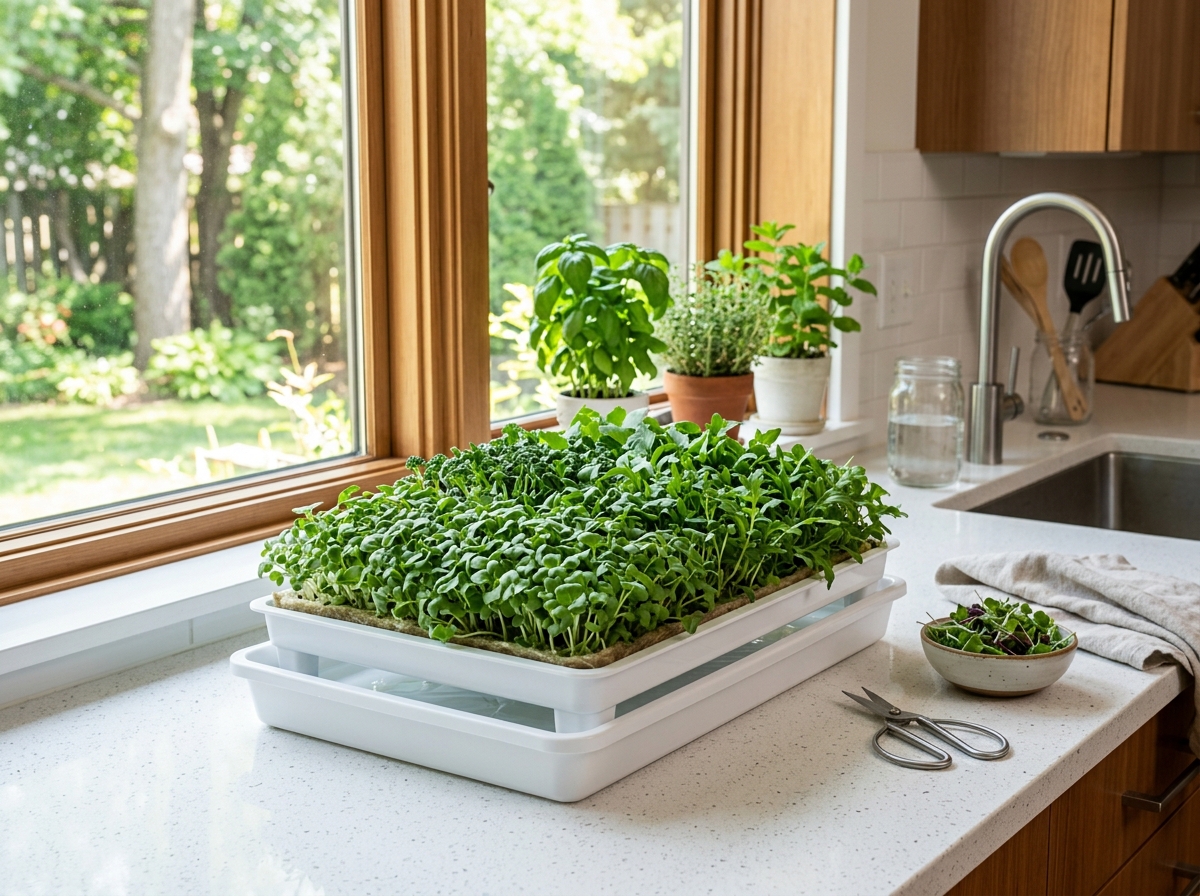
First, you need the right containers. While you can repurpose plastic clamshells from the grocery store, serious growers prefer 10×20 trays. We recommend a “double-tray” system: one tray with drainage holes nested inside a solid “catch” tray. This allows for bottom-watering, which keeps the delicate leaves dry and prevents mold. For specific recommendations, see our breakdown of the best trays for hydroponic microgreens and top hydroponic trays for microgreens.
Lighting is the next pillar. While a south-facing window can work in the summer, winter growing usually requires a boost. Full-spectrum LED grow lights are the gold standard. They should be positioned 4–12 inches above your trays and run for 12–16 hours a day.
Other essentials include:
- pH Testing Kit: Hydroponic systems thrive when the water pH is between 5.5 and 6.5.
- Spray Bottle: For misting seeds during the critical germination phase.
- Kitchen Scale: To measure seed density accurately (usually 1–2 ounces per 10×20 tray).
- Small Fan: To ensure air circulation and prevent “damping off.”
If you’re overwhelmed by choices, you can always start with a pre-made hydroponic microgreens kits review to see which all-in-one systems are worth your investment.
Choosing the Best Medium for Growing Microgreens No Soil
The “medium” is simply what the roots hold onto instead of dirt. Since the seed provides the food, the medium just needs to provide moisture and stability.
- Hemp Mats: These are biodegradable and incredibly popular. They have excellent water retention and a high success rate for beginners.
- Coconut Coir: This is often the most cost-effective option. It’s made from coconut husks and provides great aeration. You can find more details in your guide to soil-free microgreens growing.
- Jute/Bamboo Fiber: Similar to hemp, these are natural, compostable options that offer a “clean” aesthetic.
- Rockwool: A staple in commercial hydroponics, these cubes or mats are sterile and hold vast amounts of water, though they aren’t biodegradable.
- Paper Towels: The “minimalist” choice. It’s a great way to learn how to grow microgreens without getting your hands dirty using items you already have in the pantry.
Step-by-Step Guide to a Successful Harvest
Ready to plant? Follow this protocol to ensure your first harvest is a “bull market” of greens.
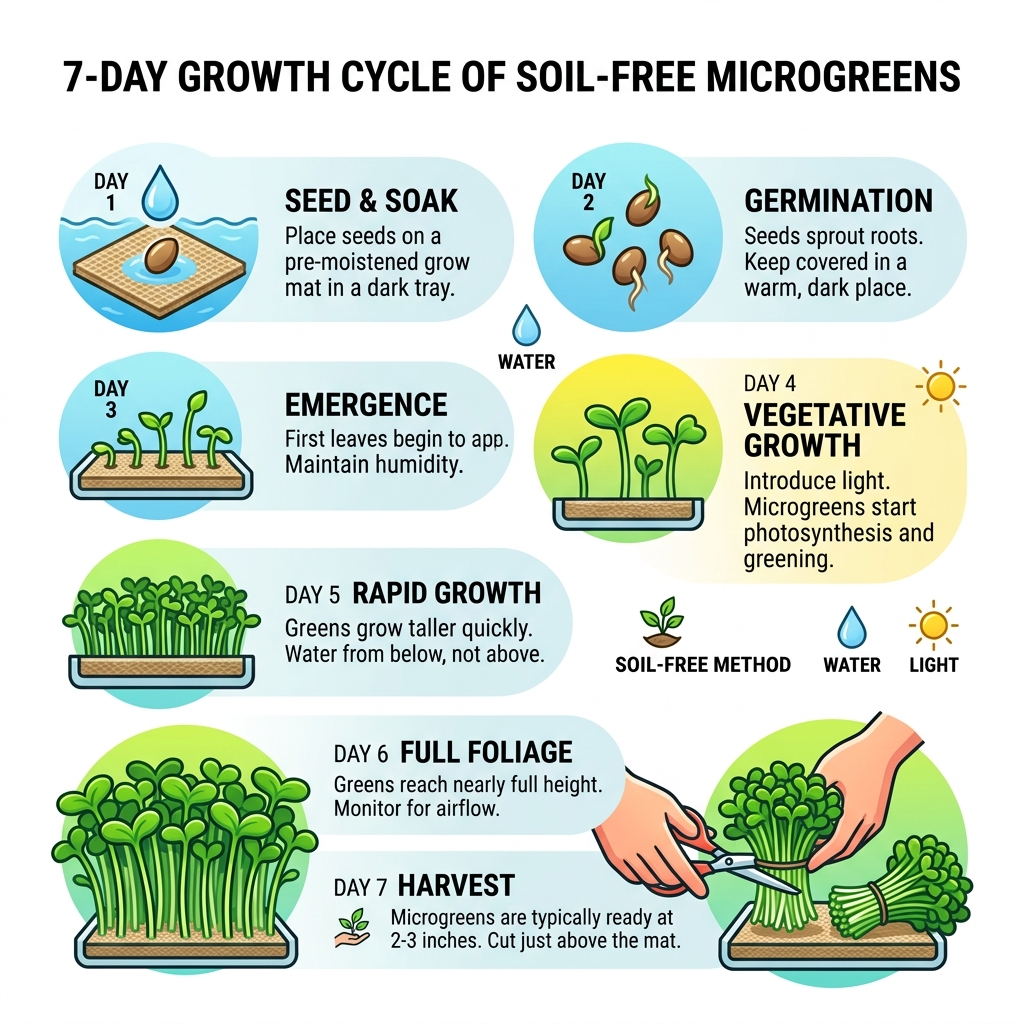
- Prep the Medium: Soak your grow mat or medium in pH-adjusted water for about 30 minutes. It should be “sponge-damp” but not dripping.
- Sow the Seeds: Broadcast your seeds evenly across the surface. Aim for a “bountiful layer”—don’t let them overlap too much, but don’t leave large gaps either. For large seeds like peas or sunflowers, pre-soak them in water for 8–12 hours before sowing.
- The Blackout Period: This is the soil-free secret to growing massive microgreen yields. Cover your tray with another inverted tray or a towel to keep it completely dark for 2–4 days. This mimics being underground and encourages the seeds to “stretch” upward in search of light, creating longer stems that are easier to harvest.
- Weights (Optional): Some growers place a light weight (like a brick or another tray) on top of the seeds during blackout. This forces the roots to push deeper into the mat, creating a stronger plant.
- Transition to Light: Once you see sprouts about half an inch tall, remove the cover and turn on the lights. They will turn from pale yellow to vibrant green within hours.
- Bottom Watering: Instead of misting from the top (which can cause mold), pour water into the bottom catch tray. The mat will “wick” the moisture up to the roots.
- Harvest: When the first set of leaves (cotyledons) are fully open and the plants are 2–3 inches tall, snip them just above the mat with clean scissors.
For a more localized look at home setups, our microgreens at home hydroponics edition can provide further inspiration.
Ideal Varieties for Growing Microgreens No Soil
Not all seeds are created equal when it comes to growing microgreens no soil. Some thrive in water, while others prefer the “grip” of soil. Here are the top performers for your hydroponic tray:
- Broccoli: The gold standard for beginners. It’s fast (8–10 days), reliable, and packed with sulforaphane.
- Radish: These are the “high-growth” stocks of the microgreen world. They can be ready in as little as 5–6 days and offer a spicy kick.
- Pea Shoots: These are incredibly hardy and produce high yields. Kids love them because they taste exactly like sugar snap peas.
- Sunflower: These require a bit more work (soaking and hull removal) but offer a nutty flavor and substantial crunch.
- Chia Seeds: Because they are mucilaginous (they develop a gel coating), they are perfect for the “plate and paper towel” method.
- Spicy Mustard: Great for adding color and zing to sandwiches.
If you’re still debating the two methods, we’ve broken down the pros and cons in soil vs hydroponics which is best for microgreens and provided a list of varieties in your guide to soil-free microgreens growing 2.
Troubleshooting and Environmental Maintenance
Even in a soil-free world, nature can be fickle. The most common enemy is mold. Because you’re providing high moisture and warmth, fungi love to join the party.
To keep your greens healthy, maintain an optimal temperature range of 60–75°F. Anything warmer can invite bacterial growth; anything cooler will stall your “investment” growth. Humidity should ideally sit between 40% and 60%.
Mold vs. Root Hairs: This is the most common question we get! If you see fuzzy white growth only at the base of the stem, those are likely root hairs—microscopic roots searching for water. If the fuzz is “spider-webby,” appears on the leaves, or has a musty smell, it’s mold. To prevent this, ensure you have a small fan running to provide constant air circulation.
If you do spot mold, you can often save the tray by misting the affected area with a very dilute food-grade hydrogen peroxide solution, but prevention through airflow and proper seed density is always better.
Frequently Asked Questions about Soil-Free Microgreens
Is growing microgreens without soil better for beginners?
Yes! Many beginners find it less intimidating because there’s no guesswork regarding soil quality or “over-potting.” It’s a clean, step-by-step process that feels more like a kitchen project than a farm chore.
How long does it take to harvest hydroponic microgreens?
Speed is one of the biggest benefits. Most varieties like radish or broccoli are ready in 7 to 10 days. Larger seeds like peas or sunflowers may take up to 14 days. This is often 2–3 days faster than soil-based methods because the roots have direct, unobstructed access to water and oxygen.
Do I need special nutrients for soilless growing?
For most microgreens, plain water is enough. The seed contains all the energy the plant needs to reach the cotyledon stage. However, for longer-cycle crops like basil or kale, adding a very diluted hydroponic nutrient solution after day 5 can help boost the yield and color.
Conclusion
Growing microgreens no soil is more than just a gardening trend; it’s a sustainable, efficient way to take control of your nutrition. By removing the mess of soil and utilizing hydroponic principles, you can turn any small corner of your home into a productive “greenhouse” that delivers fresh harvests every single week.
At FinanceOrbitX, we believe that small, consistent actions lead to the greatest long-term gains—whether in your bank account or your health. So, grab a tray, pick a medium, and start your journey toward a more sustainable lifestyle today.
Start your indoor garden journey with our curated guides and expert tips. Happy growing!
