
The Soil Under Your Microgreens Matters More Than You Think
Organic potting soil for microgreens is the single biggest factor that determines whether your tiny greens thrive or struggle. The right mix gives roots air, moisture, and a clean place to grow — the wrong one leads to mold, poor germination, and disappointment.
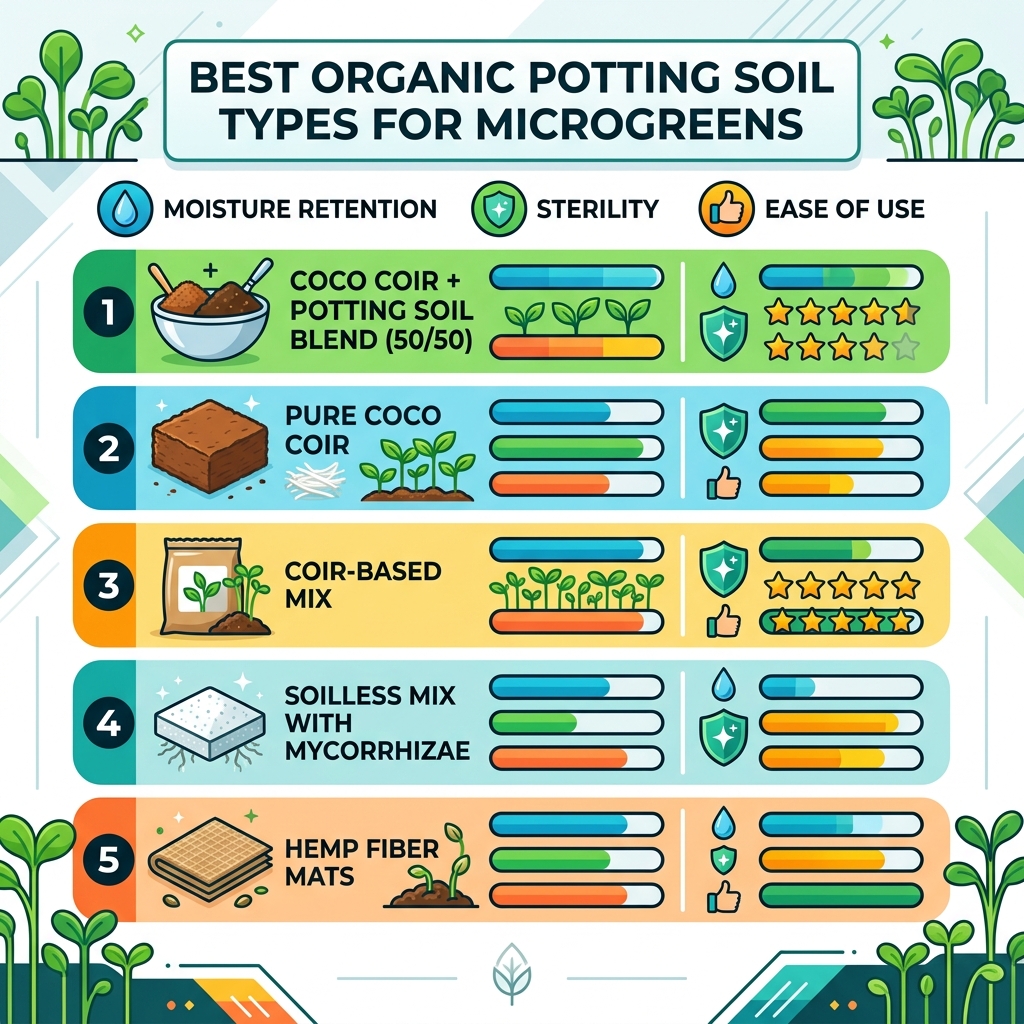
Here are the top organic potting soil options for microgreens at a glance:
| Growing Medium | Best For | Key Benefit |
|---|---|---|
| Coco coir + organic potting soil (50/50) | Most growers | Balanced drainage and nutrition |
| Pure coco coir | Clean, mess-free setups | Lightweight, pH neutral, sustainable |
| Coir-based mix (e.g., Fox Farms Coco Loco) | Slow-growing varieties like basil | Superior moisture retention and yield |
| Pro-Mix HP (soilless) | Beginners and commercial growers | Sterile, consistent, mycorrhizae-enhanced |
| Hemp fiber mats | Countertop growing | No mess, compostable, easy cleanup |
The short answer: a 50/50 blend of organic potting soil and coco coir is the go-to starting point for most home growers. It balances moisture, drainage, and nutrients without the mold risks that come from using straight potting soil.
But not all organic mixes are created equal. The ingredients list, sterility, and water-holding capacity all affect how well your microgreens germinate and grow — sometimes dramatically.
We tested 14 different soils and mixes so you don’t have to guess.
What Defines the Best Organic Potting Soil for Microgreens?
When we talk about organic potting soil for microgreens, we aren’t just talking about “dirt” from the backyard. In fact, using backyard dirt is a recipe for a tiny, muddy disaster. A high-quality organic medium is a carefully engineered environment designed to support a plant during its most vulnerable stage of life.
The gold standard for these mixes often involves an OMRI (Organic Materials Review Institute) listing. This certification ensures the product is verified for organic use from the source to the final bag. But beyond the label, the physical properties are what really do the heavy lifting. The best soils are sterile (to prevent “damping off” or mold), pH-balanced (usually between 5.5 and 6.5), and offer a delicate dance between moisture retention and aeration.
Microgreens need to stay hydrated, but their roots also need to breathe. If the soil is too dense, the roots suffocate; if it’s too loose, they dry out before you can finish your morning coffee. You can dive deeper into these technical requirements in our guide on soil and growing medium for microgreens.
Key Ingredients in a Premium Organic Potting Soil for Microgreens
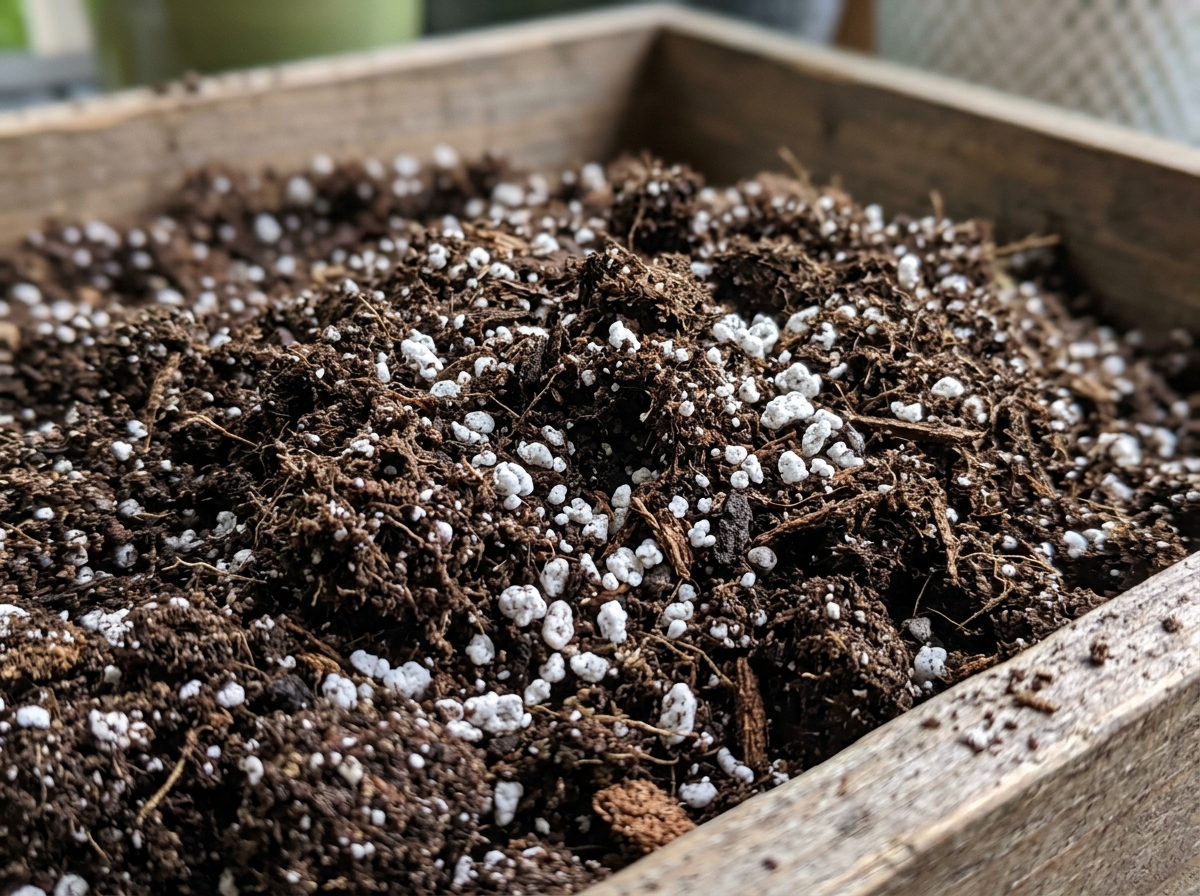
If you look at the back of a premium bag like Gardenera Organic Microgreens Premium Potting Mix, you’ll see a list of “usual suspects” that make the magic happen:
- Coco Coir: Made from coconut husks, this is a renewable superstar. It holds water incredibly well while remaining fluffy.
- Sphagnum Peat Moss: A classic base for many mixes, like Miracle-Gro Organic Indoor Potting Mix. It’s excellent for moisture, though less renewable than coir.
- Perlite: Those little white “Styrofoam” looking bits. They are actually volcanic glass and are essential for drainage and preventing soil compaction.
- Worm Castings: Often called “black gold,” these provide gentle, organic nutrients that won’t burn sensitive young roots.
- Mycorrhizae: Beneficial fungi that form a symbiotic relationship with roots, helping them absorb water and nutrients more efficiently.
The Benefits of Using Organic Potting Soil for Microgreens
Why go organic? For starters, microgreens are often eaten raw, stems and all. Using an organic medium ensures you aren’t introducing synthetic chemicals or heavy metals into your kitchen-to-table cycle.
Beyond safety, organic soils provide superior root support. Because these mixes are “light,” roots can penetrate easily, leading to faster growth cycles. Furthermore, being pathogen-free is a massive benefit; standard garden soils are teeming with weed seeds and fungi that can overtake a tray in days. For those looking to dive in without the mess, check out our tips on how to start microgreens at home without losing your soil.
Comparing Soil, Soilless Mixes, and Grow Mats
Choosing a medium is often a trade-off between yield and convenience. While we love the nutrient density of soil, some growers prefer the “cleanliness” of mats or soilless blends.
| Feature | Organic Potting Soil | Soilless Mix (Coir/Peat) | Hemp/Grow Mats |
|---|---|---|---|
| Water Retention | High | Very High | Moderate |
| Nutrient Levels | Natural/High | Low (requires feeding) | None |
| Mess Factor | High | Moderate | Low |
| Growth Speed | Fastest | Fast | Moderate |
For a full breakdown of these choices, see our analysis on soil vs hydroponics which is best for microgreens and your guide to soil free microgreens growing.
Why Coco Coir Outperforms Peat in Blackout Periods
In our testing, coco coir-based mixes—like the Gardenera Premium Organic Microgreens Potting Mix—showed a distinct advantage during the “blackout period” (the first few days when seeds are covered).
Coco coir distributes moisture more evenly than peat. Peat-based mixes can sometimes dry out at the edges of the tray while staying soggy in the middle. Coir also has a high air-holding capacity even when wet. A single 1-pound coco coir brick can expand to fill three 1020 shallow microgreen trays, making it an incredibly efficient and sustainable choice derived from coconut husks. This was backed up by comparative testing of coir and peat mixes, where coir-based products like Coco Loco produced taller, denser basil with larger leaves after 27 days.
When to Choose Soilless Mixes Over Traditional Soil
Soilless mixes, such as Pro-Mix HP or professional-grade seed starting soils, are often preferred by commercial growers. Why? Sterility and consistency. These mixes are essentially a blank slate. They often include mycorrhizae to boost root health but lack the heavy organic matter that can sometimes attract fungus gnats.
If you are growing in a high-traffic area like a kitchen countertop, a soilless mix or a soil-free growing method might be the better “clean” option.
Best Practices for Using Organic Potting Soil for Microgreens
Success isn’t just about what you buy; it’s about how you use it. We’ve found that a 50/50 mix of organic potting soil and coco coir is the “sweet spot.” The soil provides the nutrients, while the coir ensures the tray doesn’t turn into a block of hard, dry peat.
Preparing Your Trays for Maximum Yield
Don’t just dump soil in a tray and hope for the best. Follow these steps for professional results:
- Tray Depth: Fill your trays with about 1 to 2 inches of soil. The PurePlant Organic Microgreens Potting Mix works perfectly at this depth.
- Smoothing: Level the soil surface without compacting it. You want it flat so seeds don’t roll into “valleys,” but fluffy enough for roots to dive in.
- Hydration: Pre-wet your soil before seeding. It should be moist enough that only a drop of water comes out when you squeeze a handful.
- Seeding Density: For small seeds (broccoli, arugula), aim for about 15-18 grams per 1020 tray. For larger seeds (peas, sunflower), they should be almost touching.
- Weighting: After seeding, stack an empty tray on top and add a weight (like a brick). This forces the roots into the organic soil for microgreens and helps shed seed hulls.
For more detailed prep steps, see our guide on organic soil for microgreens 2.
Managing Moisture and Preventing Mold
Mold is the arch-nemesis of the microgreen grower. To keep it at bay:
- Bottom Water: Once the greens have sprouted, stop misting the tops. Pour water into the bottom tray and let the soil wick it up. This keeps the stems dry and the “danger zone” for mold airy.
- Air Circulation: Use a small fan to keep air moving.
- Drainage: Ensure your trays have holes. Standing water is a death sentence for delicate roots.
Learn more about these preventative measures at organic soil for microgreens 3.
Frequently Asked Questions about Microgreen Soils
Do microgreens require additional fertilizers in organic soil?
Generally, no. Most microgreens are harvested at the cotyledon stage (the first set of leaves). At this point, the plant is still living off the starch and nutrients stored inside the seed itself. If you are using a nutrient-rich mix like Gardenera Organic Microgreens Premium Potting Mix, there is more than enough “fuel” to get them to harvest. Only slow-growing varieties like basil or cilantro, which might grow for 20+ days, benefit from a very mild organic liquid fertilizer.
What are the drawbacks of using standard garden soil?
Standard garden soil is too heavy. It compacts easily, which physically blocks tiny roots from growing. It also lacks the “cleanliness” required for indoor growing. You don’t want to bring hitchhiking pests, weed seeds, or soil-borne pathogens into your kitchen. Stick to specialized All Natural Indoor Potting Mixes.
Can I reuse organic potting soil after harvest?
While you can, it’s tricky. The soil becomes a dense mat of roots after one harvest. Most home growers compost the spent root mass and soil. However, if your mix contains decomposed granite instead of perlite, it can actually be safely fed to livestock (like chickens) along with the root mats! If you do choose to reuse it for plants, it must be sterilized with heat or hydrogen peroxide to prevent disease carry-over.
Conclusion
At FinanceOrbitX, we believe that growing your own food is one of the best investments you can make—both for your health and your wallet. Selecting a high-quality organic potting soil for microgreens is the foundation of that investment. Whether you choose a sustainable coco coir brick or a premium blended mix, the key is to prioritize drainage, sterility, and consistent moisture.
Ready to start your first tray? Check out more info about microgreen supplies to ensure you have everything you need for a successful harvest. Happy growing!
