
When Your Microgreens Suddenly Collapse: What You Need to Know
A microgreens bacterial wilt fix is something many beginner growers need urgently — and fast. One day your tray looks healthy, the next your seedlings are drooping and dying for no obvious reason.
Here is a quick answer to help you act right now:
How to fix bacterial wilt in microgreens (quick steps):
- Quarantine the affected tray immediately — move it away from healthy trays
- Remove visibly infected clusters of seedlings and dispose of them in the trash (not compost)
- Spray remaining areas with a diluted food-grade hydrogen peroxide solution (about 2 tablespoons per 1 liter of water)
- Improve airflow around your trays using a small fan
- Lower humidity and keep temperatures between 18°C and 24°C (65°F–75°F)
- Discard the growing media and sterilize your trays before replanting
- Start fresh with clean, reputable seeds and sterile growing medium
The hard truth? Once bacterial wilt takes hold in a microgreens tray, recovery is difficult. Prevention and fast action are your best tools.
Bacterial wilt is caused by soil-borne bacteria that block the plant’s vascular system — the internal “pipes” that carry water and nutrients. Without that flow, seedlings collapse quickly. The warm, humid conditions that microgreens love also happen to be ideal for these pathogens.
To make things trickier, bacterial wilt looks a lot like other common problems — damping-off disease, overwatering, or simple underwatering. Knowing the difference is critical before you act.
What is Bacterial Wilt and Why Does it Attack Microgreens?
When we talk about a microgreens bacterial wilt fix, we are usually dealing with a formidable opponent: Ralstonia solanacearum. This bacterium is a soil-borne pathogen that is world-renowned for its ability to devastate crops. In microgreens, it acts like a microscopic “clog” in the plant’s plumbing.
The primary cause of the wilt is vascular blockage. Once the bacteria enter the plant—often through tiny wounds in the roots or stems—they multiply rapidly in the xylem. The xylem is the tissue responsible for transporting water from the roots to the leaves. As the bacteria colony grows, it produces a sticky slime (extracellular polysaccharides) that physically plugs these tubes. Even if your soil is soaking wet, the plant “thirsts” to death because the water simply cannot reach the top.
According to research on Recent Trends in Control Methods for Bacterial Wilt Diseases, this pathogen is particularly difficult to manage because it can survive for long periods in soil and water. For us microgreen growers, the bacteria often hitch a ride on contaminated seeds or low-quality, non-sterile soil.
Environmental conditions play a massive role in whether these bacteria stay dormant or go on the attack. As noted in the review on Environmental factors influencing the growth and pathogenicity of microgreens, high humidity and temperatures above 25°C (77°F) create a “pathogen playground.” When the air is stagnant and the trays are overcrowded, the bacteria spread like wildfire from one seedling to the next.
Identifying Symptoms: Is it Bacterial Wilt or Damping-Off?
Before we can apply a microgreens bacterial wilt fix, we have to be sure of what we’re looking at. To the untrained eye, a tray of collapsed seedlings all looks the same. However, there are subtle clues that separate a bacterial infection from fungal issues or simple thirst.
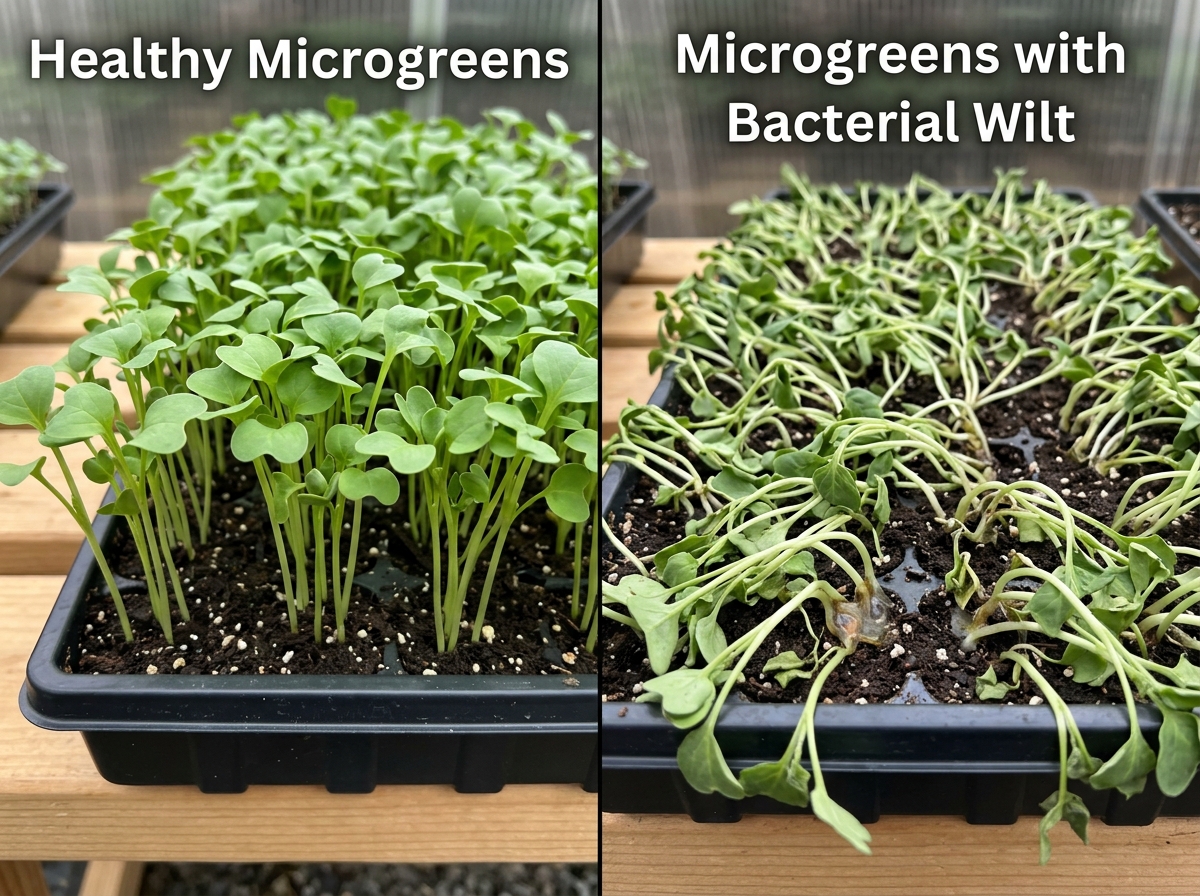
Bacterial wilt often starts as sudden drooping of the leaves, even while they still look green. Unlike fungal diseases, which might show fuzzy mold first, bacterial wilt is an “internal” job. You might notice water-soaked lesions near the base of the stem, but the most definitive sign is the speed of the collapse.
The “String of Ooze” Test
If you suspect bacterial wilt, there is a classic diagnostic test used by farmers that works for microgreens too. Cut a wilting stem and press the cut end against a clean glass or another cut stem, then slowly pull them apart. If you see a “string” of thin, sticky white ooze connecting the two surfaces, you have a confirmed case of bacterial colonization. This ooze is the mass of bacteria and slime that was clogging the plant’s vascular system.
Bacterial Wilt vs. Damping-Off
Damping-off is a fungal issue caused by pathogens like Pythium or Rhizoctonia. While both result in seedling death, they have different “styles.”
| Feature | Bacterial Wilt | Damping-Off (Fungal) |
|---|---|---|
| Primary Cause | Bacteria (Ralstonia) | Fungi (Pythium, Fusarium) |
| Visual Clue | Sticky “ooze” when cut | Fuzzy white/grey mold on soil |
| Stem Appearance | Water-soaked but often intact | Pinched or “wire-stem” at soil line |
| Spread Speed | Extremely fast (hours) | Fast, but often starts in circular patches |
| Odour | Sometimes a sour or “off” smell | Usually earthy or musty |
Distinguishing a Microgreens Bacterial Wilt Fix from Watering Issues
Sometimes, we panic and think we have a disease when our plants are just thirsty. If your microgreens are falling over, check the turgor pressure. Turgor pressure is the internal water pressure that keeps a plant upright.
In our guide on The Right Way to Water Your Microgreens, we emphasize checking the weight of the tray. If the tray is light and the soil is bone-dry, your plants are likely just dehydrated. If you water them and they stand back up within an hour, it wasn’t wilt. However, if the soil is damp and the plants remain slumped, the roots are likely compromised. To avoid this confusion in the future, stop guessing and learn exactly how often to water microgreens to maintain that perfect balance of moisture.
Step-by-Step Microgreens Bacterial Wilt Fix
If you have confirmed that bacteria are the culprit, you need to act with surgical precision. A microgreens bacterial wilt fix isn’t just about saving the current tray; it’s about protecting your entire growing operation.
1. Immediate Quarantine
Bacteria can spread through water splashes, shared tools, or even your hands. If one tray is sick, move it to a completely different room. If you touch the infected tray, wash your hands thoroughly before touching healthy ones.
2. Remove Infected Clusters
If only a small corner of your tray is drooping, you can try to “amputate” the problem. Use a clean spoon to scoop out the infected seedlings along with a 1-inch buffer zone of healthy-looking soil. Do not put this in your garden compost! The bacteria can survive the composting process unless it reaches very high temperatures. Bag it and bin it.
3. Apply Antimicrobial Treatments
To stop the remaining bacteria, you need to change the pH or introduce an oxidizing agent. In our article on How to Avoid Mold in Your Microgreen Garden, we discuss similar tactics for fungi that work here too.
- Hydrogen Peroxide (H2O2): Use 3% food-grade H2O2. Mix 2 tablespoons into a liter of water and mist the surface of the soil and the remaining stems. This helps kill surface bacteria without harming the plants excessively.
- Grapefruit Seed Extract (GSE): This is a powerful natural antiseptic. Mix 5–10 drops in a cup of water and spray. It’s a great alternative for those wanting a more “organic” microgreens bacterial wilt fix.
For more detailed help, check out our Common Beginner Microgreens Troubleshooting Tips for New Gardeners.
Using Sanitizers as a Microgreens Bacterial Wilt Fix
Sanitation is the backbone of any successful microgreen business or hobby. If you’ve had a bacterial outbreak, your trays are now “hot.” Standard soap and water might not be enough.
We recommend a two-step process for sterilizing 1020 trays:
- The Scrub: Remove all organic matter (old roots and soil). Bacteria hide in the biofilms left behind by old plants.
- The Soak: Use a 5% vinegar solution or a diluted bleach solution (1 part bleach to 9 parts water) and let the trays soak for at least 10 minutes. Rinse thoroughly and let them dry completely in the sun if possible—UV rays are a natural enemy of Ralstonia.
By being diligent, you can avoid these common microgreen growing mistakes and ensure your next batch is pathogen-free.
Preventative Measures to Stop the Spread
As we often say at FinanceOrbitX, “An ounce of prevention is worth a pound of cure”—and in gardening, it’s worth a whole harvest! The best microgreens bacterial wilt fix is never having to deal with it in the first place.
Optimize Airflow and Humidity
Bacteria love stagnant, “heavy” air. If your humidity is consistently above 60%, you are inviting trouble. We strongly suggest you use fans to grow healthier microgreens. A gentle breeze prevents moisture from pooling on the stems and leaves, which is exactly where bacteria like to enter the plant.
Temperature Control
Keep your growing area between 18°C and 24°C (65°F–75°F). Higher temperatures speed up the metabolic rate of bacteria, allowing them to colonize your seedlings before they even have a chance to grow true leaves. For more on this, see our guide on maintaining optimum temperatures for your microgreens.
Master the Bottom Watering Technique
Watering from the top is a recipe for disaster. It splashes soil (and potential bacteria) onto the delicate stems and keeps the “canopy” of the microgreens wet. Instead, use the bottom-watering method. Place your growing tray inside a solid tray without holes, and pour water into the bottom tray. The soil will wick up the moisture it needs, keeping the plants dry and the bacteria at bay. This is one of the top secrets for healthy microgreen growth.
Seed Density and Sterile Media
It is tempting to pack seeds in to get a thick “carpet” of greens, but overcrowding prevents airflow and creates a humid micro-climate at the soil level. Use a conservative seeding density. Additionally, never reuse soil. Even if it looks clean, it can harbor dormant bacterial spores just waiting for moisture to wake up.
Frequently Asked Questions about Microgreen Health
Can I save a tray after a microgreens bacterial wilt fix?
Technically, you can harvest the “healthy” looking parts of a tray, but we advise extreme caution. If the bacteria have produced toxins or if there is a risk of human-pathogenic bacteria (like Salmonella or E. coli which thrive in similar conditions), it’s safer to toss it. If you do harvest, wash the greens thoroughly in a very weak vinegar solution and consume them immediately. Never sell or share microgreens from a diseased tray.
How do pests like cucumber beetles spread wilt?
In outdoor gardens, cucumber beetles are the primary “couriers” for bacterial wilt. They carry the bacteria in their gut and inject it into the plant when they feed. For indoor microgreen growers, this is less common, but fungus gnats can also act as vectors, moving pathogens from contaminated soil to healthy trays. Keeping your grow room pest-free is a vital part of your microgreens bacterial wilt fix strategy.
Does seed pre-soaking prevent bacterial infections?
Pre-soaking can be a double-edged sword. While it improves seed vigor and speeds up germination, it can also “activate” bacteria that are sitting on the seed coat. If you choose to soak, always use clean, filtered water and consider adding a tiny splash of food-grade hydrogen peroxide to the soak water to sanitize the seeds. For a full breakdown, read the ultimate step-by-step guide to growing microgreens without killing them.
Conclusion
At FinanceOrbitX, we believe that growing your own food is one of the best “investments” you can make for your health and well-being. Dealing with a bacterial outbreak is frustrating, but it’s also a valuable learning experience. By mastering sanitation habits and environmental controls, you turn a potential loss into a future of consistent, lush harvests.
The key to a microgreens bacterial wilt fix is speed and hygiene. Don’t be afraid to start over if a tray is too far gone—sometimes the best “fix” is a clean slate and a fresh set of seeds.
For more deep dives into keeping your garden pristine, check out our guide on how to avoid mold in your microgreen garden or browse our library for more info about growing tips. Happy growing!
