
Fresh Greens in Under Two Weeks: Why Everyone Is Growing Microgreens at Home
How to grow microgreens is simpler than most people think — and faster than almost any other food you can grow at home.
Here is the quick version:
- Fill a shallow tray with 1-2 inches of moist potting soil or a growing mat
- Scatter seeds evenly across the surface and press them down gently
- Mist with water and cover the tray to create darkness for 3-5 days
- Uncover and move to light — a sunny windowsill or grow light works fine
- Water daily (from the bottom to avoid mold)
- Harvest in 7-14 days by cutting stems just above the soil line
That is the whole process. No garden. No special skills. Just a countertop and a little patience.
But there is more to the story than just the steps.
Microgreens are not just convenient — they are remarkably nutritious. Research shows they can contain up to 40 times more nutrients than their fully grown counterparts. A small handful of broccoli microgreens, for example, can deliver more of the cancer-fighting compound sulforaphane than an entire head of mature broccoli.
And they grow fast. While baby greens take 30-40 days to mature, microgreens are ready to eat in as little as 7-10 days from seed. It is hard to find a more rewarding gardening project — especially in the middle of winter when fresh food feels miles away.
In this guide, you will learn everything you need to get your first tray growing today: the right supplies, the best beginner seeds, how to avoid common mistakes like mold and leggy growth, and exactly when and how to harvest.
Microgreens vs. Sprouts: Understanding the Difference
Before we dive into the dirt, we need to clear up a common point of confusion. Many of us use the terms “sprouts” and “microgreens” interchangeably, but in horticulture (and food safety), they are quite different.
Sprouts are the very first stage of a plant’s life. They are typically grown in water (hydroponically) in jars, without any soil or significant light. When you eat a sprout, you are eating the whole thing — the seed, the root, and the tiny stem. Because they grow in warm, wet, dark conditions, they carry a slightly higher risk of bacterial contamination.
Microgreens, on the other hand, are the “toddlers” of the plant world. They are grown in a medium like soil or a hemp mat and require light to develop. We harvest them once they have developed their cotyledons (the first set of “seed leaves”) and sometimes their first “true leaves.” We only eat the stems and leaves, cutting them above the soil line. This makes them safer, more flavorful, and significantly more nutrient-dense.
| Feature | Sprouts | Microgreens |
|---|---|---|
| Growth Medium | Water/Jars | Soil, Coir, or Mats |
| Light Needs | None (Darkness) | High (Sun or Grow Lights) |
| Harvest Time | 3-5 Days | 7-21 Days |
| Parts Eaten | Seed, Root, Stem | Stem and Leaves Only |
| Flavor Profile | Mild, Crunchy | Intense, Complex, Peppery |
Understanding these stages is the first step in mastering the craft. If you want to dive deeper into the botanical “why” behind these differences, check out our Microgreens 101: A Beginner’s Guide.
Essential Supplies and Beginner-Friendly Seeds
One of the best things about learning how to grow microgreens is that the “barrier to entry” is incredibly low. You don’t need a tractor or a greenhouse; you just need a few basic items often found around the house.
To get started, we recommend gathering:
- Growing Trays: The industry standard is the 10×20 tray, but you can use recycled take-out containers or pie tins as long as you poke drainage holes in them.
- Growing Medium: A high-quality organic seed-starting mix, coconut coir, or sustainable mats (like hemp or jute).
- Seeds: Untreated, high-quality seeds specifically labeled for microgreens.
- Watering Tools: A simple spray bottle for misting and a small pitcher for bottom-watering.
- Light Source: A sunny south-facing window or a basic LED grow light.
If you are worried about the cost, don’t be. You can start this hobby for $15 to $25. For a breakdown of how to save even more, read How to Grow Your Own Organic Microgreens Without Breaking the Bank.
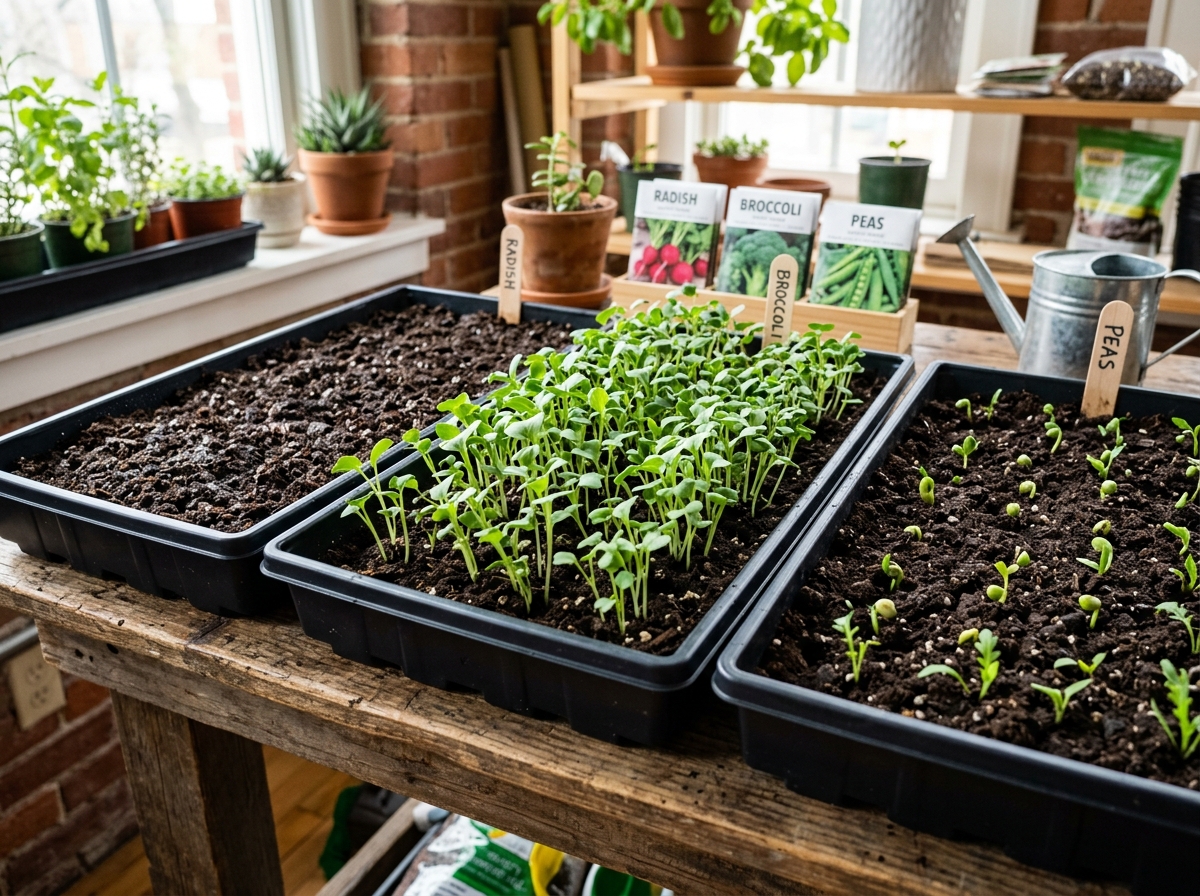
Choosing the Best Seeds for How to Grow Microgreens
Not all seeds are created equal. Some are “set it and forget it” easy, while others (like cilantro or beets) can be a bit finicky. For your first few trays, we suggest sticking to the “Big Four”:
- Radish: These are the Ferraris of the microgreen world. They germinate in a day and can be ready to harvest in as little as 6 days. They have a wonderful peppery kick that wakes up any sandwich.
- Broccoli: If you are growing for health, this is your winner. Broccoli microgreens are famous for their high levels of sulforaphane. They are mild, crunchy, and very reliable.
- Pea Shoots: Kids love these because they taste exactly like fresh sugar snap peas. They are also one of the few microgreens that can actually regrow after the first cutting.
- Sunflower: These produce thick, nutty, crunchy shoots. They require a bit more work (soaking the seeds for 8-12 hours is a must), but the flavor is unbeatable.
For a more exhaustive list of what you can grow, see our guide on Easy to Grow Microgreens for Your Kitchen Garden.
Preparing the Growing Medium
The medium is the “house” your seeds will live in. While we often use organic potting soil because it provides extra nutrients (leading to 41% higher protein and 200% higher iron levels in some studies), many home growers prefer soil-free methods.
Soil-free methods like hemp mats or coconut coir are much cleaner. There’s no dirt to wash off your greens, and they are easier to compost after use. The key is ensuring your medium has excellent moisture retention while maintaining a proper pH balance (ideally between 5.5 and 6.5).
Before sowing, always moisten your medium. It should feel like a wrung-out sponge — damp to the touch, but not dripping with water. For more on the pros and cons of different bases, visit Your Guide to Soil-Free Microgreens Growing.
How to Grow Microgreens: The Step-by-Step Method
Now, let’s get our hands dirty (or “coir-y”). The secret to professional-looking microgreens isn’t luck; it’s seed density. You want to sow your seeds thickly enough that they support each other as they grow, but not so thick that they choke out airflow.
- Fill your tray: Add about 1-1.5 inches of your medium. Level it out and tamp it down gently with a flat object to create an even surface.
- Sow the seeds: Scatter your seeds evenly across the surface. For small seeds like broccoli, aim for about 1 ounce per 10×20 tray. For larger seeds like peas, you’ll need about 3-4 ounces.
- Mist and Press: Give the seeds a generous misting with your spray bottle. This “locks” them into the medium.
- The “Weighted” Secret: Place another tray directly on top of the seeds. We often put a small weight (like a brick or a heavy book) on top of that second tray. This forces the roots to dive deep into the soil and helps the seedlings shed their hulls.
For a deeper dive into the mechanics of sowing, check out The Ultimate Step-by-Step Guide to Growing Microgreens Without Killing Them.
The Blackout Period and Germination
This is where the magic happens. For the first 3 to 5 days, your seeds should stay in total darkness. This is called the blackout period.
By keeping them in the dark and under weight, we are mimicking the experience of a seed buried deep underground. The plants will stretch, looking for light, which creates those long, beautiful stems we want to harvest. It also encourages root penetration and ensures that the “seed caps” or hulls fall off easily.
Don’t panic if you peek under the tray and see fuzzy white strands. Those are usually root hairs, not mold! We’ll talk about how to tell the difference in a moment. Learn more about this phase at Demystifying the Sprouting Process for Microgreens.
Lighting Requirements for How to Grow Microgreens
Once your seedlings are about 1-2 inches tall and starting to push up the weighted tray, it’s time for their “debut.” Remove the cover and introduce them to the light.
While a sunny windowsill can work, it often leads to “leaning” or leggy growth as the plants struggle to reach the sun. For the best results, we recommend LED grow lights.
- Duration: Aim for 12-16 hours of light per day.
- Spectrum: Plants love the 460nm (blue) and 660nm (red) wavelengths for optimal photosynthesis.
- Distance: Keep your lights 3-6 inches above the tops of the plants.
Consistent light ensures your greens are vibrant and packed with flavor. For a full breakdown of lighting tech, read Shining a Light on Optimal Microgreen Requirements.
Bottom Watering and Maintenance
If there is one “golden rule” for how to grow microgreens, it is this: Stop top-watering once they have sprouted.
Once the plants are out of the blackout phase, we switch to bottom watering. This involves placing your growing tray (which must have drainage holes) into a second, solid tray filled with about a half-inch of water. The soil wicks up the moisture from the bottom.
Why do we do this? It keeps the leaves and stems dry, which is the #1 way to prevent mold and “damping off” (a fungal disease that kills young plants). Check your trays daily; if the tray feels light when you lift it, it’s time for a drink. For more tips, see Stop Guessing and Learn Exactly How Often to Water Microgreens.
Troubleshooting Mold and Leggy Growth
Even the pros run into trouble sometimes. The most common issue is the “Mold vs. Root Hair” debate.
- Root Hairs: These are tiny, microscopic filaments that help the plant absorb water. They look like a fine white fuzz only around the root. If you mist them with water, they “disappear” or lay flat.
- Mold: This looks like a spiderweb or a grey, slimy clump that spreads across the surface of the soil and climbs the stems. It often has an unpleasant smell.
If you do find mold, don’t lose heart! You can often save the tray by increasing ventilation (use a small fan) and spraying a very diluted mixture of water and hydrogen peroxide on the affected area.
Leggy growth (stems that are too long, thin, and pale) is almost always a sign that your plants aren’t getting enough light. Move your light source closer or increase the hours of exposure. For a full troubleshooting guide, visit How to Avoid Mold in Your Microgreen Garden.
Frequently Asked Questions
Can microgreens regrow after cutting?
In almost all cases, the answer is no. Microgreens are a one-harvest crop. Because we cut them so young, they haven’t stored enough energy reserves in their roots to push out a second set of leaves.
The one notable exception is pea shoots. If you cut them just above the lowest leaf node, they will often give you a second, albeit smaller, harvest. For everything else, it’s best to compost the soil and start a fresh batch. Knowing the right time to cut is key—find out more at Knowing Exactly When Your Microgreens Are Ready.
Is growing microgreens at home profitable?
Absolutely! From a finance perspective, the “Return on Investment” (ROI) for microgreens is staggering. A single baker’s rack with five levels takes up only 6 square feet of floor space but can produce enough greens to generate $500 per week if sold directly to consumers.
Even if you aren’t looking to start a business, growing your own saves a fortune. A tray that costs you $3 to grow would cost you $15-$20 at a high-end grocery store. For a guide on setting up your “money-making” garden, check out Beginners Guide to Microgreens Garden Setup.
How long do microgreens last after harvest?
Freshness is everything. Once harvested, microgreens should be stored in the refrigerator in an airtight container. We recommend lining the container with a dry paper towel to absorb excess moisture.
When stored properly, they can last 10-12 days. However, for the best flavor and the highest nutrient levels, try to eat them within a week. For professional harvesting and storage techniques, read Proper Techniques for Harvesting Microgreens.
Conclusion
At FinanceOrbitX, we love microgreens because they represent the perfect “investment”: low risk, low startup cost, and a massive payoff in health and flavor. Whether you are sprinkling peppery radish greens on a taco, blending broccoli shoots into a morning smoothie, or garnishing a five-star steak, these tiny plants bring a level of culinary joy that is hard to match.
Now that you know how to grow microgreens, it’s time to get started. Don’t worry about getting it perfect on the first try—gardening is a practice, not a destination. Grab some seeds, find a tray, and watch the magic happen on your kitchen counter.
Ready to explore the different flavors you can grow? Check out The Gourmet Guide to Different Types of Micro-Herbs and start your journey today!
