
What It Actually Takes to Grow Microgreens at Home
Microgreens grow at home faster and easier than almost any other food crop — and you don’t need a garden, a green thumb, or much space to get started.
Here’s the quick answer for anyone ready to dive in:
How to grow microgreens at home (at a glance):
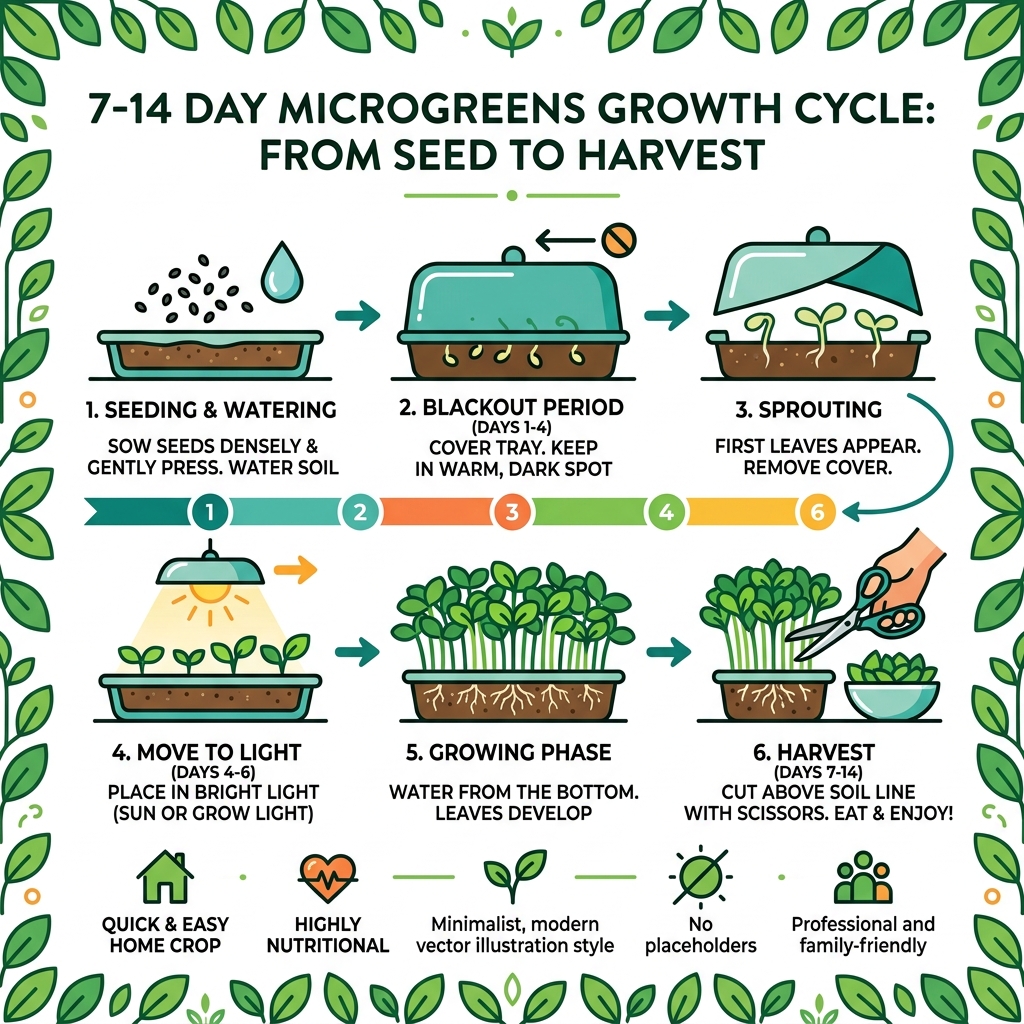
- Fill a shallow tray with 1-2 inches of potting mix or coconut coir
- Sow seeds densely across the surface and press them gently into the soil
- Cover the tray and keep it in a warm, dark spot for 2-4 days (the blackout period)
- Move to light — a sunny windowsill or LED grow light works well
- Water daily (from the bottom to prevent mold)
- Harvest in 7-14 days by cutting just above the soil line with clean scissors
That’s the whole process. Most beginners are eating their first harvest within two weeks.
Microgreens are simply young seedlings of common vegetables and herbs — harvested at the earliest stage, right after the first leaves appear. What makes them special is what’s packed inside those tiny leaves.
Research from the University of Maryland found that microgreens can contain 4 to 40 times more nutrients than their fully grown counterparts. You get the nutritional equivalent of a large bowl of salad in just a small handful.
And the cost difference is striking. A single tray of microgreens can sell for $5 to $10 at farmers’ markets. Grow them yourself, and the same tray costs pennies — especially if you start with something like dried peas from the grocery store.
The best part? You only need about a square foot of counter space to grow enough for one to two salad bowls a day for a week.
Why You Should Start Growing Microgreens Today
If you have ever stood in a grocery store aisle staring at a tiny $6 plastic clamshell of wilted sprouts, you already know the primary motivation for most home growers: cost. When you choose to stop buying and start growing your own microgreens, you are essentially printing your own “superfood” currency. A bag of dried organic peas from the grocery store can produce several trays of lush greens for less than the price of a single cup of coffee.
Beyond the financial benefits, the nutritional profile is staggering. Because these plants are harvested at the seedling stage, they contain all the concentrated energy and nutrients intended to fuel the growth of a mature plant. This means you get a massive hit of Vitamin C, Vitamin E, and Beta-carotene in just a few bites. For a general reference on the concept and common uses, see Microgreen on Wikipedia.
Furthermore, microgreens grow at home regardless of the season. Whether you are dealing with a “bitterly cold northern winter” or a “scorching southern summer” where outdoor lettuce would immediately bolt, your indoor microgreen garden remains protected. They require minimal space – a kitchen windowsill or a small corner of a bookshelf is plenty of room to maintain a continuous harvest. It is the ultimate “fast food” for the health-conscious gardener.
Essential Supplies and Beginner Varieties
Getting started doesn’t require a massive investment. In fact, many of the items you need are likely already in your kitchen or can be repurposed from the recycling bin.
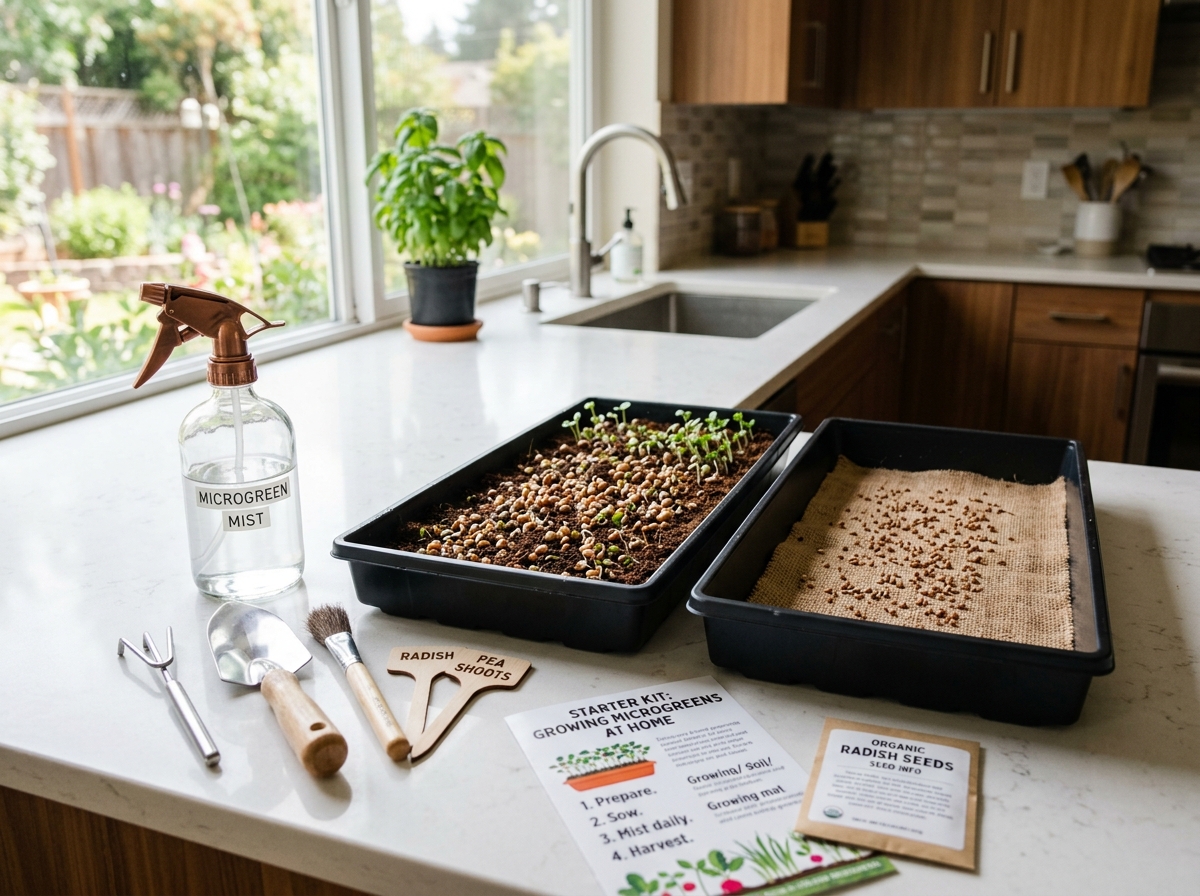
To set up your first “farm,” you will need:
- Shallow Trays: You don’t need deep pots. 1-2 inches of depth is perfect. You can use professional 10×20 trays, or repurpose plastic berry containers and pie plates. Just ensure they have drainage holes to prevent root rot.
- Growing Medium: We recommend a sterile soilless seed-starting mix, coconut coir, or specialized growing mats. Avoid using soil from your outdoor garden, as it can harbor pests and pathogens that thrive in the warm, humid conditions of an indoor grow.
- Misters and Water Pitchers: A simple spray bottle is essential for the germination phase to keep seeds moist without washing them away.
- Seeds: Always look for “untreated” or “sprouting” seeds to ensure they haven’t been coated with fungicides.
For a deeper dive into the technicalities of your space, check out our beginners guide to microgreens garden setup.
Best Beginner Varieties to Microgreens Grow at Home
Not all microgreens are created equal. Some take three weeks and are very finicky, while others are nearly “bulletproof.” For your first tray, we suggest starting with these reliable favorites:
| Variety | Flavor Profile | Harvest Time | Difficulty |
|---|---|---|---|
| Radish | Spicy, peppery, crunchy | 6-8 Days | Very Easy |
| Pea Shoots | Sweet, like fresh snap peas | 10-14 Days | Very Easy |
| Broccoli | Mild, slightly earthy | 7-14 Days | Easy |
| Sunflower | Nutty, thick, and crunchy | 7-14 Days | Easy (needs soaking) |
| Arugula | Sharp, peppery, nutty | 7-10 Days | Easy |
Radish is arguably the best “ego-booster” for a new gardener because it grows so fast you can almost see it moving. Pea shoots are a family favorite because kids love the sweet taste and the fun, curly tendrils.
Preparing Your Growing Medium and Trays
The foundation of your success lies in the medium. If you are starting an indoor garden: a beginners guide will tell you that moisture management is everything.
Start by pre-moistening your soil or coir in a bucket. It should feel like a wrung-out sponge — damp, but not dripping. Fill your tray with about 1.5 inches of this mix and level it out. Do not pack it down hard; you want the tiny roots to be able to penetrate the medium easily. Gently tamp the surface to create a flat “bed” for your seeds. This ensures that all seeds have even contact with the moisture, leading to a uniform forest of greens rather than patchy clumps.
Step-by-Step Guide to Microgreens Grow at Home
Once your tray is ready, it’s time to sow. Unlike traditional gardening where you space seeds inches apart, microgreens grow at home best when they are crowded together like people in a subway car.
- Seed Density: For small seeds (like broccoli or radish), aim for about 10-12 seeds per square inch. For larger seeds (like peas or sunflowers), you want them almost touching but not overlapping.
- Soaking: Larger, hard-shelled seeds like peas and sunflowers benefit from an 8-12 hour soak in cool water before planting. This “wakes them up” and speeds up germination significantly.
- The Blackout Period: After sowing, mist the seeds and cover them with another tray or a piece of cardboard. This mimics being underground and encourages the seeds to stretch upward in search of light, creating longer, easier-to-harvest stems.
- Weighted Germination: For a pro tip from the ultimate step-by-step guide to growing microgreens without killing them, place a small weight (like a brick or a heavy book) on top of the covering tray. This pressure forces the roots deep into the soil and helps the seedlings shed their seed hulls more efficiently.
- Temperature: Keep your trays in a spot that stays between 65-75°F. If your house is chilly, a seedling heat mat can help, but for most of us, the top of the refrigerator or a kitchen counter is perfect.
Lighting and Watering to Microgreens Grow at Home
After 2-4 days, your seedlings will look like pale, yellowish “aliens.” This is the signal that the blackout period is over. It’s time to introduce them to the world.
Lighting: While a south-facing windowsill can work, it often leads to “leggy” growth where the plants lean toward the glass. For the best results, use LED grow lights. They don’t have to be expensive; even simple LED shop lights will do the trick if kept 6-12 inches above the plants for 12-16 hours a day.
Watering: This is where most beginners fail. To learn how to start microgreens at home without losing your soil, you must master bottom watering. Instead of pouring water over the delicate leaves (which invites mold), place your growing tray inside a second tray that has no holes. Pour about a quarter-inch of water into the bottom tray and let the soil wick the moisture up. This keeps the stems dry and the roots hydrated.
Harvesting, Storage, and Troubleshooting
The “sweet spot” for harvesting is usually when the first set of leaves (the cotyledons) are fully open and look lush. Some growers wait for the “true leaves” — the second set that looks more like the mature plant — but for many varieties, the flavor is best right at the start.
How to Harvest: Use sharp, clean scissors or a kitchen knife. Grasp a small clump of greens and snip them about half an inch above the soil line. If you cut too low, you’ll get soil in your salad; if you cut too high, you’re leaving delicious food behind!
Storage: Microgreens are best eaten immediately, but they can last 10-12 days in the fridge if stored correctly. The secret is to keep them dry. Do not wash them until right before you eat them. Store them in a sealed container or glass jar with a dry paper towel to absorb any excess moisture.
Troubleshooting Common Issues
- Mold vs. Root Hairs: Beginners often panic when they see fuzzy white growth at the base of the stems. If it’s only around the roots and looks like fine silk, those are likely “root hairs” — a healthy part of the plant. If the fuzz is “cobwebby” and climbing up the stems, it’s mold. Improve your airflow with a small fan and switch to bottom watering immediately.
- Leggy Growth: If your plants are tall, thin, and falling over, they are “searching” for light. Move your light source closer or increase the duration of light.
- Damping Off: This is a soil-borne disease where stems suddenly shrivel and die. It’s usually caused by overwatering or using dirty trays. Always start with a clean setup to how to grow microgreens at home like a pro.
Frequently Asked Questions about Microgreens
What is the difference between microgreens and sprouts?
This is the most common point of confusion. Sprouts are grown in water, in the dark, and you eat the entire thing (root, seed, and stem). Because they are grown in warm, wet conditions without much airflow, they carry a higher risk of bacterial contamination. Microgreens are grown in soil or a medium, in the light, and with plenty of air. You only eat the stems and leaves, making them much safer and more flavorful.
Can microgreens regrow after cutting?
For the vast majority of varieties, the answer is no. Once you snip the “growing point” of the seedling, it’s done. You should compost the remaining soil and roots and start a fresh batch. The one exception is pea shoots, which can sometimes regrow a second (albeit smaller) harvest if you leave at least one leaf node on the stem when cutting.
Are homegrown microgreens safe to eat?
Yes, they are generally very safe. Because you are controlling the water, the soil, and the environment, you avoid the risks associated with industrial agriculture. Just ensure you use clean water, food-grade trays, and “untreated” seeds. Always wash your hands before harvesting!
Conclusion
At FinanceOrbitX, we believe that gardening is one of the best investments you can make — both for your health and your wallet. Microgreens grow at home with such speed and ease that they serve as the perfect entry point for anyone intimidated by traditional outdoor gardening.
Whether you are using them as a peppery garnish for a steak, a crunchy layer in a tuna sandwich, or the base of a nutrient-dense morning smoothie, these tiny greens will transform your cooking. There is a unique satisfaction in snipping fresh greens just seconds before they hit your plate.
Ready to turn your windowsill into a high-yield garden? Start your indoor gardening journey today and join the thousands of home growers who have traded expensive grocery store clamshells for home-grown freshness. Happy growing!
