
The Quickest Way to Fresh Greens You’ve Never Tried
Learning how to grow microgreens inside is one of the easiest wins in home gardening — and you can do it in under two weeks, with just a tray, some seeds, and a sunny spot.
Here’s the quick version:
- Fill a shallow tray with 1-2 inches of seedling starter mix
- Broadcast seeds evenly over the surface and press down gently
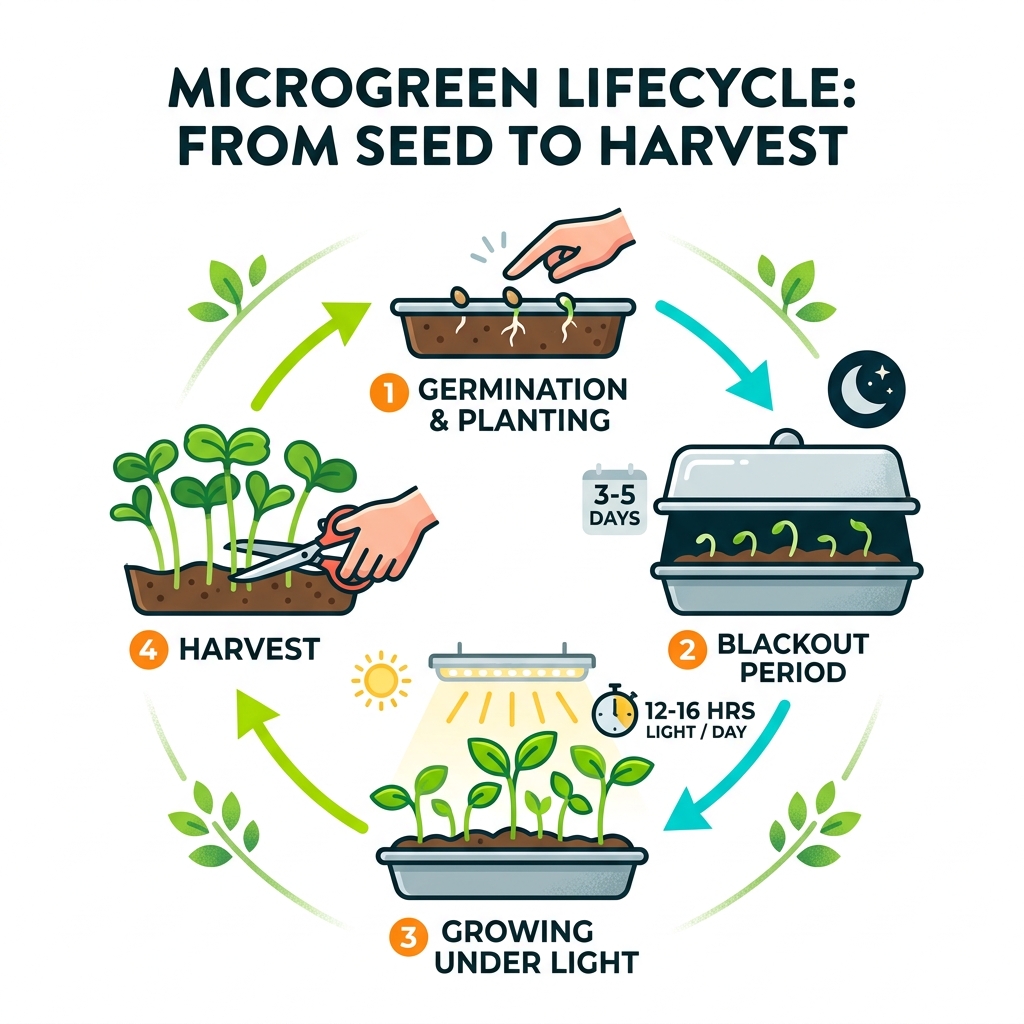
- Mist, then cover for a 3-5 day blackout germination period
- Uncover and place under light for 12-16 hours per day
- Bottom-water daily and harvest in 7-14 days when cotyledons fully open
That’s the whole process. Most varieties are ready in less than two weeks, and a single tray fits on a kitchen counter.
A few numbers worth knowing before you dive in:
| Fact | Detail |
|---|---|
| Time to harvest | 7-14 days for most varieties |
| Space needed | As little as 1 square foot |
| Daily care time | 1-5 minutes |
| Cost per tray | ~$2-4 in supplies |
| Store-bought equivalent | $5-10 per tray |
| Nutrient density | Up to 40x more concentrated than mature plants |
| Fridge shelf life | 5-12 days after harvest |
The appeal is real. Microgreens are young seedlings of common vegetables — things like radish, broccoli, peas, and sunflower — harvested just after the first leaves appear. At that early stage, the plant’s nutrients are still tightly packed into a tiny structure, making each bite surprisingly rich in vitamins and antioxidants.
No garden required. No green thumb needed. Just a countertop and a little consistency.
Whether you want to stop spending $8 on a small clamshell at the grocery store, add fresh flavor to your meals year-round, or just try something new — this guide walks you through every step.
Essential Supplies for Growing Microgreens Inside
Setting up your indoor farm doesn’t require a massive investment. In fact, most of us can get started for about $15 to $25. If you decide to add professional lighting, that might jump to $40 or $60, but the return on investment is rapid given that store-bought trays often cost $5 to $10 each.
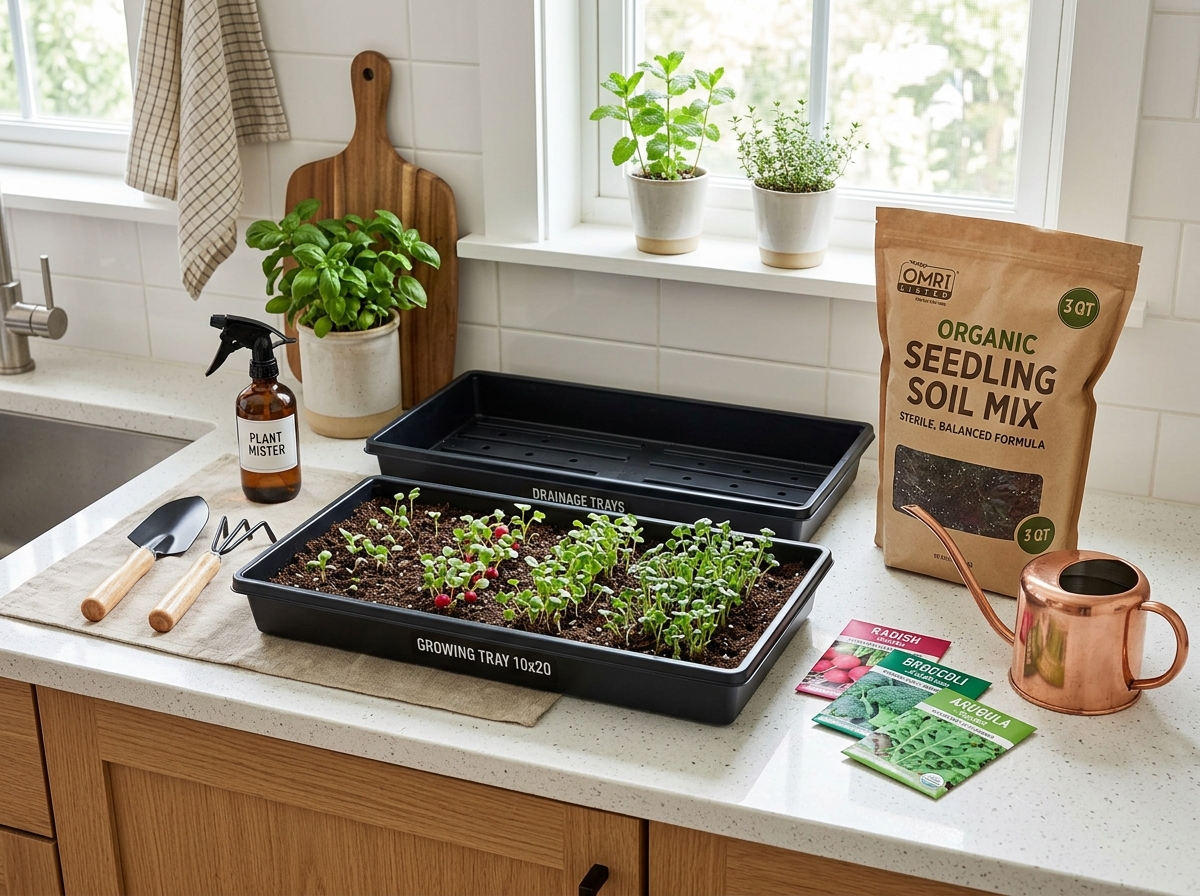
To master how to grow microgreens inside, you’ll need a few specific items:
- Shallow Growing Trays: You don’t need deep pots. Since microgreens are harvested young, their roots don’t need much room. Standard 10×20 trays are the industry favorite, but even repurposed takeout containers work for beginners. For the best results, we recommend using Seed Sprouting Trays for Microgreens that feature drainage holes.
- Growing Medium: A high-quality Soil and Growing Medium for Microgreens is vital. We suggest a sterile seedling starter mix rather than standard garden soil, which can harbor pests or pathogens.
- Untreated Seeds: Always look for Microgreens Seed Starter Packs that specify the seeds are untreated and non-GMO. Avoid seeds coated in fungicides.
- Watering Tools: A simple spray bottle for the early stages and a small watering can or pitcher for “bottom watering” later on.
- Lighting: While a south-facing windowsill can work, Best Indoor Grow Lights for Microgreens provide the consistency needed for lush, upright growth.
Soil vs. Hydroponic Mats
One of the first decisions you’ll make is what to grow your seeds in. Here is a quick breakdown:
| Feature | Seedling Starter Mix (Soil) | Hydroponic Mats (Hemp/Coir) |
|---|---|---|
| Ease of Use | Very forgiving for beginners | Cleaner, no “dirt” in the kitchen |
| Growth Speed | Slightly more robust growth | Very fast, but less buffer |
| Nutrients | Contains some natural minerals | Relies entirely on seed reserves |
| Mess Factor | Can be messy during harvest | Very tidy and easy to compost |
Best Beginner-Friendly Varieties to Start Your Indoor Garden
If you are just starting out, we always suggest beginning with the “big four.” These varieties are reliable, fast, and taste incredible.
- Radish: According to many in the community, radish is Reddit’s Favorite Tiny Greens: What to Grow First. They germinate in just 1-2 days and can be ready for harvest in as little as 6 days. They offer a bold, peppery kick.
- Broccoli: These are among The Fastest Growing Microgreens to Try at Home. They have a mild flavor and are famous for their high levels of sulforaphane, a potent antioxidant.
- Pea Shoots: Kids love these because they taste exactly like fresh sugar snap peas. They are crunchy, sweet, and can sometimes even regrow for a second smaller harvest.
- Sunflower: These are the “heavyweights” of the microgreen world. They are nutty, crunchy, and very filling. Just be sure to soak the large seeds for 8-12 hours before planting.
The Step-by-Step Process for Indoor Cultivation
Now that you have your supplies and seeds, it’s time to get your hands dirty. Following The Ultimate Step-by-Step Guide to Growing Microgreens Without Killing Them ensures you don’t run into the common pitfalls of overwatering or poor germination.
Preparation is key. Start by using Organic Soil for Microgreens to fill your tray about 1 to 1.5 inches deep. Lightly tamp the soil down so it’s level but not packed like concrete. You want a flat surface so your seeds don’t roll into “clumps,” which can lead to mold.
Sowing Seeds and Mastering How to Grow Microgreens Inside
The biggest difference between growing microgreens and a regular garden is the density. In a garden, you space seeds inches apart. When learning how to grow microgreens inside, you want to broadcast them thickly—think of it like “carpeting” the soil.
- Broadcast Sowing: Spread the seeds evenly across the surface. For small seeds like broccoli, aim for about 1 to 1.5 ounces per 10×20 tray. For larger seeds like peas, you’ll need 3 to 4 ounces.
- Tamping and Misting: Gently press the seeds into the soil with a piece of cardboard to ensure good seed-to-soil contact. Mist the surface generously until the soil is damp but not swimming in water.
- The Pro Tip: If you’re struggling with even distribution, try using a repurposed large salt shaker for tiny seeds. For more in-depth tips, check out From Seed to Salad: A Beginner Guide to Indoor Microgreens.
Managing the Blackout Phase and Light Requirements
Most beginners want to put their seeds under lights immediately, but that’s a mistake! Most microgreens need a “blackout period” of 3 to 5 days.
During this phase, cover your tray with another tray (inverted) or a humidity dome. Many pros actually place a weight (like a brick or a heavy book) on top of the covering tray. This “stresses” the seedlings just enough to make them grow thicker, stronger stems and helps them shed their seed hulls.
Once the seedlings are about an inch tall and looking a bit pale/yellow, it’s time to uncover them. This is where Choosing the Right Lighting for Growing Microgreens becomes essential. They need 12-16 hours of light per day to turn vibrant green and start photosynthesizing. LED Grow Lights for Microgreens are the most efficient choice, as they don’t produce excess heat that can dry out your tiny crop.
Maintenance and Troubleshooting Your Tiny Crop
Once your greens are under the light, your main job is keeping them hydrated. However, don’t just spray them from the top.
The best method is The Right Way to Water Your Microgreens: Bottom Watering. Place your growing tray inside a second “solid” tray without holes. Pour about a quarter-inch of water into the solid tray and let the soil wick it up from the bottom. This keeps the stems and leaves dry, which is the best defense against mold.
To keep your plants happy, aim for these conditions:
- Temperature: 65-75°F (Consistency is more important than the exact number).
- Humidity: 40-60%.
- Airflow: A small fan on low speed can work wonders.
For more details on climate control, see our guide on Maintaining Optimum Temperatures for Your Microgreens and Stop Guessing and Learn Exactly How Often to Water Microgreens.
Preventing Mold and Common Issues When You Grow Microgreens Inside
The most common “scare” for new growers is seeing white fuzzy stuff at the base of the plants. Don’t panic! Often, these are just “root hairs,” which are a natural part of the plant’s anatomy.
How can you tell the difference?
- Root Hairs: Attached to the root, very uniform, and they disappear when you mist them with water.
- Mold: Looks like a spiderweb, usually slimy, has an unpleasant smell, and stays visible even when wet.
If you do encounter real mold, it’s usually due to poor airflow or overwatering. You can learn How to Avoid Mold in Your Microgreen Garden by using How to Use Fans to Grow Healthier Microgreens and other Tools to Prevent Mold in Microgreens.
Harvesting, Storage, and Culinary Uses
The best part of learning how to grow microgreens inside is the harvest. Most varieties are ready when they are 2 to 3 inches tall and have their first set of “cotyledon” leaves fully expanded.
Knowing Exactly When Your Microgreens Are Ready is largely a matter of taste. Sample a few; if they taste great, they’re ready! Use sharp, clean scissors to snip the stems just above the soil line. We cover the specifics in our guide on Proper Techniques for Harvesting Microgreens.
Storage Tips:
- Harvest in the morning when the plants are most hydrated.
- Do not wash them before putting them in the fridge; moisture is the enemy of shelf life.
- Place them in an airtight container with a dry paper towel to absorb excess moisture. They will stay fresh for 5 to 12 days.
Beyond being a garnish, these greens are nutritional powerhouses. Check out Everything You Need to Know About Microgreen Nutrients to see how they stack up against mature veggies. When you’re ready to eat, Master the Art of the Microgreen Harvest Today by tossing them into smoothies, sandwiches, or even on top of a pizza!
Frequently Asked Questions about Indoor Microgreens
Can microgreens regrow after harvest?
For about 95% of varieties, the answer is no. Once you snip the stem, the plant has used up the energy stored in the seed and cannot recover. You should compost the soil and start fresh. The notable exception is pea shoots, which can sometimes regrow if you cut them above the lowest leaf node. For more advanced tips, see The Ultimate Guide to Indoor Microgreen Mastery.
How much does it cost to grow microgreens at home?
It is significantly cheaper than buying them. While a store-bought clamshell can cost $8, the electricity cost for a tray is roughly $0.20, and the seeds/soil cost about $2-$4. You can effectively Stop Buying and Start Growing Your Own Microgreens to save hundreds of dollars a year on high-end produce.
Do I need expensive grow lights?
Not necessarily. While professional LEDs are great, many home growers use basic 6500K LED shop lights with great success. The key is providing 12-16 hours of light. If you rely solely on a window, your plants may become “leggy” (tall and thin) as they stretch for the sun. Check out our Year-Round Indoor Microgreen Growing Tips for lighting hacks.
Conclusion
At FinanceOrbitX, we believe that gardening should be as accessible as it is rewarding. Learning how to grow microgreens inside is the perfect entry point for anyone looking to blend sustainable living with practical, cost-saving habits. You don’t need an acre of land to be a farmer—you just need a tray and a little bit of space on your counter.
Ready to expand your indoor garden? Explore more of our Indoor Gardening: Tackling Microgreens resources and start your first tray today!
