
Why Broccoli Microgreens Nutrition Is Worth Your Attention
Broccoli microgreens nutrition is one of the most impressive profiles in the plant world — and the numbers back that up.
Here’s a quick snapshot of what 100g of broccoli microgreens delivers:
| Nutrient | Amount | % Daily Value |
|---|---|---|
| Calories | 31 | – |
| Vitamin E | 24.1 mg | 160% |
| Vitamin C | 57 mg | ~60% |
| Vitamin A | 300 mcg | ~30% |
| Vitamin K | 102 mcg | ~85% |
| Potassium | 326 mg | ~7% |
| Calcium | 88 mg | ~11% |
| Magnesium | 51 mg | ~12% |
| Iron | 0.67 mg | ~6.7% |
| Sulforaphane | 633 mg | – |
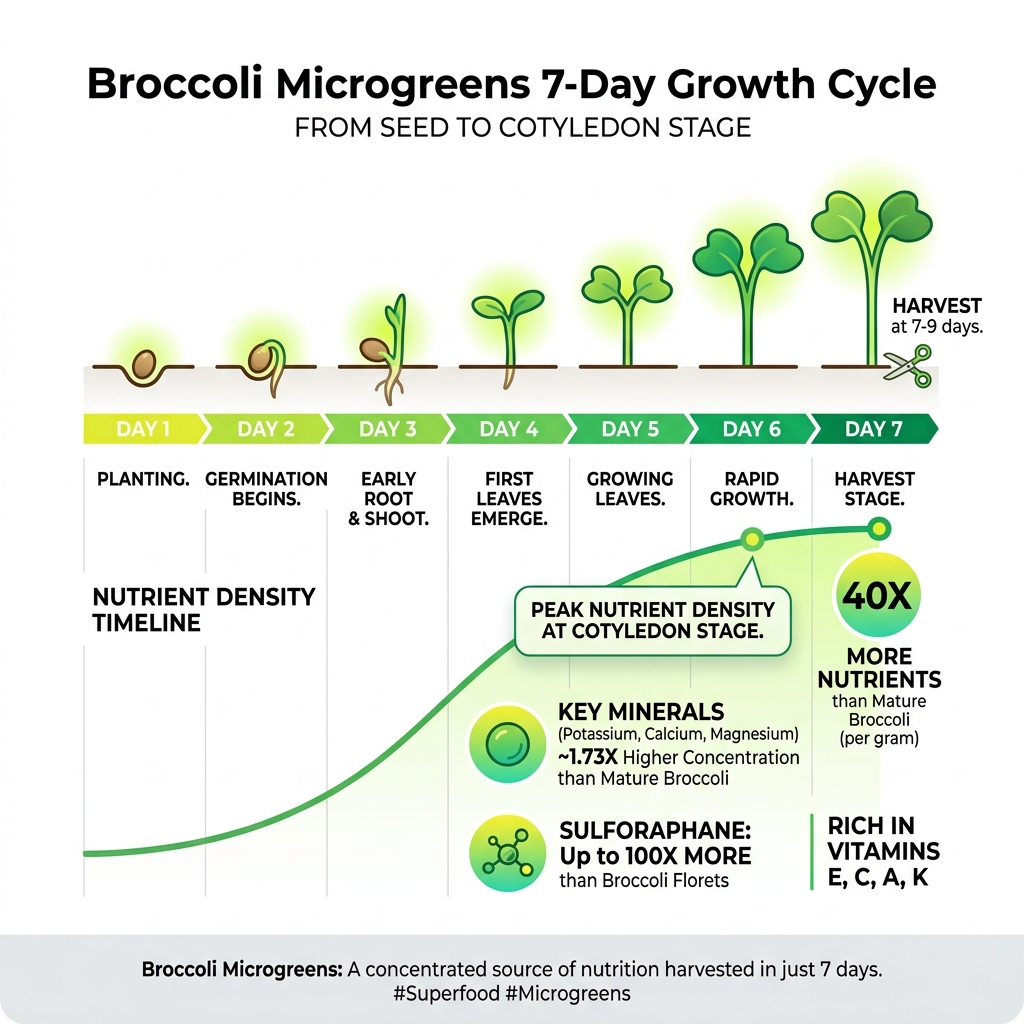
All of that in a tiny green shoot harvested just 7 to 9 days after the seed hits soil.
Broccoli microgreens are the young seedlings of the broccoli plant, cut at the cotyledon stage — right when the first seed leaves open up. That’s the exact moment when nutrient density peaks.
Research shows they can contain up to 40 times more nutrients per gram than mature broccoli. For key minerals like potassium, calcium, and magnesium, compost-grown broccoli microgreens average 1.73 times the concentration found in full-grown broccoli.
The compound getting the most attention is sulforaphane — a powerful antioxidant linked to cancer prevention, blood sugar regulation, and reduced inflammation. Broccoli microgreens can contain up to 100 times more sulforaphane than the broccoli florets you find at the grocery store.
And they’re not hard to grow. A small tray. A handful of seeds. Seven days. That’s all it takes to have a steady supply on your kitchen counter.
Broccoli Microgreens vs. Mature Broccoli and Sprouts
When we talk about broccoli, most of us picture those tree-like florets in the produce aisle. But the life of a broccoli plant has several stages, and where you choose to eat it makes a massive difference in the nutrients you actually get.
- Broccoli Sprouts: These are the “infants” of the plant world. Harvested after only 3 to 5 days, they are grown in water. While high in sulforaphane, they carry a higher risk of bacterial contamination (like E. coli) because of the warm, humid conditions required for water-based sprouting.
- Broccoli Microgreens: These are the “toddlers.” We harvest them at 7 to 14 days once they have developed their first set of leaves (cotyledons). Because they are grown in a medium like soil or compost and have exposure to light and ventilation, they are generally safer than sprouts and have a more developed flavor.
- Mature Broccoli: This is the “adult.” It takes 100 to 150 days to grow. While it provides more total fiber and protein per serving simply because we eat more of it, the concentration of vitamins and minerals is much lower than in the younger stages.
If you are new to this, checking out our Microgreens 101: A Beginner’s Guide can help you visualize these differences. Scientifically, the Bioactive Compounds and Bioactivities of Brassica oleracea L. var. Italica Sprouts and Microgreens confirms that these younger stages contain significantly higher levels of health-promoting phytochemicals.
The Superior Broccoli Microgreens Nutrition Profile
Why are these tiny greens so powerful? Think of a seed as a battery. It contains all the energy and “blueprints” needed to grow a massive plant. When we harvest at the microgreen stage, we are catching all that concentrated energy before it gets diluted across a large, mature plant.
The broccoli microgreens nutrition profile is a masterclass in efficiency. Research indicates that compost-grown microgreens have an average nutrient ratio of 1.73 across eight essential minerals (P, K, Ca, Mg, Mn, Fe, Zn, and Na) compared to their mature counterparts. This means you’d have to eat significantly more mature broccoli to get the same mineral “payday” as a small handful of microgreens. For more on how these tiny plants stack up, see Everything You Need to Know About Microgreen Nutrients.
Comparing Sulforaphane Levels
The “crown jewel” of broccoli is sulforaphane. This is an isothiocyanate derived from a precursor called glucoraphanin. When the plant is damaged (chewed or chopped), an enzyme called myrosinase converts glucoraphanin into sulforaphane.
In broccoli microgreens, the concentration of these compounds is staggering. They can produce up to 100 times the sulforaphane concentration of mature broccoli. This makes them one of the most potent natural sources of this disease-fighting compound available to us.
The Science Behind Broccoli Microgreens Nutrition
Let’s dive deeper into the specific vitamins that make these greens a staple for any “health portfolio.”
- Vitamin E: A 100g serving provides 24.1 mg, which is 160% of your recommended daily allowance. This is vital for skin health and protecting cells from oxidative stress.
- Vitamin C: At 57 mg per 100g, you’re getting about 60% of your RDA. Interestingly, even if you lightly cook them, they retain about 80% of this vitamin, which is still much higher than most cooked vegetables.
- Vitamin A: With 300 mcg, you’re hitting 30% of your RDA, supporting vision and immune function.
- Vitamin K: While they have slightly less Vitamin K than the mature plant, they still provide roughly 85% of your daily needs. This is actually a benefit for people who need to monitor their Vitamin K intake for medical reasons.
You can learn more about how these compare to other varieties in our guide on Vitamins in Popular Microgreens. Furthermore, the study Broccoli Microgreens: A Mineral-Rich Crop That Can Diversify Food Systems highlights how these nutrients can help combat global malnutrition.
Essential Minerals for Daily Health
Minerals are the building blocks of our bodies, and broccoli microgreens nutrition excels here.
- Magnesium: Essential for over 300 biochemical reactions in the body.
- Zinc & Iron: Crucial for immune health and oxygen transport.
- Potassium & Calcium: Vital for heart health and bone density.
Because microgreens are so dense, even a small 14g (1/2 oz) serving—which is only 3 calories—provides a meaningful boost to these mineral levels. If you want to diversify your mineral intake, you might also consider Why Your Diet Needs Nutrient-Dense Kale Microgreens.
Bioactive Compounds and Antioxidants
Beyond vitamins and minerals, broccoli microgreens are rich in:
- Polyphenols: Compounds that help manage blood pressure and inflammation.
- Flavonoids: Known for their anti-viral and anti-cancer properties.
- Carotenoids (Lutein and Zeaxanthin): Critical for eye health, specifically in preventing cataracts and macular degeneration.
These “bioactive” components are why we call them a superfood. For a list of other varieties with similar profiles, check out Antioxidant-Rich Microgreens to Grow.
Primary Health Benefits of Broccoli Microgreens
The real-world impact of broccoli microgreens nutrition is found in how it supports our long-term health. We like to think of them as a “low-risk, high-reward” investment for your body.
- Cancer Prevention: Sulforaphane has been shown to inhibit the growth of various cancer cells, including breast, colon, and prostate cancers.
- Blood Sugar Regulation: Studies suggest sulforaphane can help regulate glucose levels, making these greens an excellent choice for those managing Type 2 diabetes or pre-diabetes.
- Cardiovascular Health: The anti-inflammatory properties of these greens help reduce oxidative stress in the heart and blood vessels.
- Immune System Support: High levels of Vitamin C and Vitamin A provide the “armor” your immune system needs to fight off infections.
For a deeper dive into these effects, see our Superfood Microgreens for Health page.
Sulforaphane and Disease Prevention
One of the most specific benefits of sulforaphane is its ability to inhibit H. pylori, the bacteria responsible for most stomach ulcers and a major risk factor for gastric cancer. It’s also being researched for its neuroprotective effects, potentially helping with “brain fog” and fatigue recovery. If you struggle with digestion, you might find our article on Microgreens for Digestive Health particularly useful.
Maximizing Broccoli Microgreens Nutrition Through Proper Preparation
To get the most out of your greens, you need to “activate” the sulforaphane. This happens when the glucoraphanin and myrosinase mix.
- Chop or Chew: Always chop your microgreens or chew them thoroughly to trigger the chemical reaction.
- Eat Raw: Heat can damage the myrosinase enzyme. Eating them raw ensures maximum sulforaphane production.
- Gentle Heat: If you must cook them, do so at temperatures between 140-180°F for no more than 5 minutes. This retains about 80% of the nutrients.
For more tips on prep, check out How to Eat Microgreens Daily.
Sustainability and Optimal Growing Methods
At FinanceOrbitX, we love efficiency. When you look at the “environmental cost” of broccoli microgreens nutrition, the ROI is incredible.
- Water Efficiency: Growing a nutritionally equivalent amount of microgreens requires 158 to 236 times less water than growing mature broccoli in a field.
- Production Speed: You can harvest in 7 to 10 days, compared to 100+ days for a full-grown head of broccoli.
- Land Use: Because they can be grown vertically and indoors, they require 93-95% less time and significantly less land.
This makes them a “tiny superhero” for the planet. Read more in Why Organic Microgreens Are The Tiny Superheroes Of Your Salad.
Compost vs. Hydroponic Nutrient Density
If you’re growing at home, we recommend using compost or soil rather than a purely hydroponic (water-only) setup. Research shows that compost-grown microgreens have significantly higher quantities of nine key elements, including potassium, calcium, magnesium, and iron.
Using vermicompost (compost made with worms) from your own kitchen scraps—like banana peels—allows you to recycle nutrients back into your food. This “closed-loop” system is the ultimate way to ensure your Broccoli Microgreens: A Mineral-Rich Crop That Can Diversify Food Systems – PMC are as nutrient-dense as possible.
Practical Culinary Uses and Recipes
You don’t need fancy recipes to enjoy these. They have a mild, slightly peppery flavor that works with almost anything.
- Smoothie Boosters: Throw a handful into your morning green smoothie.
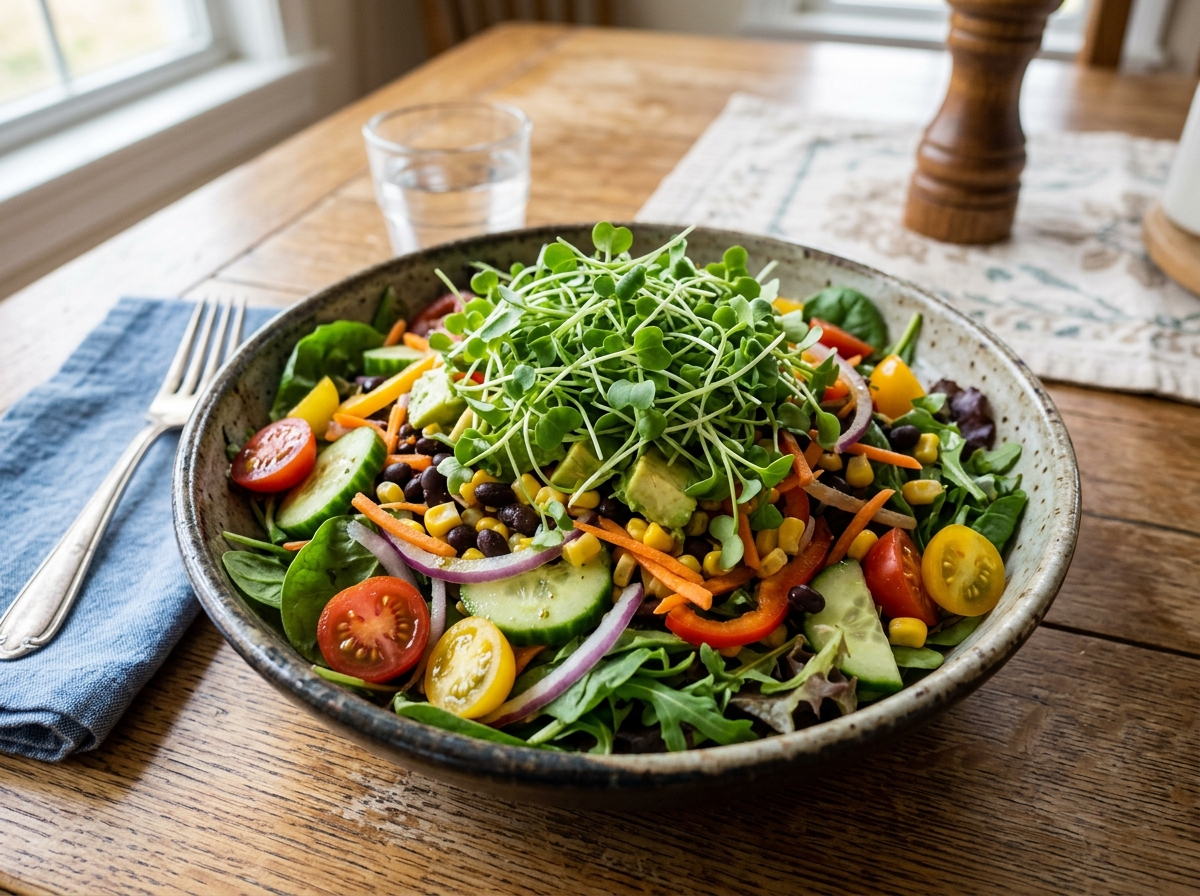
- Salad Garnishes: Use them as a base or a topper for extra crunch.
- Avocado Toast: Sprinkle them on top of avocado and red pepper flakes.
- Tacos and Pizza: They add a fresh, crisp texture to heavier dishes.
Find more inspiration at Microgreens for Smoothies and Salads.
Frequently Asked Questions about Broccoli Microgreens
How much sulforaphane is in broccoli microgreens?
They contain roughly 633mg of total isothiocyanates (which includes sulforaphane) per 100g of fresh weight. This is up to 100 times the concentration found in mature broccoli florets.
Can you cook broccoli microgreens without losing nutrients?
Yes, but be careful! To keep about 80-85% of the Vitamin C and sulforaphane, stay within the 140-180°F (60-82°C) range. Adding them to a soup just before serving is a great way to warm them without “killing” the nutrition.
Are broccoli microgreens easy to grow at home?
Absolutely. They are one of the best “beginner” crops. They don’t require pre-soaking, they germinate in 1-2 days, and you can harvest them in about a week. You only need a shallow tray, some compost, and a sunny windowsill.
Conclusion
The evidence is clear: broccoli microgreens nutrition offers a concentrated, sustainable, and highly accessible way to improve your health. Whether you are looking to manage blood sugar, prevent chronic disease, or just get more “bang for your buck” in your daily diet, these tiny greens are a smart investment.
By growing your own, you bypass long supply chains, reduce your environmental footprint, and ensure your food is as fresh as it can possibly be. We invite you to explore our other gardening guides to start your journey.
Ready to grow? Grab some seeds and a tray—your future self will thank you for the nutritional dividends!
