
The Quickest Way to Grow Fresh, Nutritious Greens at Home
How to start growing microgreens is simpler than most people think — and you can do it in less than two weeks, with minimal space and a few basic supplies.
Here’s the quick version:
- Get your supplies — seeds, shallow trays, potting mix or growing mats, and a light source
- Sow seeds densely on moist growing medium in a tray
- Cover and keep dark for 3-5 days while seeds germinate
- Uncover and move to light — 12-16 hours per day
- Water from the bottom daily to prevent mold
- Harvest at 2-3 inches tall (usually 7-14 days from sowing) by cutting just above the soil line
- Rinse and enjoy — or refrigerate for up to 5-12 days
That’s the whole process. Everything else is just fine-tuning.
If you’ve ever bought a tiny clamshell of microgreens at the grocery store for $8 and thought “there has to be a better way” — you’re right. A single tray costs just $2-4 to grow at home and produces the equivalent of what you’d pay $10-20 for at retail.
Microgreens are the young seedlings of common edible crops — things like broccoli, radish, peas, and kale — harvested just after the first leaves appear. They’re not the same as sprouts. They grow in soil (or a growing mat), need light, and pack a serious nutritional punch. Research suggests they can contain up to 40 times more nutrients than their fully mature counterparts.
And the best part? You don’t need a garden, a green thumb, or a lot of time. A space as small as one square foot of counter space is enough to get started.
How to start growing microgreens terms at a glance:
Why You Should Learn How to Start Growing Microgreens
When we talk about “juvenile vigor,” we aren’t just using fancy gardening lingo. We are referring to the incredible burst of energy and nutrients packed into a seed to help it become a plant. By harvesting at the microgreen stage, we capture that energy at its peak.
Learning how to start growing microgreens isn’t just a hobby; it’s a strategy for better health and food security. Whether it’s the middle of a blizzard or a scorching summer, your indoor “farm” stays productive year-round. For a deeper dive into the basics, check out our Microgreens 101: A Beginners Guide. You can also see the process in action by watching this How to Grow Microgreens (Video).
Health and Nutritional Benefits of Tiny Greens
Don’t let their size fool you. These tiny greens are nutritional heavyweights. University research has shown that microgreens can contain significantly higher concentrations of vitamins C, E, K, and beta-carotene than mature plants.
Specifically, broccoli microgreens are famous for high levels of sulforaphane, a compound linked to cancer prevention. If you use a fertilizer-enriched “super soil,” you can even boost the nutritional profile further—increasing protein levels by up to 41% and iron levels by a staggering 200%. They are essentially a concentrated multivitamin that tastes like gourmet food.
The Economics of How to Start Growing Microgreens at Home
At FinanceOrbitX, we love a good ROI. If you look at the retail price of microgreens at farmers’ markets, they typically range from $5 to $10 per small tray. By growing them yourself, you slash that cost to nearly nothing.
For those looking beyond personal consumption, the scalability is impressive. A single metal baker’s rack occupying only 6 square feet of floor space can hold 20 standard trays. At a yield of $25 per tray, that’s a potential $500 per week or $2,000 per month. Whether you want to save money on groceries or start a side hustle, our Beginners Guide to Microgreens Garden Setup can help you build a cost-effective system.
Essential Supplies for Your Indoor Garden
You don’t need a greenhouse to be successful. Most of us start on a kitchen windowsill or a small folding table. However, having the right gear makes the process much more “set it and forget it.”
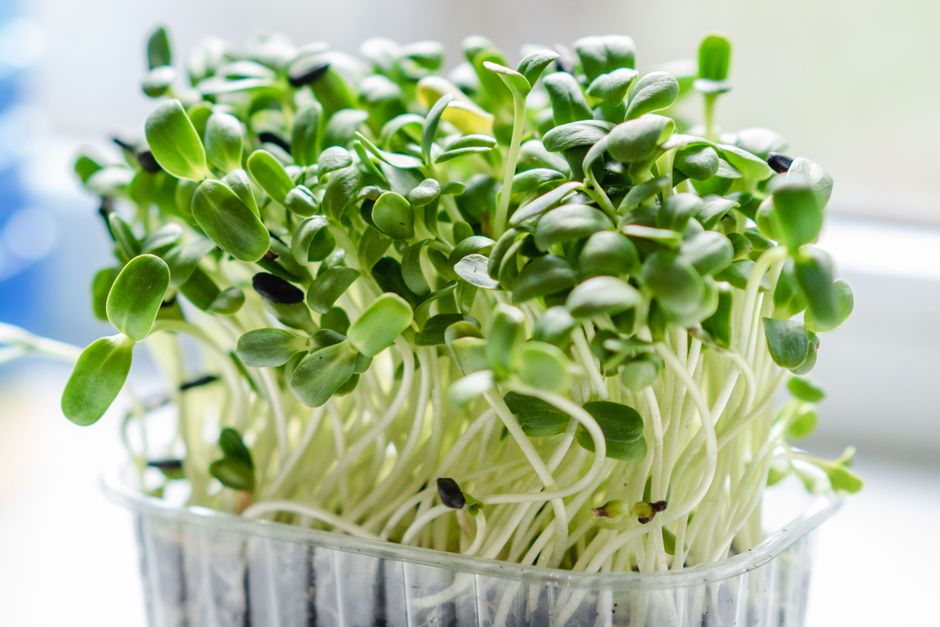
The industry standard is the 10×20 tray. We recommend using a “two-tray system”: one tray with drainage holes nested inside a solid tray without holes. This setup is crucial for bottom watering, which keeps the delicate stems dry and prevents mold. For more on tray selection, read about The Best Containers for Nurturing Indoor Microgreens.
Selecting the Best Growing Medium and Seeds
When choosing a medium, you have two main paths: soil or hydroponic mats.
| Feature | Potting Soil / Seed Mix | Hydroponic Mats (Coco Coir/Jute) |
|---|---|---|
| Growth Robustness | Very High (Nutrient dense) | Moderate |
| Cleanliness | Can be messy | Very clean |
| Ease of Harvest | Snip above soil line | Very easy; no grit |
| Reusability | Compost after use | Single use only |
We generally recommend a high-quality Soil and Growing Medium for Microgreens for beginners because it is more forgiving with watering.
As for seeds, start with “the big four”: Peas, Broccoli, Radish, and Kale. These are hardy, germinate quickly, and are very difficult to kill. Avoid seeds from the nightshade family (tomatoes, peppers, eggplants), as their shoots are toxic.
Lighting and Temperature Requirements
Microgreens are happiest when it feels like a comfortable spring day indoors. Aim for a temperature between 65-70 degrees Fahrenheit and humidity between 40-60%.
While a sunny south-facing window can work, it often leads to “leggy” (tall and weak) plants as they stretch for the sun. To get professional results, we suggest LED grow lights. You don’t need expensive horticultural lights; simple LED shop lights with a 460nm blue and 660nm red wavelength focus provide great output. Keep your lights on a timer for 12-16 hours a day. To avoid overspending, see our guide on how to Stop Overpaying for Your Microgreens Grow Lights.
Step-by-Step Guide to Sowing and Germination
The secret to a lush, carpet-like tray of greens is seed density. We aren’t planting a garden where every plant needs 6 inches of space; we are “broadcasting” seeds so they grow thick and support one another.
Step-by-Step: How to Start Growing Microgreens from Scratch
Ready to get your hands dirty? Follow this Ultimate Step-by-Step Guide to Growing Microgreens Without Killing Them:
- Prep the Tray: Fill your tray with 1-2 inches of moistened soil. Press it down gently to create a flat, even surface.
- Measure Seeds: For a 10×20 tray, use about 10g of broccoli or 22g of radish seeds. Larger seeds like peas (350g) should be pre-soaked in water for 6-12 hours first.
- Sow: Spread the seeds evenly across the surface. Think of it like “seasoning” a giant steak—you want coverage everywhere but no massive clumps.
- The Blackout Phase: This is the “secret sauce.” Cover your seeds with another tray and place a weight (like a brick or heavy book) on top. This forces the roots deep into the soil and creates stronger stems. Keep them in the dark for 3-5 days.
- Light Exposure: Once the sprouts are about an inch tall and pushing the top tray up, remove the cover and move them under your lights.
For a more visual walkthrough, check out From Seed to Salad: A Beginner Guide to Indoor Microgreens.
Watering Techniques and Avoiding Mold
Watering is where most beginners fail. If you spray the tops of the plants once they have leaves, you invite mold and “damping-off” (a fungal disease that kills seedlings).
The solution is bottom watering. Simply pour water into the bottom (solid) tray and let the soil wick it up through the holes of the top tray. This keeps the foliage dry and the roots hydrated. Check your trays daily; they should feel heavy. If the tray feels light when you lift a corner, it’s time to water. Learn more about The Right Way to Water Your Microgreens and How to Avoid Mold in Your Microgreen Garden.
Harvesting, Storage, and Troubleshooting
The moment of truth usually arrives 7 to 14 days after sowing. You’ll know they are ready when the “cotyledons” (the first set of leaves) are fully open and the plants are 2-3 inches tall.
When and How to Harvest for Maximum Yield
To get the best flavor and shelf life, follow these tips from our guide on How to Grow Microgreens at Home Like a Pro:
- Harvest in the morning: This is when the plants are most hydrated and crisp.
- Use sharp tools: Use clean scissors or a sharp knife to snip the stems just above the soil line.
- Keep them dry: Do not wash your microgreens until you are ready to eat them. Moisture is the enemy of shelf life.
Once cut, store them in a sealed container in the fridge. They will stay fresh for 5-12 days. For a comprehensive look at the end-to-end process, see Ultimate Guide to Growing Microgreens at Home.
Solving Problems in Your Microgreens Garden
If things look a little funky, don’t panic. Here are the most common issues we see:
- Fuzzy white stuff on roots: Often, these are just “root hairs,” which are perfectly healthy. Mold looks like a spiderweb and usually sits on top of the seeds, whereas root hairs are concentrated at the base.
- Leggy, pale growth: This means your plants need more light. Move your LED lights closer (1-5 inches above the plants).
- Yellowing leaves: Usually a sign of overwatering or poor air circulation.
For more fixes, see our Common Beginner Microgreens Troubleshooting Tips for New Gardeners and our Secrets for Healthy Microgreen Growth.
Frequently Asked Questions about Growing Microgreens
Can microgreens regrow after harvesting?
Generally, no. Most microgreens are a “one and done” crop. Because you are cutting them so young, they don’t have enough energy left in the roots to produce a second quality harvest. The exception is pea shoots, which can sometimes regrow if you leave at least one leaf node attached. However, for the best flavor and nutrition, we recommend composting the old soil and starting fresh.
Do I need special grow lights to start?
While you don’t need them if you have a very bright window, we highly recommend them for consistency. LED shop lights are an affordable way to ensure your greens grow thick and nutrient-dense. Aim for 12-16 hours of light per day to mimic a long summer day.
How long does it take from seed to harvest?
It depends on the variety! Radishes are the “Ferraris” of the microgreen world, often ready in just 6-8 days. Broccoli and kale usually take 10-12 days, while herbs like cilantro or basil might take up to 21 days.
Conclusion
Growing your own food is a transformative experience. It connects us to our health, saves us money, and provides a sense of self-sufficiency that is hard to find elsewhere. At FinanceOrbitX, we believe that everyone should have access to fresh, “living” food regardless of their budget or living situation.
Whether you’re sprinkling radish greens on a tuna sandwich or adding pea shoots to your morning smoothie, the culinary possibilities are endless. Ready to try the easiest varieties first? Check out our list of Easy to Grow Microgreens for Your Kitchen Garden.
For more tips on bringing the garden indoors, visit our Indoor Gardening Pillar Page. Happy planting!
