
Fresh Greens in 10 Days: What You Need to Know First
Growing pea microgreens without soil is one of the easiest ways to get fresh, nutrient-dense greens at home — no garden, no dirt, and no experience required.
Here’s the quick version of how it works:
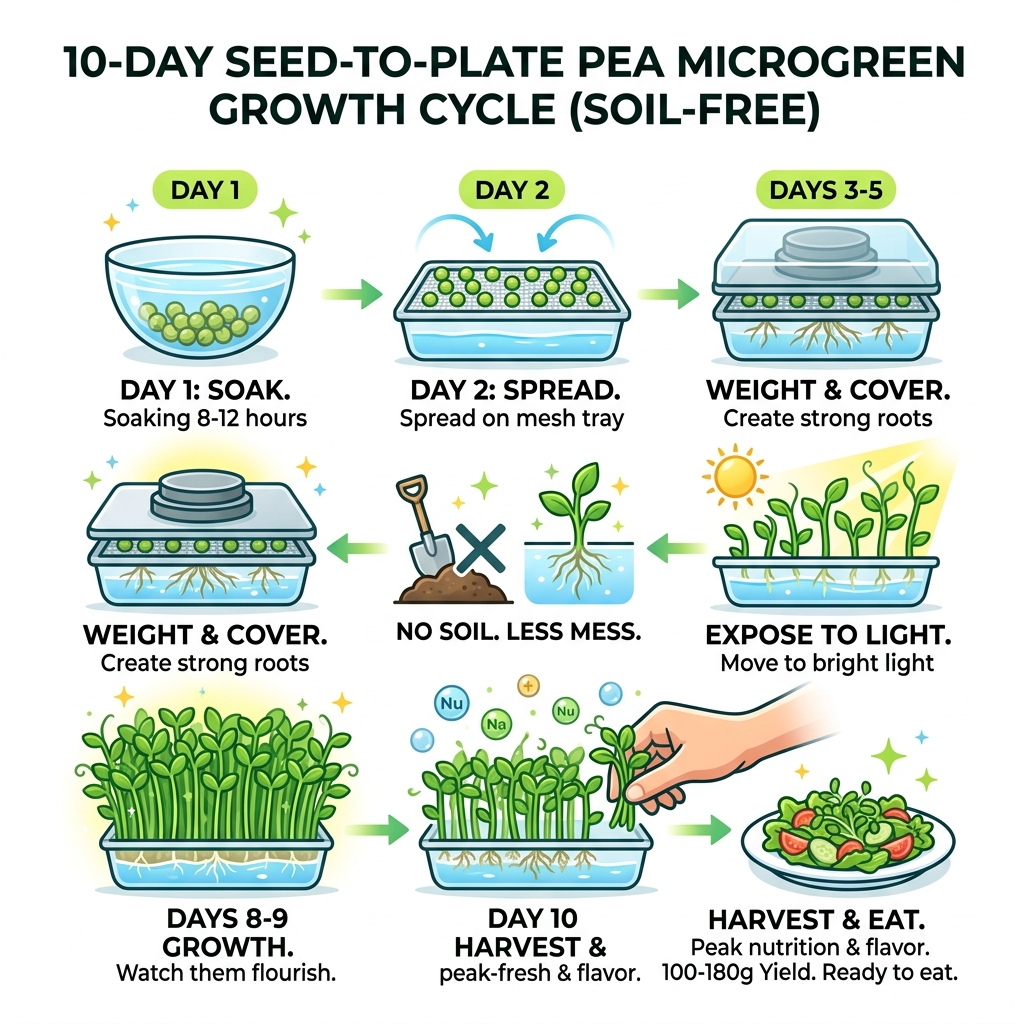
- Soak organic pea seeds for 8-12 hours in cool water
- Spread seeds in a single layer on a mesh tray over a water reservoir
- Weight and cover the tray for 3-5 days to encourage strong root anchoring
- Expose to light for 12-16 hours daily once shoots emerge
- Harvest at 3-4 inches tall — usually around day 7-10
That’s it. No soil. No mess. No complicated equipment.
Pea microgreens are among the best crops to start with because their large seeds pack enough stored energy to fuel growth without any added nutrients. According to the USDA, microgreens contain on average five times the nutritional content of their mature counterparts — and pea shoots hit peak flavor and vitamin C concentration right around days 7-10.
A standard 10×20 tray can yield 100-180g of fresh greens using hydroponic methods like mesh trays or coco mats — at a fraction of what you’d pay at the store (small containers often sell for $4.99 or more).
Whether you use a mason jar, a mesh tray, or a coco grow mat, the core process is the same. This guide walks you through every step.
Why Growing Pea Microgreens Without Soil is a Game Changer
If you’ve ever tried traditional gardening, you know that soil can be a bit of a “bad investment” when it comes to indoor spaces. It’s heavy, it’s messy, and it often invites unwanted guests like fungus gnats into your kitchen. At FinanceOrbitX, we believe in maximizing your “Return on Investment” (ROI) for every square inch of your home. That is where the soil-free secret to growing massive microgreen yields comes into play.
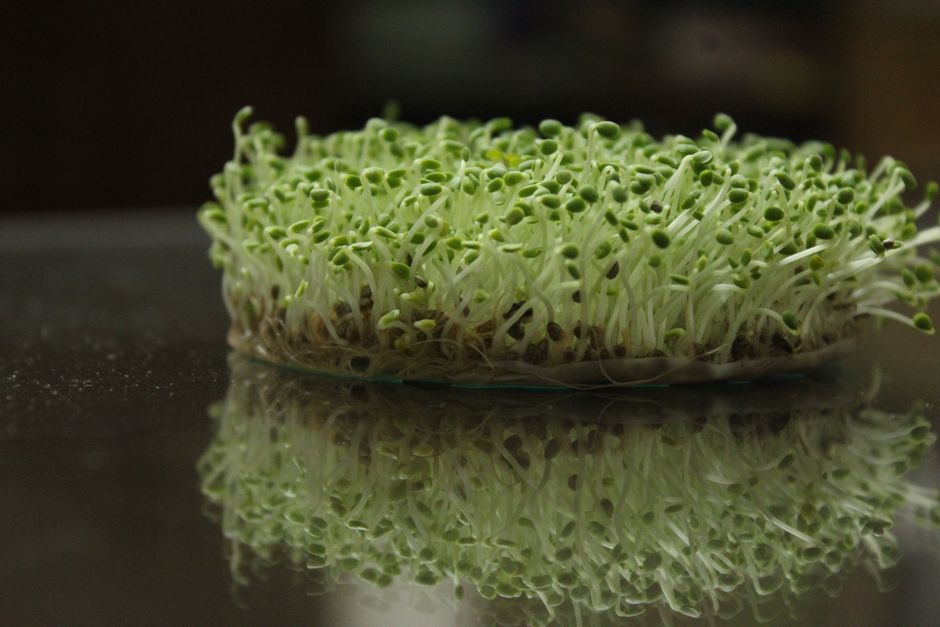
When we look at soil vs. hydroponics: which is best for microgreens, the advantages of the soil-less approach are clear:
- Pest Reduction: Without soil, you eliminate the primary breeding ground for soil-borne pests and diseases.
- Mess-Free Maintenance: You can grow these right on your kitchen counter or a bookshelf without worrying about dirt spills.
- Faster Turnaround: Research shows that soilless pea microgreens can be ready in as little as 7–10 days, whereas soil-grown crops often take 12–14 days to reach the same height.
- Clean Harvest: Since there is no dirt, you don’t have to spend ages washing grit out of those delicate curly tendrils.
| Feature | Soil-Grown Peas | Hydroponic/Soil-Less Peas |
|---|---|---|
| Setup Time | High (mixing, filling trays) | Low (soak and spread) |
| Harvest Window | 10–14 Days | 7–10 Days |
| Cleanliness | Messy (dirt/dust) | Pristine (water only) |
| Pest Risk | Moderate (gnats/mold) | Low (with proper airflow) |
| Cost per Tray | ~$1.00 (soil cost) | ~$0.02 (water/nutrients) |
Essential Supplies for Your Hydroponic Setup
To start growing pea microgreens without soil, you don’t need a lab-grade laboratory. You just need a few smart assets to build your indoor farm. We recommend starting with a dedicated tray system, though beginners can certainly improvise with household items like mason jars or pie plates lined with paper towels.
Here is your “portfolio” of essential supplies:
- Trays: You’ll want a two-tray system. One is a top hydroponic tray for microgreens with mesh holes for drainage and root passage. The second is a solid reservoir tray that sits underneath to hold water.
- Growing Medium (Optional): While you can grow peas on bare mesh, many find success using best trays for hydroponic microgreens lined with hemp mats, coco mats, or even a simple paper towel.
- High-Quality Seeds: Look for “sprouting” or “microgreen” grade seeds. Varieties like Speckled Pea, Dunn Pea, or Yellow Field Pea are favorites for their sweet, nutty flavor.
- Lighting: While a sunny window works, LED grow lights provide the consistent 12–16 hours of light needed for stocky, vibrant shoots.
- Water Source: Use non-chlorinated water if possible. A simple spray bottle is perfect for the early stages.
For those who want everything in one package, checking a hydroponic microgreens kits review can help you find a pre-bundled system that fits your budget. Learning how to grow microgreens without getting your hands dirty is truly about having the right tools for the job.
Step-by-Step Guide to Growing Pea Microgreens Without Soil
Ready to launch your first crop? This microgreens at home: hydroponics edition guide breaks the process into three distinct phases. Follow these steps to ensure a high-yield harvest.
Phase 1: Soaking and Sowing for Success
Pea seeds are hard and dehydrated. To “unlock” their potential, you must soak them. This is the first step in your guide to soil-free microgreens growing 2.
- The Soak: Place your seeds in a bowl of cool, filtered water for 8 to 12 hours. Do not exceed 24 hours, or you risk drowning the embryo. You’ll notice the seeds swell to nearly double their size—this is why we recommend removing about 20% of the seeds from your initial tray measurement to account for this expansion.
- The Sowing: Drain the seeds and spread them evenly across your mesh tray. Aim for a dense, single layer. If using a 10×20 tray, about 250 grams of dry seed is a solid “investment.”
- The Anchor: Ensure the seeds are in contact with your moist medium (or the mesh itself). Use your spray bottle to give them a final misting. This is a key part of your guide to soil-free microgreens growing.
Phase 2: The Blackout and Weighting Method
This is where the magic of soil-less cultivation: the new age of growing microgreens happens. Unlike mature plants, seeds in the germination phase don’t want light—they want pressure and darkness.
- Stacking and Weighting: Place an empty tray directly on top of your seeds. Add a weight—a 15lb paver, a heavy book, or a large stone. This mimics the pressure of soil and forces the roots to anchor downward through the mesh rather than lifting the seed upward.
- The Blackout: Cover the stack with a towel or a black dome to block out all light. Keep them in this state for 3–5 days.
- The Stretch: Without light, the peas will “stretch” looking for a sun source. This creates the long, tender stems we love. By day 4 or 5, you’ll see pale yellow shoots actually lifting the weighted tray. This is your signal to move to the next phase.
Phase 3: Light Exposure and Harvesting
Now it’s time to let the chlorophyll do its work.
- Let There Be Light: Remove the weight and the cover. Expose your tray to 12–16 hours of light. Within 24 hours, those “yucky” yellow shoots will turn a vibrant, healthy green.
- Bottom Watering: Once the roots have grown through the mesh into the reservoir tray, stop misting from the top. Simply add water to the bottom tray. This keeps the foliage dry and prevents mold. Using the best trays for hydroponic microgreens makes this process seamless.
- The Harvest: When the shoots are 3–4 inches tall and have their first set of true leaves (around day 10), they are at their peak. Use sharp scissors or a knife to snip them just above the seed line.
Troubleshooting Common Issues in Soil-Free Pea Shoots
Even the best “portfolio” can face market volatility. When growing pea microgreens without soil, the most common “risk factors” are moisture and airflow.
Managing Mold and Moisture in Growing Pea Microgreens Without Soil
If you see white fuzzy stuff, don’t panic—it might just be root hairs! Root hairs are microscopic “investors” reaching for water. However, if the fuzz is grey, slimy, or smells like a damp basement, you have mold.
- Air Circulation: Use a small fan to keep air moving around your trays.
- Bottom Watering: Never water from above once the shoots are up.
- Sterilization: Clean your trays between every batch using a 1:10 ratio of hydrogen peroxide to water.
- Seed Density: If mold is a recurring issue, try sowing your seeds slightly less densely to allow for better airflow between stems.
Fixing Leggy Growth and Yellowing Leaves in Growing Pea Microgreens Without Soil
If your peas look like they’re “short-selling” you on leaves and growing too thin, they are likely “leggy.”
- Light Intensity: Move your grow lights closer (about 6–10 inches from the canopy) or increase the duration. T5 LEDs are excellent for this.
- Temperature: Keep your “grow room” between 65–75°F. If it’s too hot, the plants grow too fast and become weak.
- Nutrients: While peas have enough energy in the seed for one harvest, if you notice yellowing leaves early on, you can add a diluted, organic hydroponic fertilizer to the reservoir water.
Frequently Asked Questions about Growing Pea Microgreens Without Soil
Can I regrow pea microgreens after the first harvest?
Yes! Peas are one of the few microgreens that offer a “second dividend.” To get a second crop, harvest by cutting about an inch above the base, making sure to leave at least one small “node” or leaf set on the stem. Add a little organic fertilizer to your water reservoir to support the regrowth. While the second harvest may be slightly smaller, it increases your total yield from the same set of seeds.
Do I need to use fertilizers for hydroponic peas?
For a single harvest, no. The “cotyledons” (the two halves of the pea seed) act like a built-in savings account, providing all the energy the plant needs for the first 10 days. If you are going for a second or third harvest, or if you are using an inert medium like rockwool, adding a trace mineral supplement can help maintain that vibrant green color.
How do I store harvested pea shoots to keep them fresh?
Think of storage like “asset preservation.” You want to keep them cold and dry.
- Dry them: If you washed them, use a salad spinner to remove every drop of moisture.
- Paper Towels: Place the shoots in an airtight container or a reusable silicone bag lined with a dry paper towel.
- Refrigerate: They will stay crisp and delicious for 7–14 days in the fridge.
Conclusion
At FinanceOrbitX, we love systems that provide high yields with low overhead. Growing pea microgreens without soil fits that description perfectly. By ditching the dirt, you’ve created a clean, efficient, and incredibly rewarding indoor garden that pays off in fresh, crunchy, and nutritious greens every single week.
Whether you’re adding them to a stir-fry, topping a salad, or just snacking on them straight from the tray, pea shoots are a culinary “blue chip” that belongs in every home. Ready to diversify your indoor farm? Check out our Indoor Gardening Category for more guides on growing everything from spicy radishes to nutrient-packed broccoli microgreens. Happy growing!
