
Is Compost a Good Growing Medium for Microgreens?
Compost for microgreens can significantly boost your yields — but it comes with real trade-offs you need to understand before filling your trays.
Here’s a quick answer:
- Yes, compost works — a 25-50% compost mix is the sweet spot for most home growers
- 100% compost is too risky — it raises yield by ~33% but also increases root rot dramatically
- Best ratio: Mix 25-50% compost with coco coir, potting soil, or perlite
- Best compost types: Vermicompost or organic waste compost (avoid spent mushroom compost — its high salt content hurts germination)
- Key risk: Unfinished compost can carry pathogens — always use fully cured compost
Most beginner microgreen growers are told to use sterile, single-use growing media. It’s safe, predictable, and easy. But it’s also wasteful and expensive over time.
Compost offers something different: living, nutrient-rich soil that can feed your microgreens more effectively than bare coir or peat alone. Research from real farm experiments shows that adding compost to your growing mix can push yields well away from what sterile media produces.
But here’s the catch — microgreens are harvested as seedlings. They’re delicate. They can’t fight off the mold, fungi, and pathogens that mature plants shrug off. So the question isn’t just “does compost work?” It’s “how do you use it safely?”
That’s exactly what this guide will walk you through.
The Benefits of Using Compost for Microgreens
When we talk about compost for microgreens, we are moving away from the “sterile” mindset of industrial farming and toward a more biological approach. The primary reason growers make the switch is the undeniable boost in plant vigor. While seeds contain enough energy to sprout, they still crave the mineral profile and bioactive compounds found in high-quality organic matter.
According to Scientific research on sustainable microgreen media, using organic waste compost as a peat substitute can maintain or even enhance the nutritional quality of the greens. If you want to dive deeper into why organic matter is the backbone of healthy plants, check out our More info about organic soil for microgreens.
Boosting Yield and Nutritional Quality
The data is clear: compost grows more food. In controlled farm experiments, trays using 100% compost produced an average of 600g of fresh shoots per tray. That is a staggering 33% increase over trays with no compost at all.
It isn’t just about the weight, though. Compost-grown microgreens, such as rocket (arugula), often appear bushier and more vibrant. In one UK-based trial, the compost-grown rocket produced an extra 50g per tray compared to coir. At market prices where 30g sells for £2.50-£3, that extra yield represents a significant “return on investment” for your gardening efforts. Furthermore, the presence of beneficial microbes helps the plants synthesize more antioxidants and vitamins, resulting in a more nutrient-dense harvest.
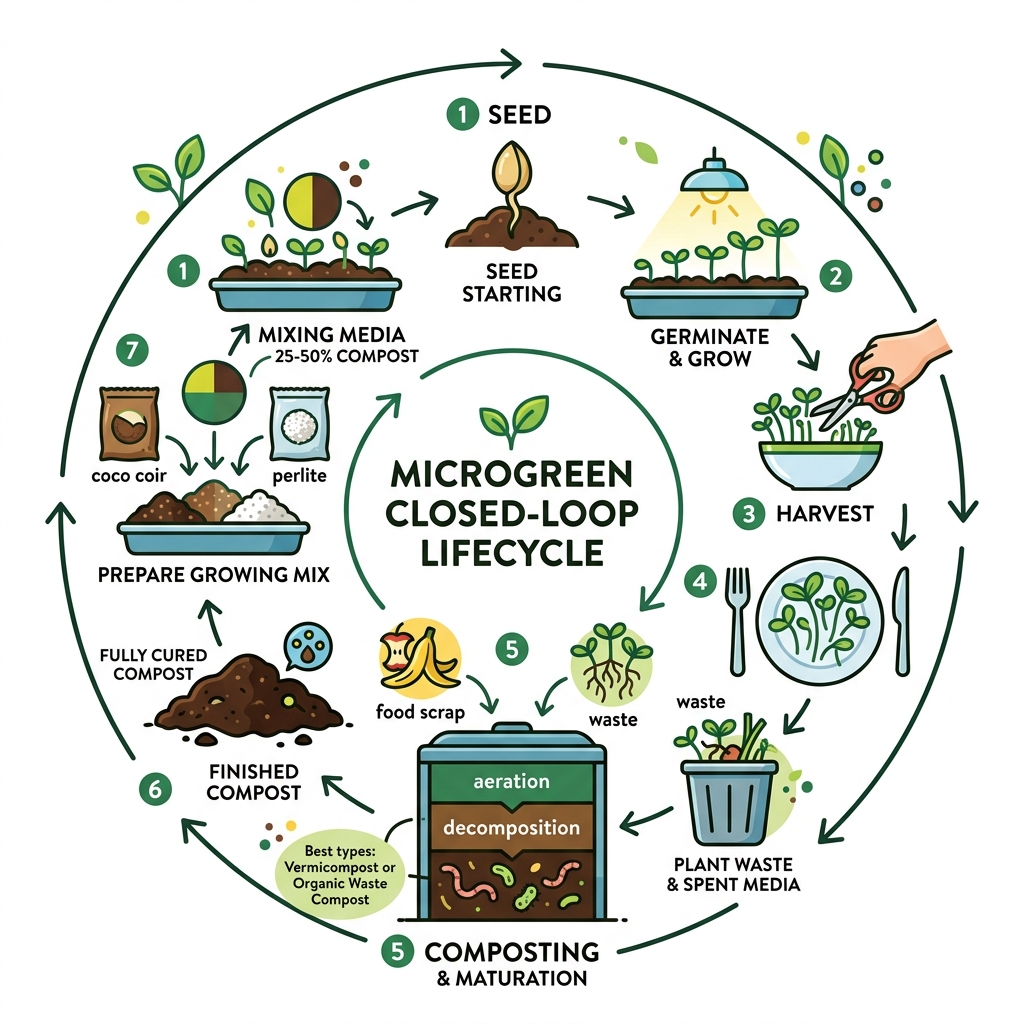
Creating a Closed-Loop Composting System
At FinanceOrbitX, we love a good “circular economy” story. One of the biggest environmental headaches in microgreen growing is the waste. Traditionally, after you harvest your pea shoots or radishes, you’re left with a “root mat”—a thick tangle of roots and spent soil. Most growers simply toss this in the bin.
By using compost for microgreens, you can close that loop. Spent trays, including the roots and stems, can be composted and turned back into the very medium used for the next harvest. This waste reduction saves money on buying new bags of soil and keeps organic matter out of landfills. For those worried about the logistics, you can find More info about starting microgreens without losing soil to help manage your resources effectively.
Comparing Compost for Microgreens to Coir and Peat
Choosing a medium is like choosing a savings account; you want the best “interest” (growth) with the least “fees” (mess and cost).
| Feature | Compost | Coconut Coir | Peat-Based Mix |
|---|---|---|---|
| Nutrient Content | High (Living) | Low/None | Low (unless added) |
| Water Retention | Excellent | Very High | High |
| Sustainability | High (Recycled) | High (By-product) | Low (Non-renewable) |
| Pathogen Risk | Moderate | Very Low | Low |
| Aeration | Moderate | Excellent | Moderate |
While peat has been the industry standard for decades, its harvest destroys vital carbon sinks. This has led many of us to look toward Scientific research on compost vs coir performance. For a broader look at your options, see our More info about soil and growing medium for microgreens.
Why Texture and Drainage Matter
Microgreens have tiny, fragile roots. If your compost is “chunky” with big pieces of wood or un-decomposed bark, those roots will struggle to anchor themselves. This is why we recommend sifting your compost through a fine mesh screen before use.
Texture also dictates drainage. Peat-free composts like Melcourt Silvagrow are often praised for their fine texture, which prevents the “soggy bottom” syndrome that leads to mold. If your medium is too dense, the seeds might germinate, but they’ll quickly succumb to “damping off”—a fungal disease that causes the stems to collapse.
Managing Electrical Conductivity (EC) in Compost for Microgreens
Here is a technical bit that matters: Electrical Conductivity (EC) measures the salt concentration in your soil. While plants need some salts (nutrients), too many will actually “burn” the seeds or prevent them from absorbing water.
This is the primary reason to avoid spent mushroom compost (SMC) for microgreens. Research published in Scientific research on organic waste compost shows that SMC often has an EC as high as 23.50 mS/cm. For comparison, most microgreens prefer an EC below 0.5 mS/cm. Using high-salt compost is like trying to grow a garden in a salt mine—your germination rates will plummet. Stick to organic waste compost or vermicompost for the best results.
Navigating Risks: Pathogens and Root Rot
We have to be honest: using compost for microgreens isn’t without its dangers. Because compost is a living medium, it can host “bad guys” alongside the “good guys.”
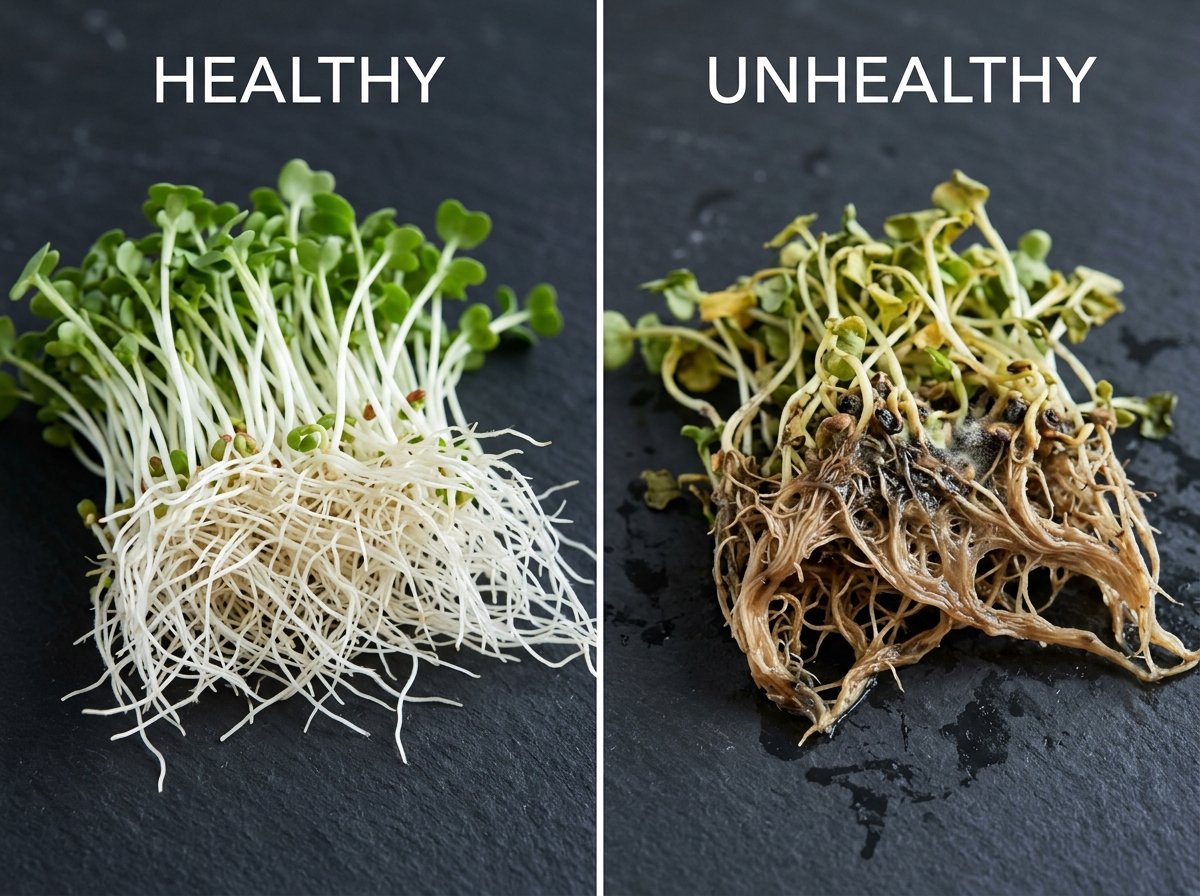
When using 100% compost, experiments showed an average of 4.5 signs of root rot per tray, compared to almost zero in sterile control trays. This is why we focus so heavily on safety and hygiene. If you’re undecided between soil and water-based growing, check out our More info about soil vs hydroponics.
Mitigating Pathogens in Organic Media
To ensure your microgreens are safe to eat, you must use “finished” compost. This means the organic matter has gone through a thermal composting phase where temperatures reached 55-60°C (131-140°F). These high temperatures kill off pathogens like Salmonella and E. coli.
After the heat phase, the compost needs to “cure” for several months. This stabilizes the nutrients and allows beneficial microbes to outcompete the harmful ones. Never use “fresh” manure or unfinished kitchen scraps directly in your microgreen trays.
Troubleshooting Mold and Uneven Growth
If you see white fuzzy growth on your soil, don’t panic—it might just be root hairs! However, if it looks like a spiderweb or smells musty, it’s likely mold.
To prevent this when using compost:
- Improve Airflow: Use a small fan in your growing area.
- Bottom Water: Instead of spraying the leaves, pour water into a bottom tray and let the soil soak it up.
- Seed Density: Don’t overcrowd your seeds; give them room to breathe.
- Hydrogen Peroxide: A diluted spray (1 part 3% H2O2 to 10 parts water) can help knock back early mold outbreaks.
Step-by-Step: Preparing Your Compost Mix
Ready to get your hands dirty? Preparing a custom mix is the best way to leverage the power of compost for microgreens while minimizing the risks. For more detailed soil tips, visit our More info about organic soil for microgreens.
Finding the Optimal Compost for Microgreens Ratio
The “sweet spot” discovered by farm researchers is a 25% to 50% compost mix.
A popular recipe we recommend is:
- 50% Coconut Coir: For moisture retention and fluffiness.
- 40% Sifted Compost or Vermicompost: For nutrition and biology.
- 10% Perlite or Vermiculite: For aeration and drainage.
This ratio provides enough nutrients to boost your yield by about 33% without the high disease risk associated with 100% compost trays.
Seeding and Germination in Compost
Once your mix is in the tray (aim for 1–2 inches deep), it’s time to sow.
- Pre-moisten: Mix your media with water before putting it in the tray so it’s damp like a wrung-out sponge.
- Even Sowing: Spread your seeds (like radish or pea) evenly across the surface.
- The Blackout Period: Most microgreens need 3-5 days of darkness to germinate.
- Weighting: For varieties like peas and sunflowers, place an empty tray on top with a 2.5-pound weight. This forces the roots deep into the compost and creates stronger, more upright stems.
For more on the germination phase, see More info about organic soil for microgreens.
Frequently Asked Questions about Compost for Microgreens
Can I use 100% compost for my trays?
You can, but we don’t recommend it for beginners. While it offers the highest potential yield (up to 600g per tray), the risk of root rot and mold is significantly higher. A 50/50 mix is much more stable and forgiving.
Is spent mushroom compost safe for seedlings?
Generally, no. Most spent mushroom compost (SMC) has extremely high salt levels (EC) that can inhibit germination. If you must use it, keep it to less than 10% of your total mix.
How do I prevent mold in compost-based soil?
The most effective way is bottom watering. By keeping the surface of the soil and the stems of the plants dry, you deprive mold spores of the moisture they need to grow. Also, ensure your growing room stays between 75-80°F during the blackout period.
Conclusion
At FinanceOrbitX, we believe that gardening should be as rewarding for your wallet as it is for your health. Using compost for microgreens is a fantastic way to increase your “sustainable ROI” by growing more food with fewer external inputs. By recycling your waste into a closed-loop system, you’re not just a gardener—you’re a micro-farmer practicing high-level resource management.
Whether you are looking for a way to beat rising grocery costs or simply want the freshest salad possible, mastering organic media is your next step. Ready to grow? Explore our indoor gardening guides for more expert tips on turning your windowsill into a high-yield asset.
