
Why Your Lighting Choice Makes or Breaks Your Microgreen Harvest
The best lights to grow microgreens are full-spectrum LED shop lights in the 5000K–6500K (daylight) color range — and you don’t need to spend a fortune to get great results.
Here’s a quick summary to help you choose:
| Light Type | Best For | Price Range | Key Benefit |
|---|---|---|---|
| LED shop lights (T5/T8, 5000K–6500K) | Most growers | $20–$90 | Affordable, effective, low heat |
| Integrated LED strip bars | Multi-shelf racks | $30–$90 | Easy daisy-chaining, even coverage |
| Specialized grow light kits | Serious/commercial growers | $295–$785+ | Optimized spectra, all-in-one setup |
| Compact LED panels | Single tray / beginners | $25–$60 | Plug-and-play simplicity |
Quick tip: Run your lights for 12–18 hours per day, keep them 6–12 inches above your trays, and target a light intensity of 150–300 μmol/m²/s (PPFD). That’s really all you need to know to get started.
Now, here’s the thing most beginners don’t realize.
Microgreens are surprisingly forgiving when it comes to lighting. You don’t need a high-end cannabis grow setup. A $30 LED shop light from a hardware store can produce the same vibrant, nutrient-dense greens as a $200 specialty fixture — if you set it up correctly.
But get the lighting wrong — wrong spectrum, wrong distance, wrong schedule — and you’ll end up with pale, leggy, weak greens that disappoint at harvest. Light affects not just growth speed, but also color, flavor, nutritional content, and shelf life.
This guide breaks down exactly what to look for, what to buy, and how to set it all up — whether you’re growing two trays on a kitchen shelf or scaling to a full vertical rack.
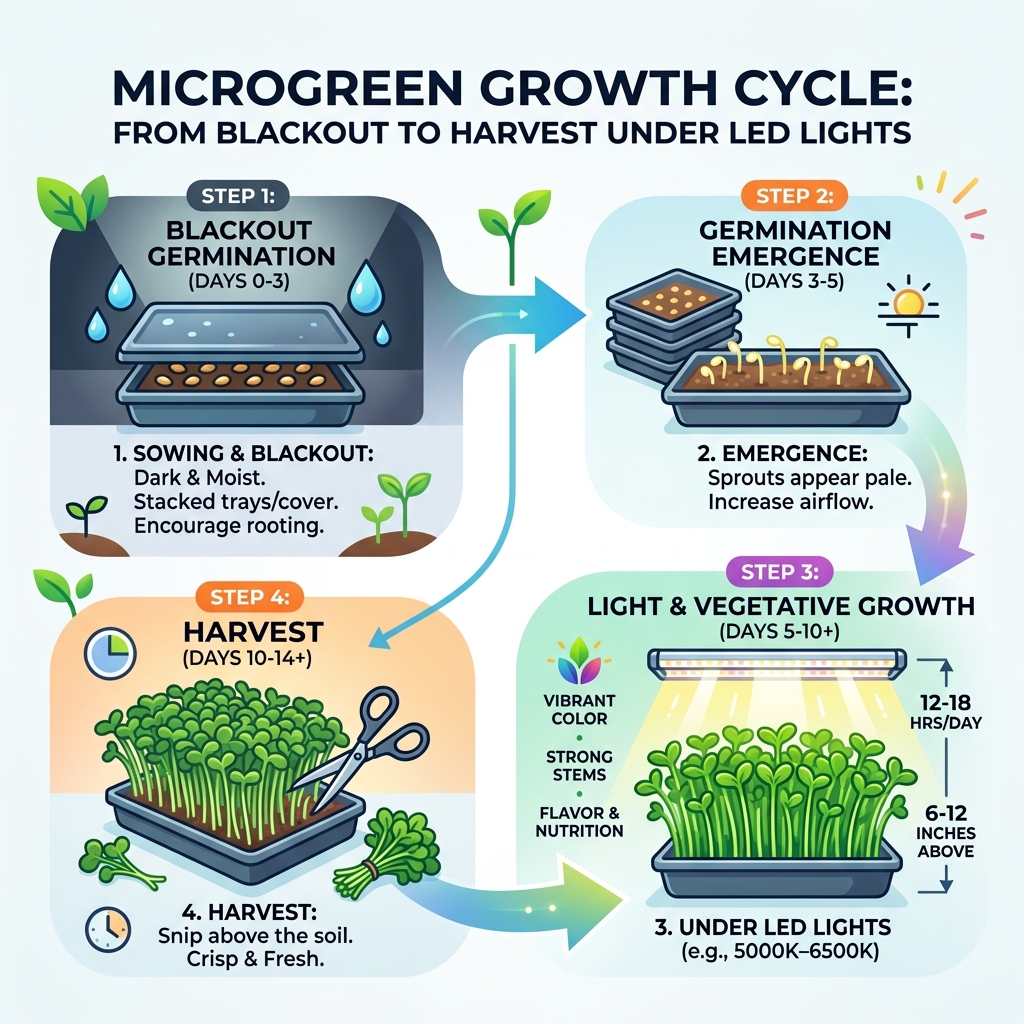
Best lights to grow microgreens terms simplified:
Understanding the Best Lights to Grow Microgreens
When we dive into indoor farming, the jargon can feel overwhelming. PAR, PPFD, Kelvins, and Lumens—it sounds more like a physics lab than a garden. However, at FinanceOrbitX, we believe in making the complex simple. The best lights to grow microgreens aren’t necessarily the most expensive ones; they are the ones that provide the specific wavelengths your “baby plants” need to thrive.
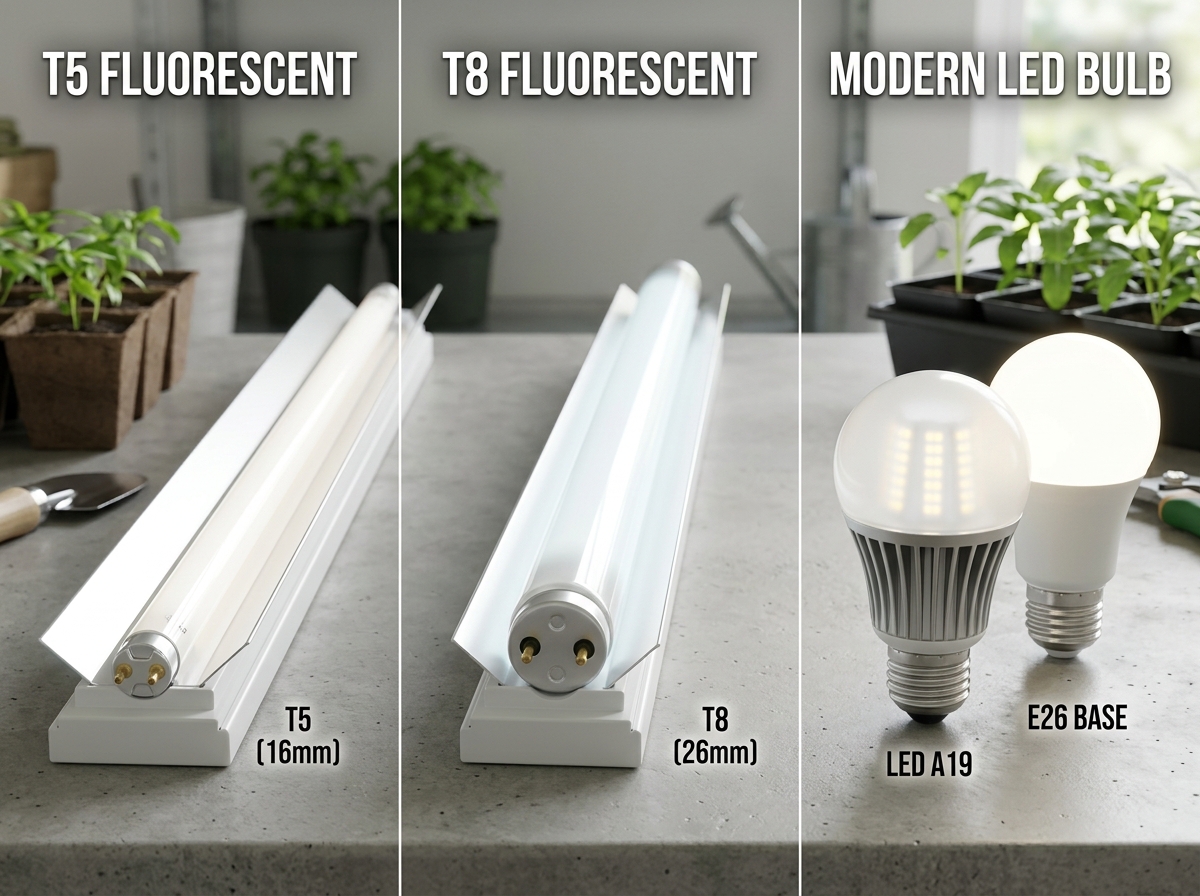
Historically, growers used fluorescent T5 or T8 tubes. T5 lights are thinner and more efficient than the older, thicker T8s. However, the industry has shifted almost entirely toward LEDs. Why? LEDs last 50,000+ hours, consume 30-50% less energy, and don’t contain mercury.
One of the biggest debates is whether to buy specialized “grow lights” or standard “shop lights.” Research and practical testing show that for microgreens, standard LED shop lights in the 5500K-6500K range often perform just as well as high-priced horticultural lights. Choosing the right lighting for growing microgreens involves balancing purchase price with photon efficacy—the amount of light produced per watt of electricity.
| Feature | LED Shop Lights | Specialized Grow Lights |
|---|---|---|
| Price | Very Low ($20 – $60) | High ($150 – $300+) |
| Spectrum | Fixed (Daylight) | Often Adjustable/Targeted |
| Efficiency | Good | Excellent |
| Ease of Use | Plug and Play | May require assembly/controllers |
| Results | Great for Microgreens | Overkill for most home setups |
Why Full-Spectrum Daylight is the Best Light to Grow Microgreens
Microgreens are essentially in a race to grow as much biomass as possible in 7 to 14 days. To do this, they need a spectrum that mimics the sun. We recommend a color temperature between 5000K and 6500K. This “cool white” or “daylight” range is rich in blue light, which is crucial for keeping plants compact and preventing them from stretching (getting “leggy”).
Scientific research has shown that white LEDs can actually produce higher fresh weights and more chlorophyll compared to the older “blurple” (red/blue) LEDs. Furthermore, full-spectrum light makes it much easier for us to inspect our crops. Under red/blue lights, it’s nearly impossible to spot early signs of mold or pest issues. White light also boosts the production of carotenoids and antioxidants, meaning your greens aren’t just prettier—they’re healthier.
Choosing the Best Lights to Grow Microgreens for Your Budget
If you are just starting out, don’t feel pressured to buy a commercial-grade kit. A budget-friendly wire rack setup with 4-foot LED shop lights is the gold standard for home enthusiasts. You can find affordable grow lights for microgreens that cost pennies a day to run.
For those looking at a long-term ROI, investing in integrated T5 LED strips that can be “daisy-chained” (linked together) is a smart move. This reduces the number of power outlets you need. Commercial growers might opt for premium kits like the Walden 3-Tier LED Grow Tent, which offers high-reflectivity environments to maximize every photon. However, for the average kitchen gardener, a $30-50 investment is often all that’s required to see a successful harvest.
Technical Requirements: PPFD, DLI, and Wattage
To truly master your setup, we need to look at the numbers. While “lumens” tell us how bright a light looks to humans, plants care about PAR (Photosynthetically Active Radiation).
- PPFD (Photosynthetic Photon Flux Density): This measures how many photons are hitting your plants per second. For microgreens, aim for a target of 150–300 μmol/m²/s. Anything lower than 100 will result in weak growth.
- DLI (Daily Light Integral): This is the total amount of light your plants receive in a 24-hour period. Microgreens prefer a DLI of 12-18 mol/m²/day. You achieve this by balancing the intensity of your light with the number of hours it’s turned on.
- Wattage: As a rule of thumb, you want at least 20-40 watts per standard 10×20 tray.
Understanding these metrics is part of enlightening indoor microgreens: a guide to lighting and ensuring you aren’t under-powering your garden.
Optimizing Your Setup for Maximum Yield
Once you have the best lights to grow microgreens, how you arrange them determines your success. Vertical farming is the most efficient way to grow, allowing you to stack multiple tiers of greens in a small footprint.
Photoperiod: We have found that an 18-hour-on and 6-hour-off schedule is the “sweet spot.” While microgreens can grow with just 6 hours of light, the 18/6 cycle significantly increases phenolic compounds (up to 32%) and antioxidant capacity.
Light Distance: Position your lights 6 to 12 inches above the canopy. If your lights are too far away, the plants will stretch toward the light, becoming thin and unstable. If they are too close, you risk “light bleaching” or heat stress, though LEDs generally run cool enough that this is rarely an issue.
Reflectivity: You can boost your light efficiency by 10-30% simply by using reflective surfaces. Lining your shelves with Mylar or even painting nearby walls a flat white helps bounce light back onto the edges of your trays. This ensures uniform growth across the entire tray, preventing the “edge effect” where plants on the outside are smaller than those in the center. Check out more on LED grow lights for microgreens to see how to link these systems together.
For those looking for the ultimate setup, using a best indoor grow lights for microgreens guide can help you select specific brands that offer the best balance of heat dissipation and light spread.
Common Lighting Mistakes and How to Avoid Them
Even with the best equipment, mistakes happen. Here are the most common pitfalls we see at FinanceOrbitX:
- Leggy Stems: This is the #1 complaint. If your stems are long, pale, and falling over, your light is either too dim or too far away. Lower the lights or add more fixtures.
- Light Bleaching: If the tops of your greens look white or scorched, the light is too intense or too close.
- Improper Blackout Timing: Don’t turn the lights on too early! Most microgreens need 3-5 days in total darkness (the “blackout phase”) to stretch their stems just enough and establish strong roots.
- Uneven Distribution: If the center of your tray is lush but the corners are struggling, you need better light coverage. Using two or three light strips per shelf instead of one central bulb solves this.
- Dirty Fixtures: Dust can block up to 20% of light output. Wipe your LED bars with a dry cloth once a month.
Don’t fall into the trap of overspending on features you don’t need. You can stop overpaying for your microgreens grow lights by sticking to the daylight spectrum and focusing on proper placement. For a deeper dive into troubleshooting, see our enlightening indoor microgreens: a guide to lighting 2 article.
Frequently Asked Questions about Microgreen Lighting
When should I move my microgreens from darkness to light?
You should move your microgreens to light after the germination and blackout phase, which typically lasts 3 to 5 days. A good rule of thumb is the “2-3cm rule”: once the seedlings are about 2-3cm tall and have shed their seed hulls, they are ready for photosynthesis. Exposing them to light too early can result in stunted, short crops that are difficult to harvest.
Can I grow microgreens using only a sunny windowsill?
While possible for a hobbyist, it is rarely ideal. Windowsill light is often inconsistent and unidirectional, leading to “phototropism” where plants lean heavily toward the glass. Seasonal variances also mean you might get 10 hours of light in summer but only 6 in winter. For consistent, market-quality results, supplemental LED lighting is highly recommended.
How much does it cost to run microgreen lights monthly?
LEDs are incredibly efficient. For a standard 3-light shelf setup (60W total) running 17 hours a day, the cost is approximately $3.67 per month (based on an average rate of $0.12/kWh). This makes indoor gardening one of the most cost-effective ways to put fresh, organic produce on your table.
Conclusion
At FinanceOrbitX, our goal is to help you grow your green—both in your garden and in your wallet. Choosing the best lights to grow microgreens doesn’t have to be a financial burden. By focusing on full-spectrum LED shop lights, maintaining the right distance, and sticking to a consistent timer, you can produce professional-grade harvests in the comfort of your home.
Ready to take your indoor garden to the next level? Shining a light on optimal microgreen requirements is just the beginning. Explore more indoor gardening guides at FinanceOrbitX to learn about soil health, watering techniques, and the best varieties to plant this season. Happy growing!
