
What Are the Best Microgreens for Beginners?
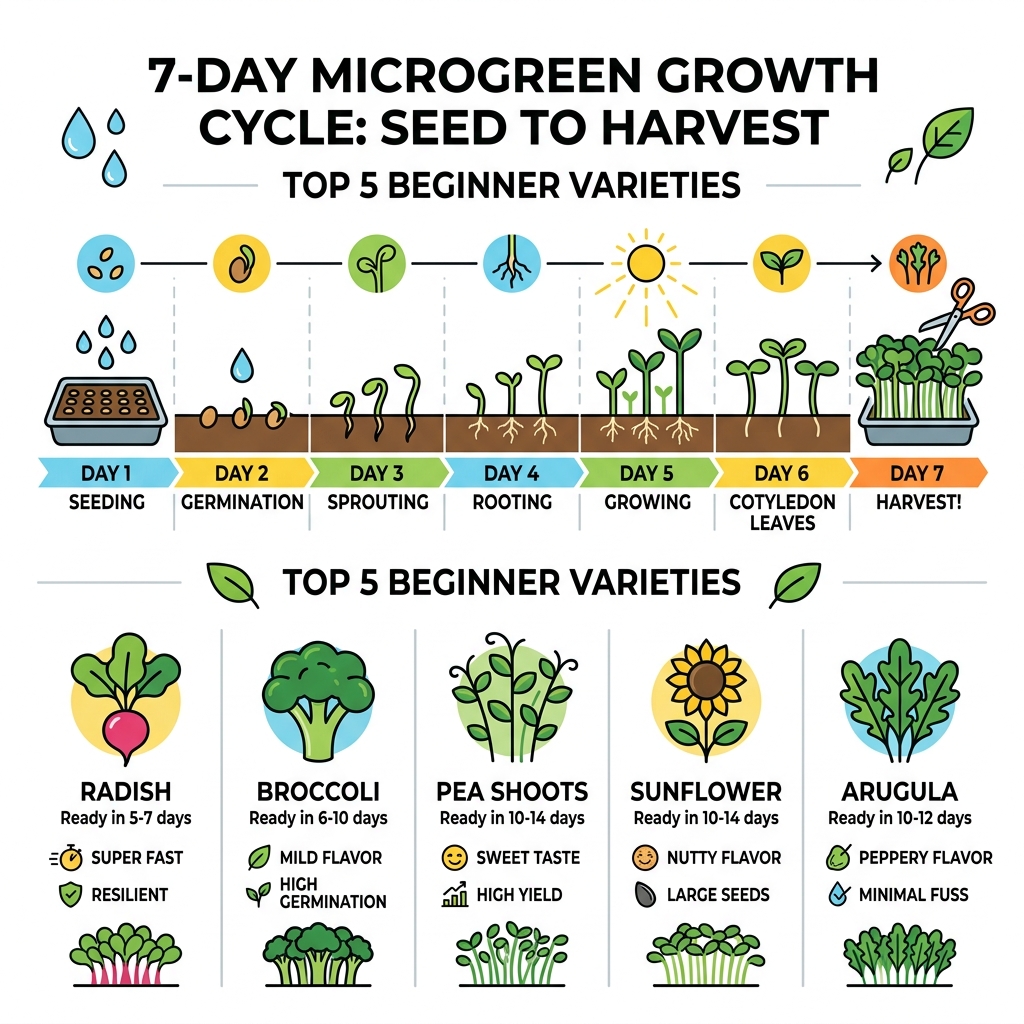
The best microgreens for beginners are varieties that germinate fast, grow evenly, and forgive small mistakes. Here are the top picks to start with:
- Radish – Ready in 5-7 days, germinates in 24 hours, very resilient
- Broccoli – Ready in 6-10 days, mild flavor, high germination rate
- Pea Shoots – Ready in 10-14 days, sweet taste, high yield per tray
- Sunflower – Ready in 10-14 days, nutty flavor, large seeds easy to handle
- Arugula – Ready in 10-12 days, bold peppery flavor, grows with minimal fuss
Most of these are ready to harvest in 7 to 14 days from planting. You only need a tray, some seeds, a growing medium, and a light source to get started.
If you’ve ever wanted to grow your own food but felt like gardening was too complicated, microgreens are the place to start. They don’t need a backyard. They don’t need weeks of patience. Most varieties go from dry seed to fresh, ready-to-eat greens in under two weeks — sometimes in as little as six days.
Microgreens are simply young vegetable or herb seedlings, harvested just after their first leaves open. They’re bigger than sprouts but smaller than full-grown plants. And despite their small size, research shows they can contain 4 to 40 times more nutrients than their mature counterparts.
The best part? You don’t need a green thumb. The right variety, a little water, and some light are genuinely all it takes to get a real harvest on your first try.
Why Microgreens are the Ultimate Entry Point for New Gardeners
At FinanceOrbitX, we believe that growing your own food should be as efficient as a well-managed portfolio. Microgreens represent the ultimate “low-risk, high-reward” investment in horticulture. If you have ever felt the sting of a wilted houseplant or the frustration of a tomato plant that refused to fruit after three months of labor, microgreens are your rehabilitation.
Space Efficiency and Low-Risk Investment
One of the primary hurdles for new gardeners is space. Not everyone has an acre of tilled land, but almost everyone has a windowsill or a small corner of a kitchen counter. A standard 10×20-inch tray can produce a substantial harvest in less square footage than a microwave.
Furthermore, the “startup costs” are incredibly low. You can get a basic setup running for under $30. When you compare the cost of a homegrown tray—roughly $2 to $3 in supplies—to the $8 to $12 you might pay for a tiny 50g clamshell at a high-end grocery store, the “return on investment” is clear. For a deeper dive into the basics, check out our Microgreens 101: A Beginner’s Guide.
Immediate Gratification
In a world of instant downloads, waiting 90 days for a pepper to ripen can feel like an eternity. Microgreens provide immediate gratification. Because most varieties are ready in 7 to 14 days, you see visible progress every single morning. It is a “foundational win” that builds the confidence needed for larger gardening projects. If you’re worried about the technical side, our Ultimate Step-by-Step Guide to Growing Microgreens Without Killing Them ensures you stay on the right track.
The Nutritional Powerhouse
Don’t let their size fool you. These tiny greens are nutrient-dense overachievers. Research from the University of Maryland has shown that microgreens can contain up to 40 times the concentration of vitamins and antioxidants found in mature plants. For example, red cabbage microgreens are packed with Vitamin C and K, while arugula microgreens contain eight times the calcium and five times the vitamins of iceberg lettuce.
The 5 Best Microgreens for Beginners to Grow at Home
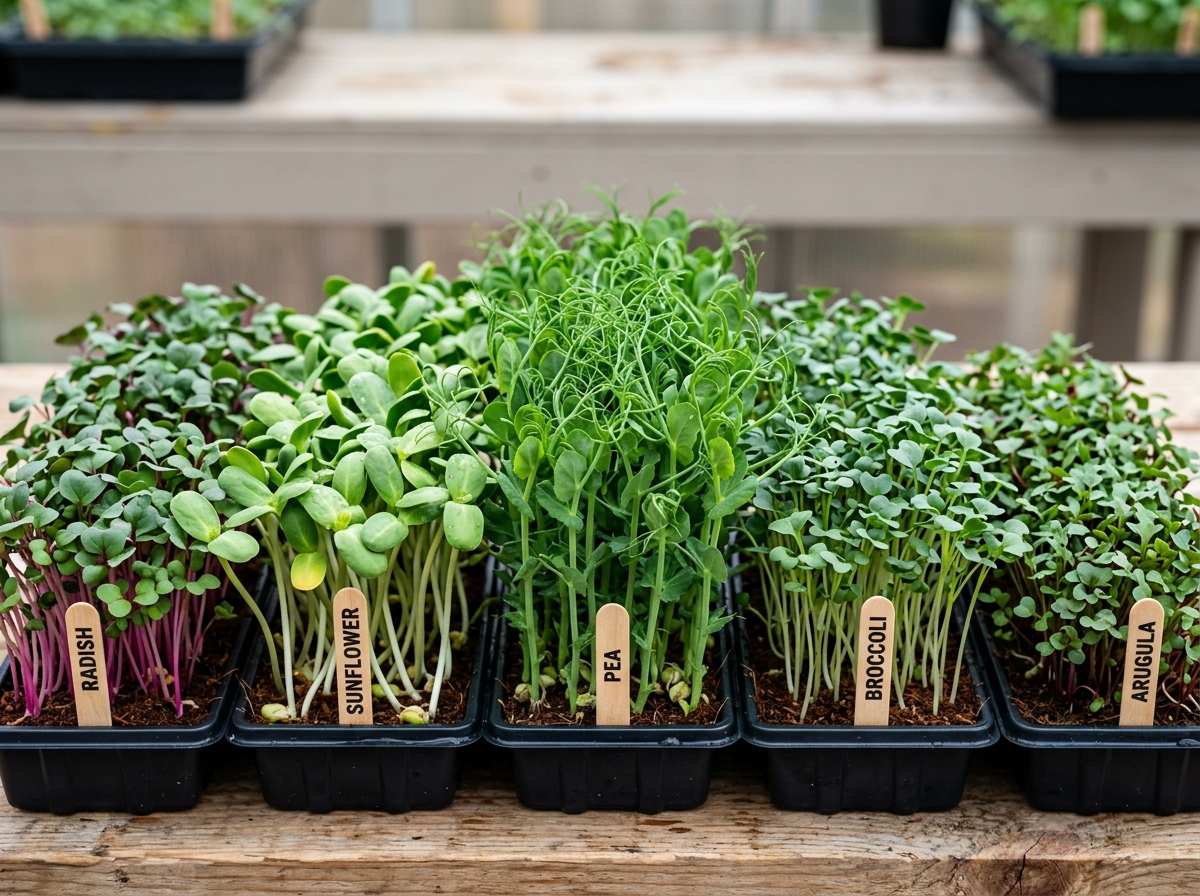
Choosing your first variety is the most important decision you’ll make. While exotic options like basil or amaranth are tempting, they can be finicky. We recommend sticking to the “Big Five.” These varieties are selected based on their high germination rates, resistance to mold, and speed of growth.
| Variety | Growth Time | Difficulty | Flavor Profile | Yield per 1020 Tray |
|---|---|---|---|---|
| Radish | 5-7 Days | Very Easy | Peppery, Zesty | 12 oz |
| Broccoli | 7-10 Days | Very Easy | Mild, Fresh | 6 oz |
| Pea Shoots | 10-14 Days | Easy | Sweet, Beany | 16 oz |
| Sunflower | 10-14 Days | Easy | Nutty, Hearty | 12-14 oz |
| Arugula | 10-12 Days | Easy | Bold, Nutty | 5-6 oz |
Radish: The Fastest Best Microgreens for Beginners
If you want a “bomb-proof” variety, radish is the gold standard. It is arguably the best microgreens for beginners because it germinates in as little as 24 hours. By day three, you’ll have a lush carpet of green; by day six, you’re eating.
Radishes are incredibly resilient to overwatering and temperature fluctuations. They offer a sharp, peppery bite that mimics the flavor of a mature radish bulb. For a specific roadmap to success with this variety, see The Beginner Guide to Rapid Radish Microgreen Success.
Broccoli: The Nutritional Powerhouse
Broccoli is the “overachiever” of the microgreen world. It is famous for containing high levels of sulforaphane, a compound linked to significant health benefits. Unlike the mature vegetable, which some find bitter, broccoli microgreens are remarkably mild and fresh. They grow uniformly and have a high germination rate, making them a staple for any beginner’s rotation.
Pea Shoots: High Yield and Kid-Friendly
Pea shoots are a favorite in our “growing room” because they are fun to watch and even better to eat. The seeds are large and easy to handle, which makes them perfect for getting kids involved in the garden. They produce thick, crunchy stems and delicate tendrils that taste exactly like fresh sugar snap peas.
One unique advantage of pea shoots is their yield; 250g of dry seed can result in over 500g of fresh greens. They are also one of the few varieties that can sometimes offer a second harvest if you cut them correctly. Learn the proper technique in our guide on how to Master the Art of the Microgreen Harvest Today.
Essential Setup and Supplies for Your First Harvest
You don’t need a greenhouse to be successful. In fact, keeping it “stupidly simple” is the best way to ensure you don’t overcomplicate the process.
Growing Trays
We recommend the industry-standard “1020 tray” (10 inches by 20 inches). For the best results, use a two-tray system: one tray with drainage holes nested inside a second solid tray without holes. This setup allows for “bottom watering,” which keeps the leaves dry and prevents mold. Explore your options here: Seed Sprouting Trays for Microgreens.
Growing Medium
While you can grow some varieties hydroponically, we find that beginners have the most success using a high-quality seed-starting mix or coconut coir. These mediums provide better moisture retention and support for the roots. Avoid regular garden soil, which can be too heavy and may contain pests or pathogens. For more details, see our guide on Soil and Growing Medium for Microgreens.
Lighting Needs
While a sunny south-facing window can work, it often leads to “leggy” (tall and thin) plants as they stretch for the sun. For consistent, professional-quality results, a simple LED grow light is a game-changer. You don’t need a $300 fixture; a basic full-spectrum LED shop light will do the trick if kept 6–12 inches above the plants for 12–16 hours a day. Check out our recommendations for LED Grow Lights for Microgreens.
Choosing the Best Microgreens for Beginners Seeds
The quality of your seeds is the single most important factor in your success. Always look for “untreated” seeds specifically labeled for microgreen use. These are typically sold in bulk (ounces or pounds rather than small packets), which is much more cost-effective. High germination rates (90%+) ensure that your tray looks like a lush forest rather than a patchy lawn. You can find our curated list of Top Microgreens Seeds for Home Gardening to help you source the best starting materials.
Troubleshooting Common Growing Hurdles
Even with the best microgreens for beginners, you might run into a few hiccups. The most common issue is mold. Because we grow these seeds so densely in a humid environment, fungal issues can arise if you aren’t careful.
Mold Prevention and Airflow
The “secret” to avoiding mold is airflow and bottom watering. If your seeds are too wet for too long, they will rot. A small desk fan on a low setting can provide just enough circulation to keep the stems dry. It’s also vital to distinguish between mold and “root hairs.” Root hairs are tiny, white, fuzzy structures that grow out of the root—they are healthy! A quick tip: if you mist them with water and they disappear, they are root hairs. If they stay fuzzy, it might be mold. For a deeper dive, read How to Avoid Mold in Your Microgreen Garden.
If you encounter uneven growth or yellowing leaves, it usually points to lighting or watering issues. We’ve compiled a list of Common Beginner Microgreens Troubleshooting Tips for New Gardeners to help you diagnose and fix these problems instantly. Every mistake is just data for your next grow. To stay ahead of the curve, check out our guide on how to Avoid These Common Microgreen Growing Mistakes.
Identifying the Best Microgreens for Beginners Safety Risks
Safety is paramount when growing food indoors. Beginners should strictly avoid plants from the Solanaceae (Nightshade) family, such as tomatoes, potatoes, peppers, or eggplants. The leaves and stems of these plants contain toxic alkaloids and are not safe to consume as microgreens.
It is also important to understand the difference between sprouts and microgreens. Sprouts are grown in water in warm, humid conditions, which can be a breeding ground for bacteria like E. coli. Microgreens are grown in a medium (like soil) and harvested above the root line, making them significantly safer. For a full breakdown, see Demystifying the Sprouting Process for Microgreens.
Frequently Asked Questions about Starting Microgreens
Can I grow microgreens without soil?
Yes, absolutely! Many beginners prefer the “cleanliness” of soil-free growing. You can use hydroponic mats made from coconut coir, hemp, or jute. These are mess-free and easy to dispose of after harvest. While soil often produces slightly more robust plants for larger seeds like sunflower, mats are perfect for arugula and radish. Learn How to Grow Microgreens Without Getting Your Hands Dirty in our specialized guide.
How long does it take to harvest?
Most beginner-friendly varieties are ready in 7 to 14 days. The general rule is to harvest when the “cotyledons” (the first set of seed leaves) are fully open and look vibrant. Some growers wait for the first “true leaf” to appear for a more complex flavor. For a visual guide on timing, see Knowing Exactly When Your Microgreens Are Ready.
Do microgreens regrow after cutting?
For most varieties, the answer is no. Once you snip the stem, the plant has used up its energy reserves and will not regrow. You should compost the remaining root mat and start fresh. The notable exception is pea shoots; if you harvest them just above the lowest leaf node, they may produce a second, albeit smaller, flush of growth.
Conclusion
Starting your journey with the best microgreens for beginners is more than just a way to get fresh salad toppings—it’s a way to reclaim your connection to your food. At FinanceOrbitX, we love microgreens because they represent a smart, efficient, and healthy lifestyle choice that anyone can master in a week.
Don’t wait for the perfect “growing season.” Your kitchen counter is ready right now. Grab some radish or pea seeds, set up your first tray, and enjoy the satisfaction of a harvest you grew yourself.
Ready to take the next step? Start your journey with our growing tips and join our community of indoor gardeners today!
