
The Smartest Way to Start Growing: What You Need to Know About Microgreen Bulk Seeds
Microgreen bulk seeds are the most cost-effective way to grow nutrient-dense greens at home or at scale – and the best places to buy them right now are:
| Retailer | Best For | Starting Price |
|---|---|---|
| True Leaf Market | Beginner-friendly variety selection | From $2.99 |
| High Mowing Organic Seeds | Certified organic varieties | From $8.45 |
| Everwilde Farms | Wide organic selection (96 varieties) | From $3.96/packet |
| Johnny’s Selected Seeds | Commercial bulk (5lb or 25lb bags) | Varies by variety |
| The Seed Guy | Heirloom starter packages | From $25.60 |
| Bulk Seed Store | Affordable blend mixes | From $4.84/oz |
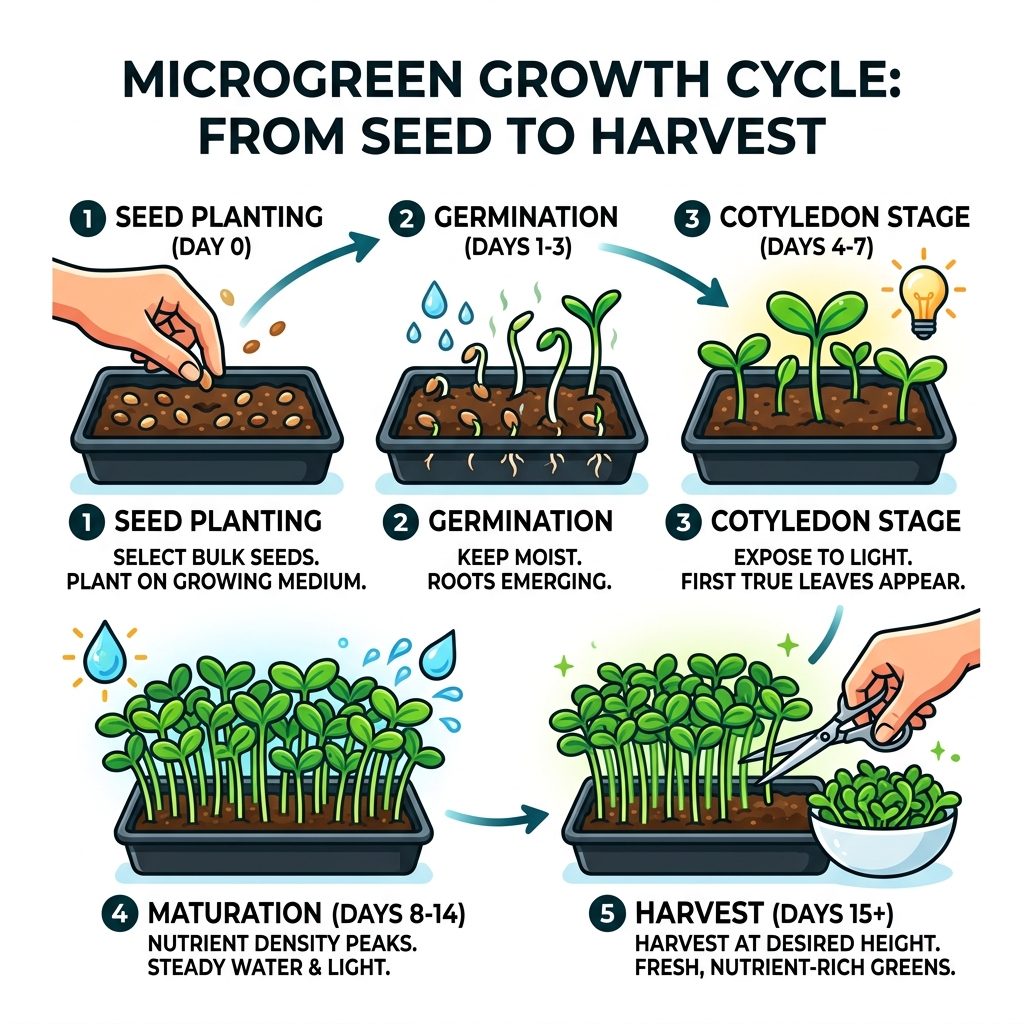
Microgreens are one of the fastest-growing crops you can grow indoors. They go from seed to harvest in as little as 7 to 15 days for fast varieties like radish and broccoli. And here’s the kicker – they pack up to 40 times the nutrient density of their fully grown counterparts, according to research from the University of Maryland and findings highlighted by the U.S. Department of Agriculture.
For a beginner, that’s a big deal. You get fresh, vitamin-rich greens fast, without needing a backyard, fancy equipment, or a green thumb.
Buying seeds in bulk makes this even better. You spend less per grow cycle, always have seeds on hand, and can stagger plantings for a continuous harvest week after week.
This guide rounds up the best sources for bulk microgreen seeds – whether you want organic, non-GMO, heirloom varieties, or convenient pre-made mixes – so you can start growing with confidence.
Why Micro-Farmers Should Buy Seeds in Bulk
If you are looking to turn your windowsill or spare room into a mini-farm, the first financial lesson we teach at FinanceOrbitX is about economies of scale. Buying tiny packets of seeds at a local hardware store is like buying gas by the gallon at a convenience store—it’s expensive and inefficient.
Bulk Savings and Commercial Scalability
When you transition to microgreen bulk seeds, the price per gram drops significantly. For instance, while a small packet might cost $5.00 for a few hundred seeds, buying by the ounce or pound can reduce your cost per tray to pennies. This is essential for anyone interested in the Ultimate Guide to Growing Microgreens at Home who wants to see a real return on their investment.
Inventory Management and High-Density Planting
Micro-farming is unique because of high-density planting. Unlike traditional gardening where you space seeds inches apart, microgreens are sown thick—like blades of grass. You might use 18 to 30 grams of seed for a single 10×20 tray. If you aren’t buying in bulk, you’ll run out of inventory before your first harvest is even on the table. Keeping a steady supply of Top Microgreens Seeds for Home Gardening ensures you never have “down days” in your production cycle.
Seed Storage
One of the biggest concerns with bulk buying is shelf life. Fortunately, most microgreen seeds are incredibly hardy. If kept in cool, dry, and dark conditions, many varieties maintain high germination rates for up to five years. This allows you to stock up when prices are low or when your favorite organic variety is back in stock.
Selecting the Right Microgreen Bulk Seeds for Your Farm
Choosing your seeds is the most critical step in your journey. As we discuss in our Microgreens 101: A Beginner’s Guide, the quality of the seed dictates the quality of the harvest.
Organic Certification and Non-GMO
For many micro-farmers, “organic” isn’t just a buzzword; it’s a requirement for health-conscious consumers. Suppliers like High Mowing Organic Seeds offer certified organic, non-GMO options that ensure your greens are free from synthetic pesticides. Similarly, Everwilde Farms stocks nearly 100 organic varieties, ranging from basic Arugula to specialty Watercress.
Heirloom Integrity
Heirloom seeds are varieties that have been passed down through generations, often prized for their superior flavor and nutritional profiles. The Seed Guy offers heirloom packages containing thousands of seeds across ten varieties, such as Chioggia Beets and Giant Noble Spinach. These are excellent sources for non-GMO, organic, and heirloom varieties because they offer high germination rates—often between 90% and 98%.
Fast-Growing vs. Slow-Growing Microgreen Bulk Seeds
Speed is the name of the game in micro-farming. Depending on your schedule, you’ll want to balance your crop rotation between “fast” and “slow” movers.
- 10-Day Cycle (Fast-Growing): These are the “sprint” crops. Radishes, mustards, and kales are famous for being ready in just 10 to 15 days. If you’re looking for a quick win, check out The Fastest Growing Microgreens to Try at Home.
- 25-Day Cycle (Slow-Growing): Some of the most flavorful greens take their time. Herbs like cilantro, basil, and certain beets can take 16 to 25 days. While they require more patience, their culinary value is often much higher.
Flavor Profiles: Mild vs. Spicy Microgreen Bulk Seeds
We like to think of microgreens as the “spice rack” of the vegetable world. You can choose your seeds based on the flavor profile you want to achieve:
- Mild Mixes: If you want something versatile for smoothies or kid-friendly salads, look for Easy-to-Grow Microgreens for Your Kitchen Garden like broccoli, kale, kohlrabi, or Swiss chard. These are often sold as “Mild Mixes” and provide a fresh, crunchy base.
- Spicy and Bold: For those who want a kick, radish (like Daikon or China Rose), arugula, and mustard seeds are the way to go. These varieties add a peppery punch to sandwiches and avocado toast. Understanding mild mix microgreens versus spicy varieties helps you tailor your “farm” to your personal palate or your customers’ needs.
Planting and Harvesting Considerations for Bulk Crops
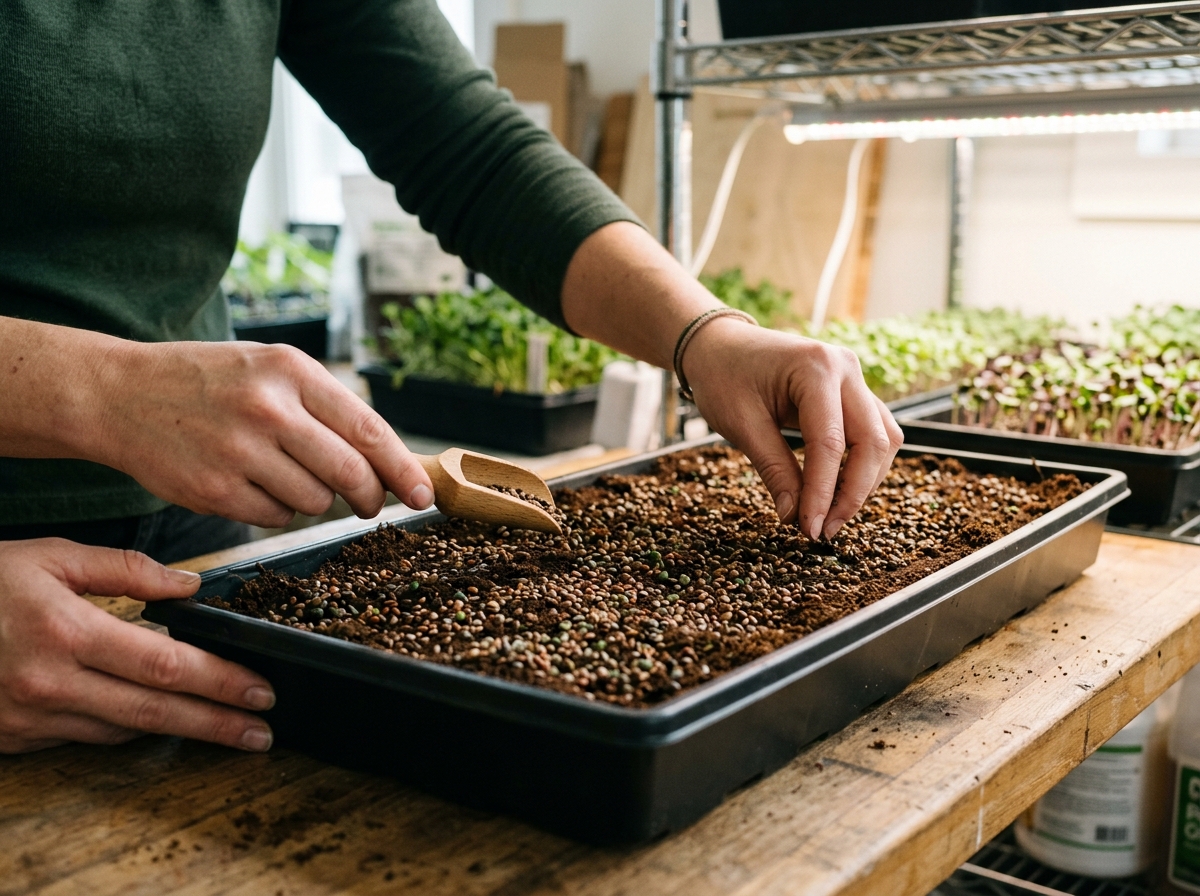
Once you have your microgreen bulk seeds, it’s time to get your hands dirty. Proper technique ensures that you don’t waste your bulk investment.
Seeding Density and Trays
The standard for micro-farming is the 1020 tray (10 inches by 20 inches). To get a lush, carpet-like growth, you need to master seeding density. If you sow too thinly, you get a poor yield; too thickly, and you risk mold due to poor airflow.
| Variety | Recommended Seeding Rate (per 1020 tray) | Days to Harvest |
|---|---|---|
| Broccoli | 18 – 22 grams | 10-14 Days |
| Radish | 25 – 30 grams | 7-10 Days |
| Mild Mix | 18 – 20 grams | 10-15 Days |
| Sunflower | 100 – 120 grams (soaked) | 12-15 Days |
| Pea Shoots | 150 – 200 grams (soaked) | 14-21 Days |
For more specific guidance, our Microgreens Planting Guide for the First-Time Gardener covers everything from soil depth to watering schedules. Using the right Seed Sprouting Trays for Microgreens—ideally with drainage holes—is a non-negotiable for success.
Harvesting for Peak Nutrition and Flavor
The “sweet spot” for harvesting most microgreens is when the cotyledons (the first set of “seed leaves”) are fully expanded and the first “true leaf” is just beginning to peek out. At this stage, the plant is a nutritional powerhouse.
- The Scissor Method: Use sharp, clean scissors or a harvest knife to snip the greens just above the soil line.
- Nutrient Density: Research shows these tiny leaves can contain significantly higher concentrations of vitamins C, E, and K than the mature plant. To learn more about the science behind the growth, see Demystifying the Sprouting Process for Microgreens.
Popular Mixes and Sourcing High-Quality Seeds
If you don’t want to mix your own varieties, many suppliers offer pre-blended microgreen bulk seeds. These are designed so that all varieties in the mix germinate and reach harvest height at the same time.
- Rainbow Blends: These typically include a colorful array of kohlrabi, beets, and mustards.
- Mighty Mixes: These focus on the most nutrient-dense brassicas like broccoli and kale.
- Diverse Heirloom Seed Packages: These are perfect for those who want to try a little bit of everything. You can find these in our curated Microgreens Seed Starter Packs.
Frequently Asked Questions about Microgreen Bulk Seeds
How long do bulk microgreen seeds stay viable?
Most seeds will stay viable for at least 2 to 3 years, with many heirloom varieties lasting 5 years or more if stored correctly. The key is to keep them in a “sleep state”—this means a cool, dark, and dry environment. Many bulk buyers use moisture-proof Mylar bags or glass jars with desiccant packets to ensure their investment doesn’t spoil.
Do I need special lights for bulk microgreen production?
While microgreens can grow on a sunny window sill, professional micro-farmers often use LED grow lights to ensure consistent growth year-round. Because microgreens are harvested so young, they don’t need the intense, expensive lighting that flowering plants require. Simple shop lights or basic LEDs are often enough to trigger photosynthesis and get those vibrant green colors.
What is the most cost-effective microgreen to grow in bulk?
Radish is widely considered the “ROI King” of the microgreen world. The seeds are relatively inexpensive in bulk, they have a near 100% germination rate, and they are ready to harvest in as little as 7 days. Broccoli is a close second, offering incredible health benefits with a very fast turnaround and high yield per pound of seed.
Conclusion
At FinanceOrbitX, we believe that gardening should be as rewarding for your wallet as it is for your body. By investing in microgreen bulk seeds, you are taking a major step toward sustainable, low-cost food production. Whether you are growing for your family or starting a small-scale commercial venture, the right seeds make all the difference.
The return on investment for a single pound of broccoli or radish seed is staggering when compared to the price of “living lettuce” at the grocery store. Plus, there is a unique satisfaction in harvesting your own “superfood” right from your kitchen counter.
Ready to dive deeper into indoor farming? Check out More info about gardening guides for everything from tray selection to advanced hydroponic techniques. Happy growing!
