
Why the Right Microgreens Growing Supplies Make or Break Your First Harvest
Microgreens growing supplies are the foundation of a successful indoor garden — and knowing what to buy before you start saves you time, money, and a lot of frustration.
Here’s a quick look at the core supplies you’ll need to get started:
| Supply | What It Does | Beginner Pick |
|---|---|---|
| Growing trays | Hold your seeds and medium | 1020 shallow tray (with + without holes) |
| Growing medium | Feeds roots and anchors seeds | Coconut coir or potting mix |
| Seeds | The crop itself | Non-GMO or organic microgreen seeds |
| Spray bottle | Waters seedlings gently | Any fine-mist bottle |
| Grow light or windowsill | Powers photosynthesis | South-facing window or LED grow light |
| Humidity dome | Traps moisture during germination | Vented dome lid |
These six basics cover everything a beginner needs to get from seed to harvest.
Microgreens are one of the fastest-growing crops you can raise indoors — many varieties are ready to harvest in as little as 7 to 14 days. They’re also nutritionally dense, packing the equivalent nutrition of a full bowl of salad greens into just a few tablespoons.
But here’s the catch: the wrong supplies lead to mold, poor germination, and wasted seeds. The right setup — even a simple one — makes the whole process almost foolproof.
Whether you have a sunny windowsill or a spare shelf in a dark corner, there’s a setup that fits your space and budget. This guide breaks it all down.
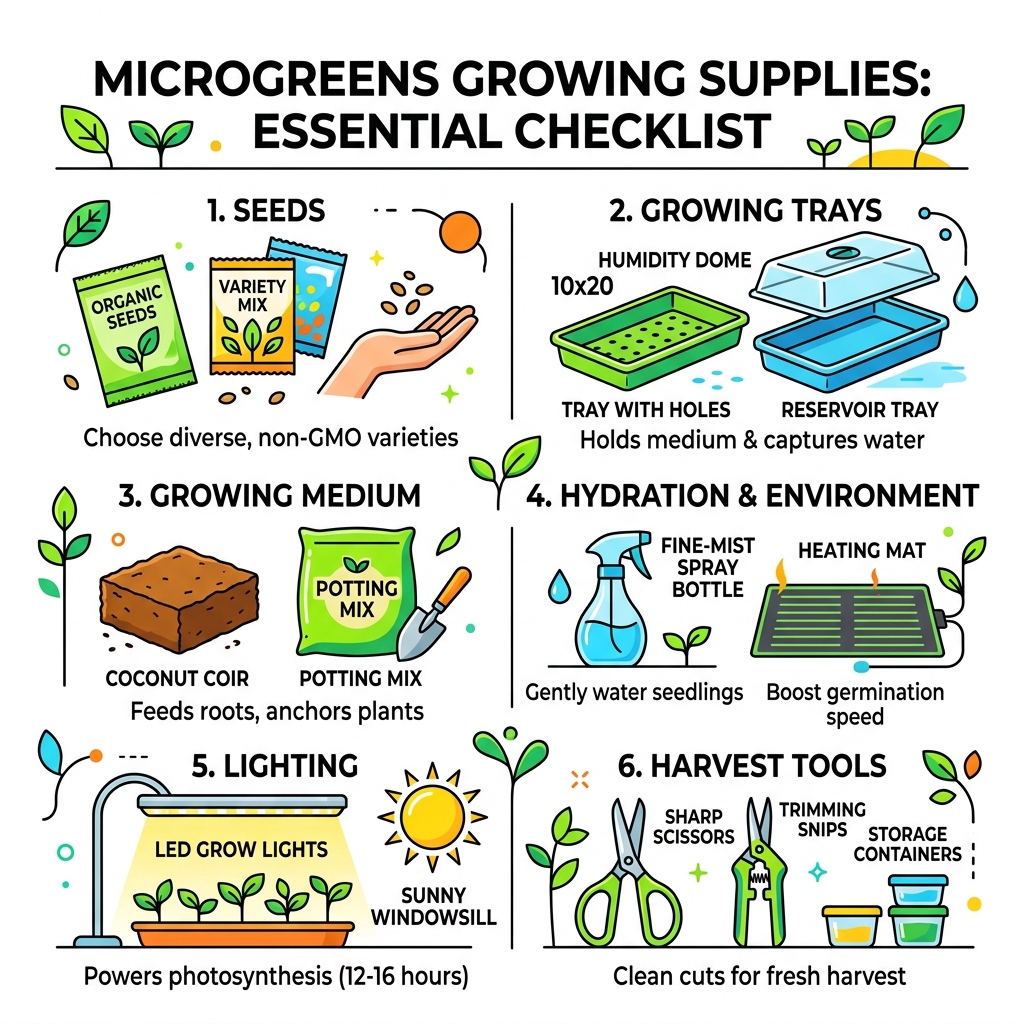
Essential Microgreens Growing Supplies for Beginners
Starting your own “green empire” doesn’t require a degree in botany or a massive bank account. In fact, at FinanceOrbitX, we love microgreens because the return on investment (ROI) is incredible. For a small initial spend on microgreens growing supplies, you can produce gourmet-quality greens that would cost a fortune at a high-end grocery store.
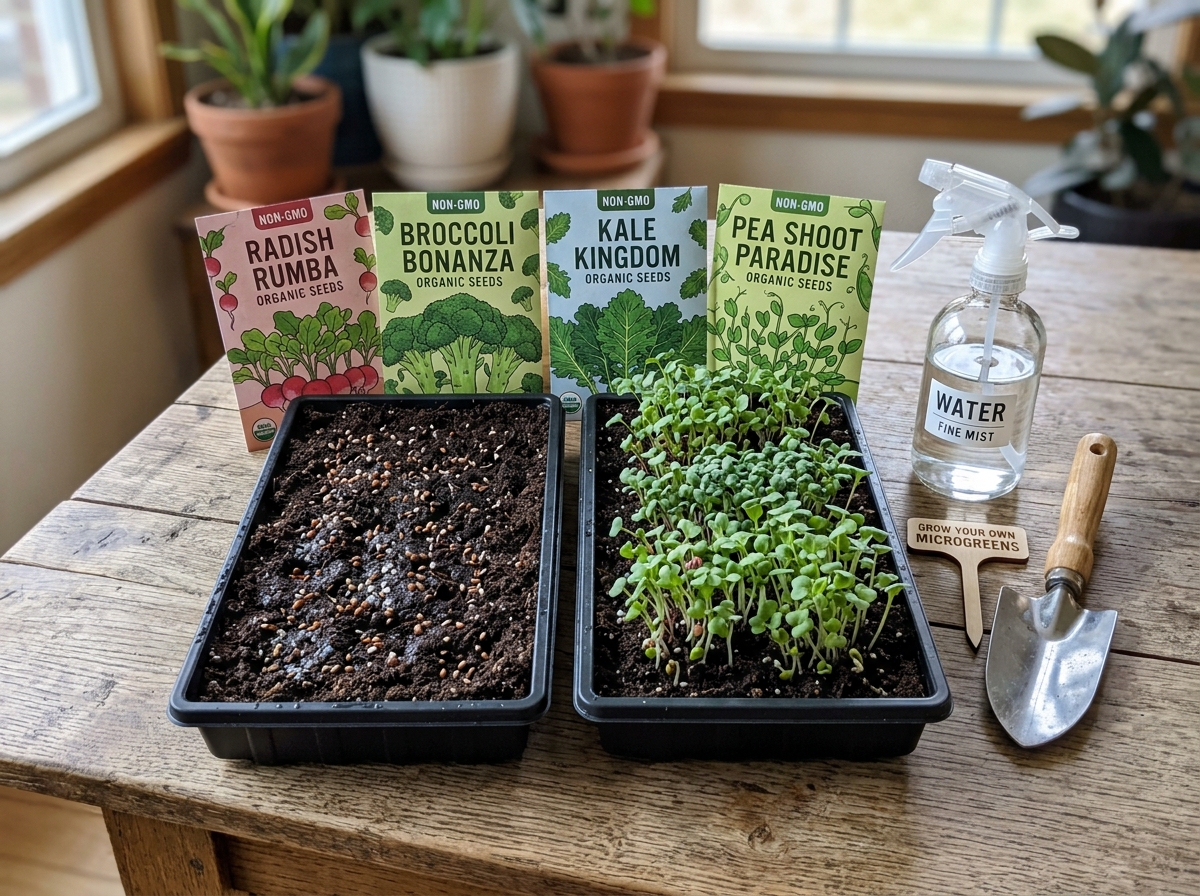
To get started, you’ll need a few essential tools for indoor gardening. First and foremost are high-quality, non-GMO seeds. Whether you’re eyeing spicy radishes, earthy beets, or nutrient-packed broccoli, the seed is your primary asset. You’ll also need growing trays to house your plants, a substrate (the “stuff” they grow in), and a reliable spray bottle for gentle misting. If you’re looking for a one-stop shop to browse these items, Microgreens Growing Supplies | Grow Medium, Trays, Books, & More is a great place to see the variety available.
Heavy-Duty vs. Standard Microgreens Growing Supplies
When you’re shopping for trays, you’ll see a wide range of prices. It might be tempting to grab the cheapest flimsy plastic inserts, but if you’re planning on growing more than one batch, durability matters. Heavy-duty trays are typically made from BPA-free, food-safe polypropylene plastic.
These are built to last for years, not just one season. High-quality trays won’t crack when you lift them full of wet soil, which protects your floors and your sanity. Choosing the Best Containers for Your Microgreens involves looking for materials that are easy to sanitize and won’t leach chemicals into your food.
The Role of Humidity Domes
Think of a humidity dome as a tiny spa for your seeds. During the first few days of growth (the germination phase), seeds need consistent moisture and warmth. A vented humidity dome sits over your tray, trapping the water you’ve misted inside.
This creates a greenhouse effect that significantly improves germination rates. Once the “babies” have sprouted and reached about an inch tall, you remove the dome to allow for better airflow. For those starting small, seed sprouting trays for microgreens often come with these domes included.
Choosing the Right Trays: Size, Depth, and Drainage
The “industry standard” for microgreens is the 1020 tray (named because it is roughly 10 inches by 20 inches). However, bigger isn’t always better for home growers. If you are a family of two, a 1010 tray (half the size) or even small 5×5 inserts might be more manageable.
One of the most important decisions you’ll make is the depth of the tray. Most microgreens only need about an inch of soil, so “shallow” trays (about 1.25 inches deep) are perfect. They save you money on soil and make harvesting much easier because you can get your scissors closer to the base of the plant. You can learn more about why many pros ditch the plastic with these beginner microgreens growing trays or check out our tray reviews: the best for indoor microgreens for a deeper dive into specific brands.
Drainage Holes vs. Solid Bottoms
Here is a pro tip: you actually need both types of trays. You want a tray with drainage holes to hold your soil and seeds. This tray then nests inside a solid bottom tray (no holes).
Why? This setup allows for “bottom watering.” Instead of spraying the delicate leaves—which can lead to mold and rot—you pour water into the bottom tray. The soil then wicks the moisture up to the roots. This keeps the canopy dry and the roots happy. This method is particularly vital when looking for the best trays for hydroponic microgreens.
Space-Saving Vertical Racks
If you’re living in a cozy city apartment, don’t worry. You don’t need a backyard to have a farm. Vertical grow racks allow you to stack multiple layers of trays in a very small footprint. Some high-end systems even offer automated propagation with built-in lights and watering. For those in tight quarters, microgreens kits for apartments are specifically designed to maximize vertical space.
Selecting Your Growing Medium: Soil vs. Hydroponics
What should your greens grow in? This is a hot debate in the microgreen world. Some swear by the flavor of soil, while others love the cleanliness of hydroponic mats.
| Medium | Pros | Cons |
|---|---|---|
| Potting Soil | Great flavor, holds water well | Can be messy, potential for soil-borne pests |
| Coconut Coir | Sustainable, pH neutral, clean | Provides no natural nutrients (need liquid fertilizer) |
| Hemp Mats | Totally compostable, very clean harvest | Dries out faster than soil |
| Biostrate | Designed for hydroponics, consistent | Single-use, more expensive than bulk soil |
Deciding between soil and growing medium for microgreens often comes down to your personal preference for “cleanliness” versus “flavor.” If you’re still on the fence, we’ve broken down the soil vs hydroponics: which is best for microgreens? debate in detail.
Organic Substrates for Your Microgreens Growing Supplies
If you choose the soil route, we always recommend an organic soil for microgreens. Since you are eating these plants just days after they sprout, you want to ensure the medium is free of synthetic chemicals. Compressed coconut coir is a fantastic choice; it comes in dry “bricks” that expand when you add water, making it easy to store in a small apartment. Some growers even add trace minerals like Azomite to their medium to boost the nutrient profile of their harvest.
Hydroponic Grow Pads and Mats
Hydroponic mats made of hemp fiber, wood wool, or bamboo are popular because they make harvesting a breeze. There’s no dirt to wash off your greens! These are often referred to as top hydroponic trays for microgreens setups because they provide a stable, clean surface for the roots to grip. Once you harvest, the entire mat can usually go straight into your compost bin.
Lighting and Environment: Do You Need Grow Lights?
Microgreens are like little solar panels—they need light to produce those vibrant colors and nutrients. While a very bright, south-facing window can work for some varieties (like peas or sunflowers), many microgreens will get “leggy” (tall, skinny, and weak) as they stretch toward the sun.
To get those dense, lush trays you see in photos, you’ll likely want LED grow lights for microgreens. Look for “Full Spectrum” or “6400k” lights, which mimic the bright midday sun. For a full breakdown of the science, check out our enlightening indoor microgreens: a guide to lighting.
Optimizing Your Microgreens Growing Supplies for Light
You don’t need a professional stadium lighting setup. Simple hanging kits or shop lights can work wonders. The key is to keep the lights close—usually just a few inches above the plants—and move them up as the greens grow. If you’re worried about the cost of electricity, don’t be. Modern LEDs are incredibly efficient. We even have a guide on how to stop overpaying for your microgreens grow lights to help you keep your budget in check.
Temperature and Airflow Management
Microgreens like the same temperatures we do (around 65-75°F). If your grow space is in a cold basement, a heat mat under your trays can speed up germination. However, the biggest enemy of a healthy tray is stagnant air.
Without airflow, moisture gets trapped between the stems, leading to mold. A small oscillating fan is one of the most underrated microgreens growing supplies. It keeps the air moving and actually makes the plants stronger by simulating a light breeze. If you’re looking for budget-friendly climate control, there are many affordable grow lights for microgreens that include basic timer functions to help regulate your environment.
All-in-One Microgreen Growing Kits
If all of this sounds a bit overwhelming, don’t sweat it. You can start with a kit! Many beginners find that a microgreens complete kit (includes Sprout Nursery) is the easiest way to get their feet wet.
These kits usually include a stylish planter (sometimes ceramic or BPA-free plastic), pre-measured seed pads, and simple instructions. They are perfect for gifting or for testing out the hobby without committing to a full rack of trays. You can find many microgreens growing kits online that range from basic setups to beautiful windowsill decor.
Deluxe Kits for Advanced Growers
For those who know they want to grow a lot of food, “Deluxe” kits are the way to go. These often include automated racks, professional-grade sprayers, and enough seeds to last for months. When we’re reviewing the best indoor microgreens kits, we look for value, durability, and how easy it is to buy “refills” for the seeds and medium.
Maintenance and Cleaning for Repeated Use
To keep your “empire” running smoothly, you have to stay clean. After you harvest, you’ll have a mat of roots and leftover medium. If you’re using reusable trays, you need to scrub them thoroughly.
A weak solution of food-grade hydrogen peroxide (H2O2) or a quick run through the dishwasher (if the trays are heat-rated) will kill any lingering mold spores. Proper sterilization ensures your next batch is just as healthy as the first. For more tips on keeping your gear in top shape, see the ultimate guide to crafting your own DIY microgreen kit.
Frequently Asked Questions about Microgreen Equipment
How do I choose between shallow and deep trays?
For 90% of microgreens, shallow trays (1.25″) are the winner. They save you roughly 40% on soil costs and make cutting the greens much easier. Deep trays (2.5″) are generally reserved for crops with massive root systems or those you want to grow for a longer time, such as wheatgrass, pea shoots, or sunflowers.
Can I grow microgreens using only natural window light?
Yes, but with a caveat. You need a very bright, south-facing window that gets at least 6-8 hours of direct sun. If your plants start leaning heavily toward the glass or look pale and spindly, they are “searching” for light. In these cases, supplemental LED lighting will make a world of difference.
What factors affect the budget for growing supplies?
The biggest variables are reusability and scale. Buying soil in bulk (like a large bag of potting mix vs. small individual pucks) saves money. Investing in heavy-duty trays costs more upfront but saves you from buying replacements every few months. Generally, your ongoing costs will be just seeds, medium, and a tiny bit of electricity.
Conclusion
Building your microgreen empire is one of the most rewarding (and delicious) financial and lifestyle moves you can make. By choosing the right microgreens growing supplies from the start, you set yourself up for high-yield harvests and minimal waste. Whether you start with a simple windowsill kit or a full vertical rack, the key is to just get growing!
At FinanceOrbitX, we believe that self-sufficiency is the ultimate asset. For more guides on how to grow your own food and manage your home garden budget, check out our full range of supplies resources. Happy growing!
