
Why Microgreen Light Requirements Matter More Than You Think
Microgreen light requirements are simpler than most beginners expect — here’s a quick summary before we dive deeper:
| Factor | Recommendation |
|---|---|
| Light intensity (PPFD) | 200-400 µmol/m²/s |
| Daily light hours | 12-16 hours (17 on / 7 off is a popular sweet spot) |
| Color temperature | 5000K-6500K (full-spectrum “daylight” LEDs) |
| Light distance from tray | 6-12 inches above the canopy |
| When to start lighting | After 3-5 days of darkness (post-germination) |
| Minimum lumens per shelf | 2,000+ lumens for a standard 10×20 tray |
Getting these numbers right is the difference between vibrant, nutrient-dense microgreens and pale, leggy sprouts that fall over before you can harvest them.
Microgreens are one of the fastest and most rewarding crops you can grow at home. But here’s the thing — light is the single biggest variable most first-time growers get wrong. Too little, and your greens stretch and go yellow. Too much, too close, and you risk scorching delicate leaves before they’re ready.
The good news? You don’t need expensive or complicated equipment to get it right. A basic full-spectrum LED shop light and a simple plug-in timer can produce excellent results on a kitchen shelf.
In this guide, we’ll walk through everything you need to know — from PPFD and photoperiods to grow light types, distances, and how light actually shapes the flavor and nutrition of what you eat.
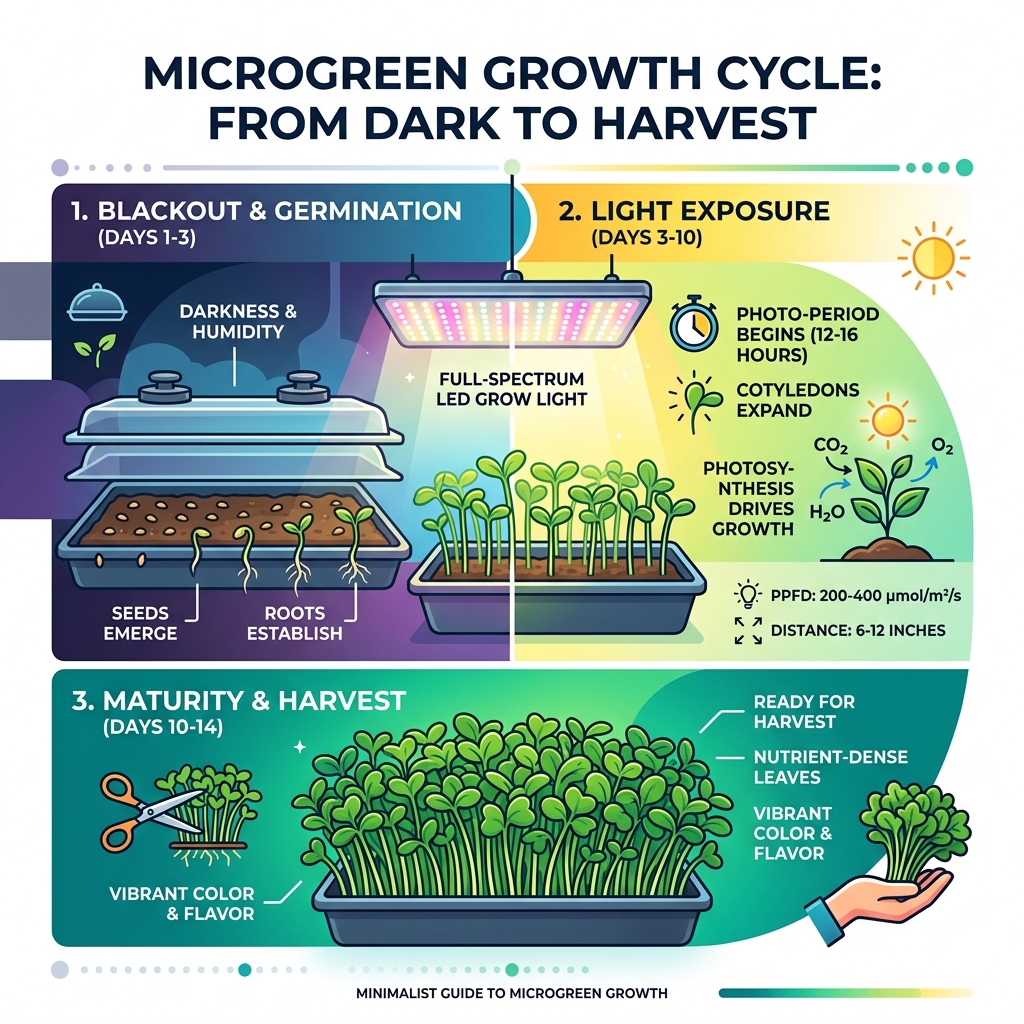
Understanding Essential Microgreen Light Requirements
When we talk about microgreen light requirements, we have to look past just “brightness.” To a plant, light is food. Through photosynthesis, microgreens convert light energy into chemical energy, driving biomass production and the development of those healthy vitamins we’re after.
One of the most common mistakes we see first-time gardeners make is focusing on “Watts.” In modern LEDs, wattage is just a measure of how much electricity the bulb sucks from your wall—it doesn’t tell you how much “food” the plant is getting. Instead, we look at Photosynthetic Photon Flux Density (PPFD).
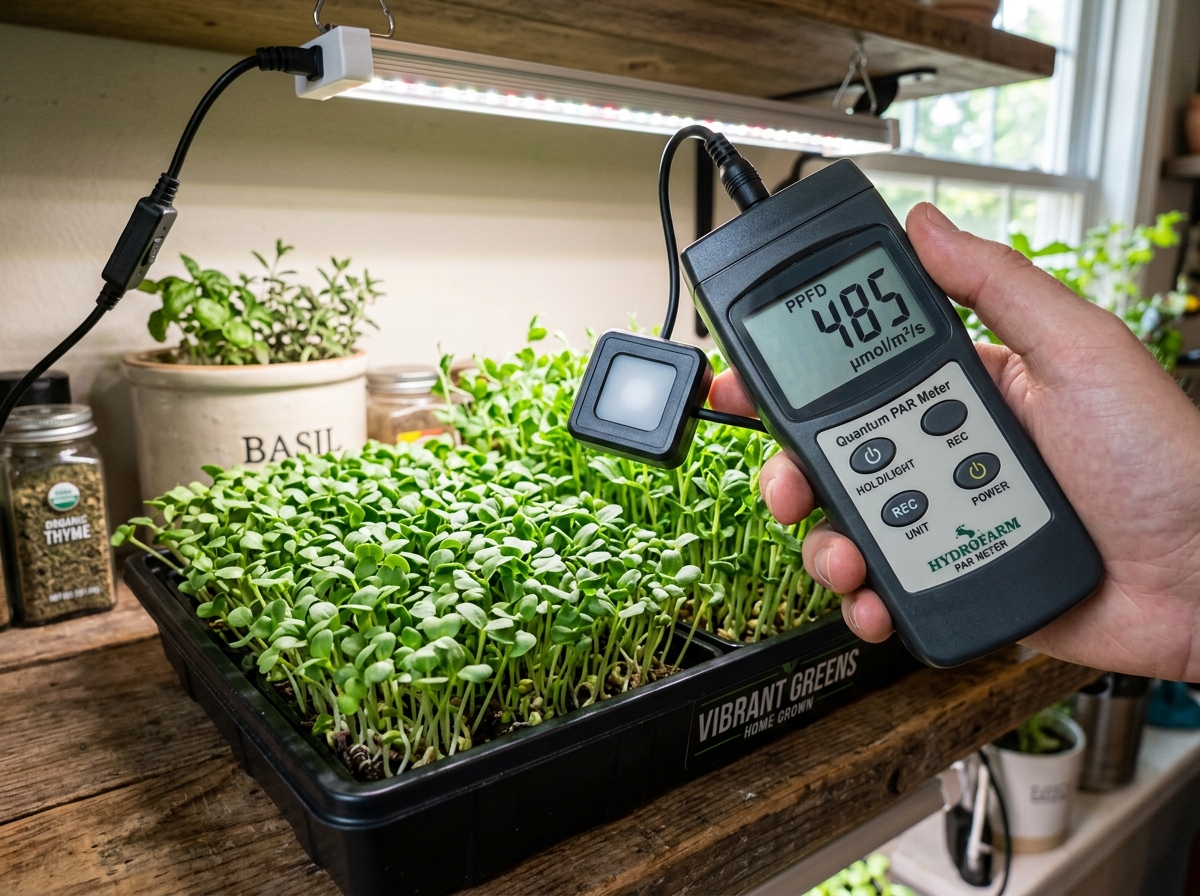
PPFD measures the amount of light useful for photosynthesis that actually hits your tray every second. For most microgreens, the “sweet spot” is between 200 and 400 µmol/m²/s. If you drop below 100 µmol/m²/s, your plants will start stretching (getting “leggy”) as they desperately search for more energy. If you’re a home grower without a fancy PAR meter, a good rule of thumb is to aim for at least 2,000 lumens per 10×20 tray shelf. For more details on these metrics, check out our guide on Shining a Light on Optimal Microgreen Requirements.
Optimal Photoperiod and Light Duration
How long should your lights stay on? This is called the photoperiod. While humans need about 8 hours of sleep, microgreens are a bit more flexible. Most varieties thrive with 12 to 16 hours of light per day.
However, many experienced growers have found a specific “sweet spot”: 17 hours on and 7 hours off. Why the 7 hours of darkness? Plants have circadian rhythms just like we do. During the dark period, microgreens perform essential metabolic processes that they can’t do while the lights are blasting.
Interestingly, research shows that duration can actually boost your harvest’s health benefits. A 16-hour photoperiod can increase phenolic compounds by 32% and antioxidant capacity by 25% compared to a shorter 12-hour cycle. We dive deeper into these timing strategies in our article Enlightening Indoor Microgreens: A Guide to Lighting.
Ideal Light Spectrum and Color Temperature
Not all light is created equal. If you’ve ever looked at a “daylight” bulb vs. a “warm white” bulb, you’ve seen the difference in color temperature, measured in Kelvin (K). For microgreen light requirements, we want to mimic the sun as closely as possible.
We recommend full-spectrum LEDs with a color temperature of 5000K to 6500K. This range provides a balanced mix of colors, but two specific wavelengths do the heavy lifting:
- Blue Light (440-470nm): This is the “growth” light. It promotes leafy development, triggers chlorophyll production, and keeps your plants short and stout. It’s also responsible for boosting vitamins C, E, and K.
- Red Light (640-680nm): This helps with biomass and can even influence the sweetness of the plant.
Since we harvest microgreens before they reach the flowering stage, blue-dominant light is our priority. You can learn more about picking the right bulbs in our breakdown of LED Grow Lights for Microgreens.
Choosing the Best Grow Lights for Your Setup
Choosing a light can feel like picking a stock—there are a lot of options, and everyone has an opinion. Here is how the most common choices stack up for microgreen growers:
| Light Type | Pros | Cons | Verdict |
|---|---|---|---|
| LED Shop Lights | Cheap, energy-efficient, low heat, long-lasting. | Not always “full spectrum.” | Best for Beginners |
| T5/T8 Fluorescent | Affordable, widely available. | Uses more power, contains mercury, runs hotter. | Old School |
| Natural Sunlight | 100% free, perfect spectrum. | Inconsistent, depends on weather/season. | Great Supplement |
| LED Panels | High intensity, professional grade. | Expensive, can be “overkill” for microgreens. | Commercial Use |
For most of us, LED grow lights are the undisputed champions. They last for 50,000+ hours and run cool enough that they won’t bake your greens. If you’re looking for specific product recommendations, see our list of the Best Indoor Grow Lights for Microgreens.
Positioning and Distance for Microgreen Light Requirements
Even the best light won’t help if it’s three feet away. Distance is key to managing light intensity and heat.
For standard LED shop lights or T5 fixtures, you should position the lights 6 to 12 inches above the microgreen trays. As your plants grow taller, you’ll want to maintain this gap. If you notice your plants leaning or looking pale, they are likely too far away—try moving the light closer by two inches. Conversely, if the leaf edges look “crispy” or bleached, they might be getting toasted; back the lights off a bit.
Managing this height is a delicate dance between giving them enough energy and avoiding heat stress. For a deeper dive into the physics of placement, read Choosing the Right Lighting for Growing Microgreens.
How Light Influences Nutrition and Flavor Profiles
One of the coolest things about growing your own food is that you can actually “program” the flavor and nutrition of your plants using light.
Microgreens are famous for being “nutrient-dense,” often containing up to 40 times the vitamins of their mature counterparts. Light plays a massive role in this. For example, exposure to blue light has been scientifically proven to increase levels of carotenoids and vitamins.
- Flavor: Want spicier broccoli microgreens? Increased light intensity can boost glucosinolates, the compounds responsible for that “kick.”
- Color: Deep purples in radishes or amaranth are caused by anthocyanins. These pigments act like a “sunscreen” for the plant, and they often become more vibrant under strong, full-spectrum light.
- Texture: Proper light prevents “legginess.” A well-lit microgreen has a sturdy stem and a satisfying crunch, whereas a low-light plant feels stringy and weak.
Step-by-Step Lighting Setup and Troubleshooting
Ready to get growing? Here is our foolproof method for setting up your first rack.
- The Blackout Phase: Don’t turn the lights on yet! After sowing your seeds, keep them in total darkness for 3-5 days. This mimics being underground and encourages the seeds to stretch slightly and anchor their roots.
- Light Introduction: Once you see the first “seed leaves” (cotyledons) and the sprouts are about an inch tall, it’s time for their debut.
- The Rack Setup: Use a sturdy wire rack. We love daisy-chaining three 20-watt LED shop lights per shelf. This ensures even coverage across the entire 10×20 tray.
- Automation: Don’t rely on your memory. Use a programmable 24-hour timer to maintain your 16 or 17-hour light cycle.
- Reflectivity: You can increase your effective light by 10-30% simply by surrounding your grow area with white material or Mylar. Even painting the nearby walls bright white helps!
For those on a budget, we’ve put together a guide on Affordable Grow Lights for Microgreens and tips to Stop Overpaying for Your Microgreens Grow Lights.
Troubleshooting Common Microgreen Light Requirements Issues
Even pros run into hiccups. Here’s how to spot and fix common lighting problems:
- Pale, “Leggy” Stems: This is the #1 issue. It means your microgreen light requirements aren’t being met. The plants are stretching to find light. Fix: Move lights closer or increase the number of hours they are on.
- Yellow Leaves: If the plants are tall but yellow, they aren’t producing enough chlorophyll. Fix: Ensure you are using “Daylight” spectrum bulbs (5000K+).
- Uneven Growth: The plants in the middle are tall, but the ones on the edges are short. Fix: Your light distribution is poor. Add a second light fixture to the shelf.
- Dust Accumulation: Believe it or not, dust on your bulbs can reduce light output by 20% or more. Fix: Wipe your lights down once a month.
For more troubleshooting tips, visit Enlightening Indoor Microgreens: A Guide to Lighting.
Frequently Asked Questions about Microgreen Lighting
Can I grow microgreens using only a windowsill?
Yes, you can, but it’s a bit like trying to run a marathon on a diet of only snacks. You need a south-facing window that gets at least 4 to 6 hours of direct sun. Be aware that window-grown greens often lean toward the glass (phototropism), so you’ll need to rotate the trays daily. In winter, the light is often too weak, leading to leggy growth, so supplemental LEDs are usually a good investment.
When should I first expose my seedlings to light?
Timing is everything. You should wait until the germination and “blackout” phase is complete—usually 3 to 5 days after planting. Look for the emergence of cotyledons. If you expose them to light too early, they might not develop strong enough roots; too late, and they’ll become excessively leggy and difficult to harvest.
How much does it cost to run grow lights monthly?
Growing your own food should save you money, not drain your bank account! LEDs are incredibly efficient. If you run three 20-watt LED lights (60W total) for 17 hours a day at an average electricity rate of $0.12/kWh, it will cost you approximately $3.67 per month. Considering a single tray of microgreens can retail for $15-$20 at a farmer’s market, the ROI (Return on Investment) is fantastic.
Conclusion
At FinanceOrbitX, we believe that mastering your microgreen light requirements is one of the smartest investments you can make in your health and your home economy. By blending a little bit of science with a simple daily routine, you can transform a small corner of your home into a high-yield urban garden.
Remember: start with full-spectrum LEDs, keep them 6-12 inches from your plants, and don’t forget that crucial 3-5 day blackout period. Whether you’re growing spicy radish for your salads or sweet pea shoots for the kids, getting the light right is the key to a bountiful harvest.
Ready to expand your indoor garden? Check out More info about indoor gardening for more tips on making your home grow-op as efficient and profitable as possible! Happy planting!
