
The Best Seeds for Microgreens: A Quick Answer for First-Time Growers
The best seeds for microgreens are ones that germinate fast, grow evenly, and taste great — here are the top picks for beginners:
| Seed | Days to Harvest | Flavor | Difficulty |
|---|---|---|---|
| Radish (Rambo) | 6-7 days | Spicy, peppery | Very easy |
| Broccoli (Waltham 29) | 7-10 days | Mild, fresh | Very easy |
| Pea (Speckled) | 10-14 days | Sweet, tender | Easy |
| Sunflower (Black Oil) | 10-12 days | Nutty, crunchy | Easy |
| Red Acre Cabbage | 7-10 days | Earthy, mild | Easy |
| Kale | 8-12 days | Mild, slightly bitter | Easy |
You’ve probably heard that microgreens are “superfoods.” That part is true — but what most guides skip is how simple they are to actually grow.
Microgreens are young vegetable or herb plants harvested just after their first leaves appear. Most are ready in 7 to 14 days. You don’t need a garden, a greenhouse, or any special skills. A tray, some seeds, light, and water is all it takes.
They pack a concentrated punch of vitamins, minerals, and antioxidants — more than their fully grown counterparts. And they taste like the mature plant, just more intense: peppery, nutty, sweet, earthy.
The only real question is: which seeds do you start with?
That’s exactly what this guide answers.
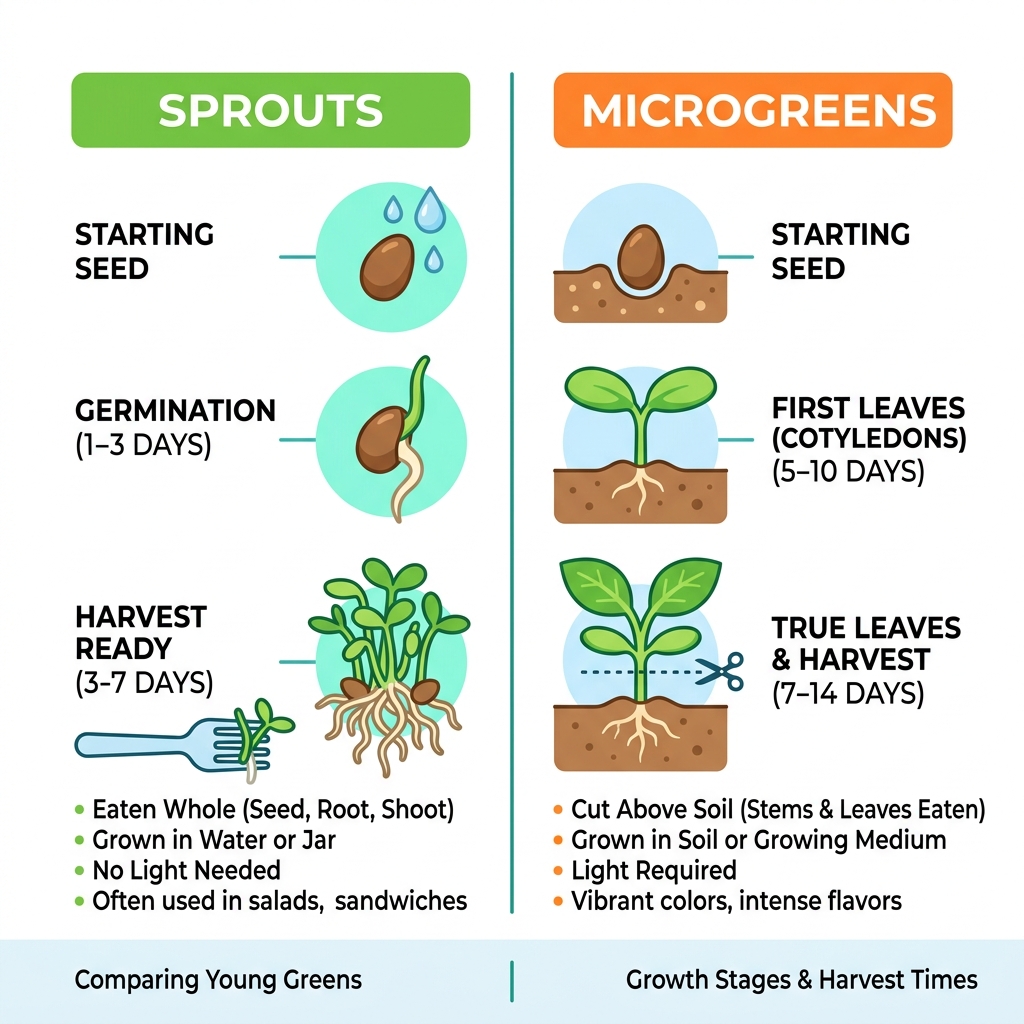
Common best seeds for microgreens vocab:
Why Microgreens are the Ultimate High-Yield Asset for Home Growers

In FinanceOrbitX, we love a good Return on Investment (ROI). When it comes to indoor gardening, microgreens are essentially the “blue-chip stocks” of the plant kingdom. They offer a low-risk entry point with a high-yield payoff in record time. While a full head of cabbage might take 80 days to mature in a traditional garden, microgreens allow you to bypass the long wait and harvest the same flavors and nutrients in just over a week.
Why should you consider them your next home-growing asset? First, they are incredibly space-efficient. You don’t need an acre of land; a simple windowsill or a small shelf is plenty of “real estate” to start your production. Second, they are a year-round crop. Regardless of the frost outside, your indoor kitchen garden can remain “in the green.”
From a culinary perspective, these tiny greens are versatile powerhouses. You can toss cilantro microgreens into winter tacos for a fresh burst of summer flavor, or use pea shoots as a standalone side dish. For more on the basics, check out our guide From Seed to Salad: A Beginner Guide to Indoor Microgreens and learn about Demystifying the Sprouting Process for Microgreens to ensure your “portfolio” starts strong.
The Best Seeds for Microgreens: Top Beginner Picks
Selecting the best seeds for microgreens is the most critical step in your journey. If you start with low-quality seeds, you’ll likely end up with poor germination or “bad debt” in the form of moldy trays. We recommend looking for seeds that are specifically labeled for microgreens or sprouting. These are typically untreated, non-GMO, and tested for high food safety standards.
When you’re just starting, you want “forgiving” varieties. Some seeds, like cilantro or beets, can be a bit moody—they take longer to germinate and might need specific soaking rituals. For your first tray, we suggest sticking to the “easy wins.” You can find pre-curated options in our Microgreens Seed Starter Packs to take the guesswork out of the equation.
Fast-Growing Brassicas: The Best Seeds for Microgreens Beginners
If you want to see results almost overnight, the Brassica family is your best friend. These are the “high-frequency traders” of the microgreen world—fast, efficient, and reliable.
- Radish (Rambo or Daikon): Radish microgreens are arguably the fastest of them all. They often germinate in just 1-2 days and can be ready for harvest in less than 7 days. Radish Rambo (Organic) is a fan favorite, boasting over 400 positive reviews for its stunning purple hue and peppery kick. Learn more in The Beginner Guide to Rapid Radish Microgreen Success.
- Broccoli (Waltham 29): This is a staple for a reason. With 615 reviews, it’s one of the most popular choices globally. It has a mild, fresh flavor and is packed with sulforaphane, a compound studied for its health-boosting properties. It’s a “set it and forget it” variety that grows evenly and densely.
- Red Acre Cabbage: This variety adds a beautiful splash of violet to your salads. It’s crisp, tender, and earthy. For those looking to detox, we’ve put together The Ultimate Guide to Buying Cabbage Microgreens for Detoxification.
Nutritious Powerhouses: Best Seeds for Microgreens with High ROI
While speed is great, sometimes you want to maximize the “dividend” of vitamins. Some microgreens are significantly more nutrient-dense than others.
- Red Amaranth: If you want a visual showstopper that doubles as a health hero, this is it. These tiny red leaves are packed with antioxidants. However, be aware that Amaranth seeds are smaller and take a bit longer to germinate than Brassicas. Discover Why Red Amaranth Microgreens Are The Nutrient Powerhouse You Need.
- Kale: Kale microgreens are often preferred over mature kale because they are milder and less fibrous. They provide an impressive amount of Vitamin C and K. Check out Why Your Diet Needs Nutrient-Dense Kale Microgreens to see why this is a must-have in your rotation.
Diversifying Your Portfolio: Flavors, Colors, and Textures
A successful investor never puts all their eggs in one basket, and a successful microgreen grower doesn’t just grow one variety! By mixing and matching, you can create a “flavor portfolio” that ranges from sweet to spicy.
- Spicy: Look for Mustards (like Red Giant) or Arugula. Arugula microgreens provide a full peppery punch in tiny leaves that will amaze you.
- Nutty: Sunflower – Black Oil seeds are a top seller (447 reviews) for a reason. They produce thick, crunchy “shoots” that taste like fresh sunflower seeds.
- Sweet: Pea – Speckled (Organic) seeds are a favorite (527 reviews). They grow tall, tendril-filled shoots that kids (and chefs) absolutely love.
- Earthy: Beets and Swiss Chard offer a subtle, grounded flavor and stunning red or rainbow stems.
For more inspiration on how to use these in your kitchen, see our list of 15 Microgreens That Add a Zesty Twist to Any Meal or Spice Up Your Salad with These Flavorful Microgreens.
Understanding Plant Families and Growth Cycles
To truly master the best seeds for microgreens, it helps to understand who their “relatives” are. Most microgreens fall into a few specific botanical families, and each family has its own “personality”:
- Brassicaceae (The Fast Track): Includes broccoli, radish, cabbage, kale, and mustard. These are generally the easiest and fastest (7-10 days).
- Amaranthaceae (The Visuals): Includes spinach, beets, chard, and amaranth. These often have vibrant colors but may take slightly longer (12-20 days).
- Apiaceae (The Herbs): Includes carrot, cilantro, dill, and parsley. These are the “long-term investments,” taking 15-30 days to reach harvest, but they offer intense herbal flavors.
- Asteraceae (The Crunch): Includes lettuce and sunflowers. Sunflowers are fast and crunchy; lettuce is easy but slightly less nutrient-dense than the Brassicas.
Understanding these cycles helps you plan your harvests so you never have a “bear market” in your kitchen. Explore The Gourmet Guide to Different Types of Micro-Herbs or learn about Finding Your Perfect Microgreen Mix to find the right balance for your palate.
Risk Management: What Seeds to Avoid and Selection Criteria
In finance, risk management is about avoiding “toxic” assets. In microgreen growing, this is literal. Not every plant can be grown as a microgreen.
The Nightshade Danger: You must absolutely avoid plants from the Nightshade (Solanaceae) family. This includes tomatoes, potatoes, eggplants, and peppers. While we love the mature fruits, the leaves and stems of these plants contain toxic alkaloids that can make you very sick. Always stick to known edible varieties.
When selecting your “assets,” follow these criteria:
- Organic and Non-GMO: Since you are eating the entire plant (minus the roots), you want to ensure the seeds haven’t been treated with fungicides or pesticides.
- High Germination Rate: Look for seeds with a tested germination rate of 85% or higher. This ensures a thick, lush canopy rather than a patchy “recession” in your tray.
- Untreated: Some garden seeds are coated in chemicals to help them survive in outdoor soil. These are a “no-go” for indoor microgreens.
For a safe, healthy start, you might want to Order Alfalfa Microgreens to Power Up Your Body’s Natural Detox—it’s a classic, safe choice for beginners.
Growth Strategy: Tips for a Successful Harvest
To get the best “margins” on your microgreen trays, you need a solid strategy. Here are the industry secrets for a successful harvest:
- Seed Density is Key: This is the “asset allocation” of gardening. For larger seeds like peas or sunflowers, aim for about 2 seeds per square inch. For tiny seeds like broccoli or radish, you can go up to 12 seeds per square inch. This creates a dense mat that supports itself.
- Temperature Control: Most microgreens prefer a “bull market” temperature of 65°F to 75°F. If it’s too cold, growth slows down; too hot, and you risk mold.
- The Blackout Phase: After sowing, cover your seeds for 2-3 days. This mimics being underground and encourages the seeds to “stretch” upward, giving you longer stems that are easier to harvest.
- Airflow: Use a small fan to keep air moving. This prevents “damping off,” a fungal disease that can wipe out your investment overnight.
- Harvest Early: Most microgreens are best harvested when the first set of leaves (cotyledons) are fully open. If you wait too long, they can become bitter or tough.
For more advanced tactics, check out Top High-Yield Microgreens Varieties to Boost Your Production and The Fastest Growing Microgreens to Try at Home.
Frequently Asked Questions about Microgreen Seeds
Which microgreens are the healthiest to grow?
While all microgreens are nutrient-dense, the Brassica family (Broccoli, Kale, Cabbage) and the Amaranth family are considered the “gold standard.” Broccoli is particularly famous for its high levels of sulforaphane, while Red Amaranth is a powerhouse of antioxidants.
What plants should NOT be grown as microgreens?
Avoid all members of the Nightshade family, including tomatoes, peppers, potatoes, and eggplants, as their sprouts are toxic. Additionally, do not use seeds intended for outdoor gardening that have been treated with chemical fungicides or coatings.
How long do most microgreens take to grow from seed?
Most beginner-friendly varieties like radish and broccoli are ready in 7 to 10 days. Slower varieties like cilantro, beets, or carrots can take 15 to 25 days. It’s often a good idea to plant a mix of both so you have a staggered harvest!
Conclusion
At FinanceOrbitX, we believe that everyone should have access to the tools they need to grow—whether that’s their bank account or their kitchen garden. Microgreens are the perfect entry point for the “late bloomer” who wants to start gardening without the steep learning curve of a traditional backyard plot.
By selecting the best seeds for microgreens, managing your risks, and following a simple growth strategy, you can turn your windowsill into a high-yielding asset that pays out in fresh, delicious nutrients every single week. Take a look at The Ultimate Cheat Sheet for Every Type of Microgreen or browse More info about indoor gardening services to keep your green thumb growing!
